Coop Ventilation Guide: What Changed in 2026?
A good Coop Ventilation Guide can help backyard chicken keepers create a healthier home for their flock. In 2026, ventilation remains a key part of poultry care, especially as extreme heat, cold snaps, and changing weather affect chicken housing around the world.
For US chicken owners, the goal is simple: provide fresh air without creating harmful drafts. Additionally, good airflow removes moisture, ammonia, carbon dioxide, dust, and stale air. Penn State Extension updated its small-scale poultry housing guidance in June 2026 and continues to emphasize ample airflow without drafts.
Why Coop Ventilation Matters
The main purpose of Coop Ventilation Guide principles is to balance fresh air with comfortable temperatures. Chickens produce moisture through breathing, manure, and normal activity. Therefore, a closed coop can quickly become damp.
Poor airflow can lead to:
- Wet bedding and condensation
- Strong ammonia odors
- Poor indoor air quality
- Respiratory irritation
- Greater heat stress during summer
- Frostbite risks when cold air meets high humidity
Moreover, recent poultry guidance continues to connect moisture control and ventilation with better bird welfare.
Key Factors in a Coop Ventilation Guide
1. Use High and Low Openings
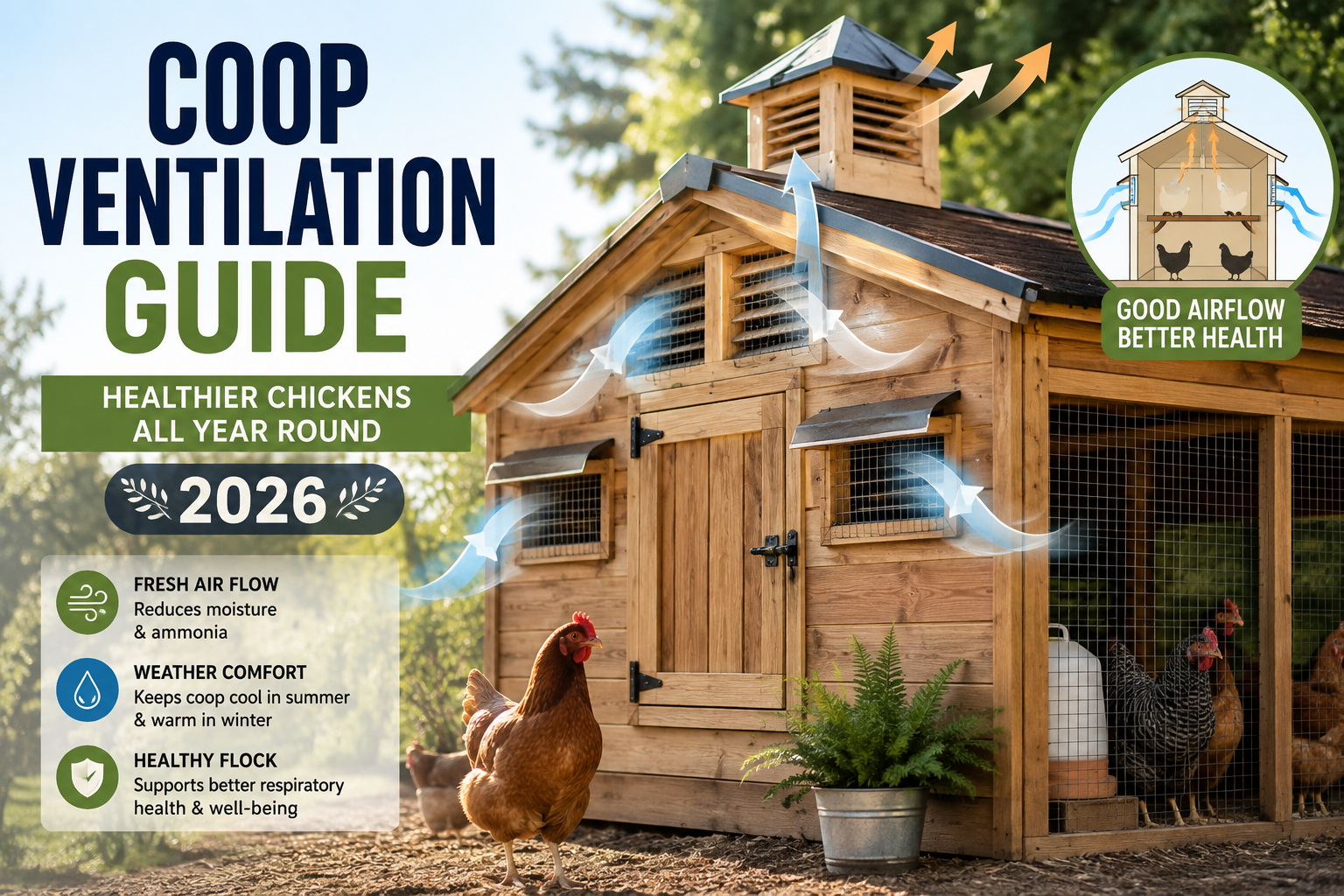
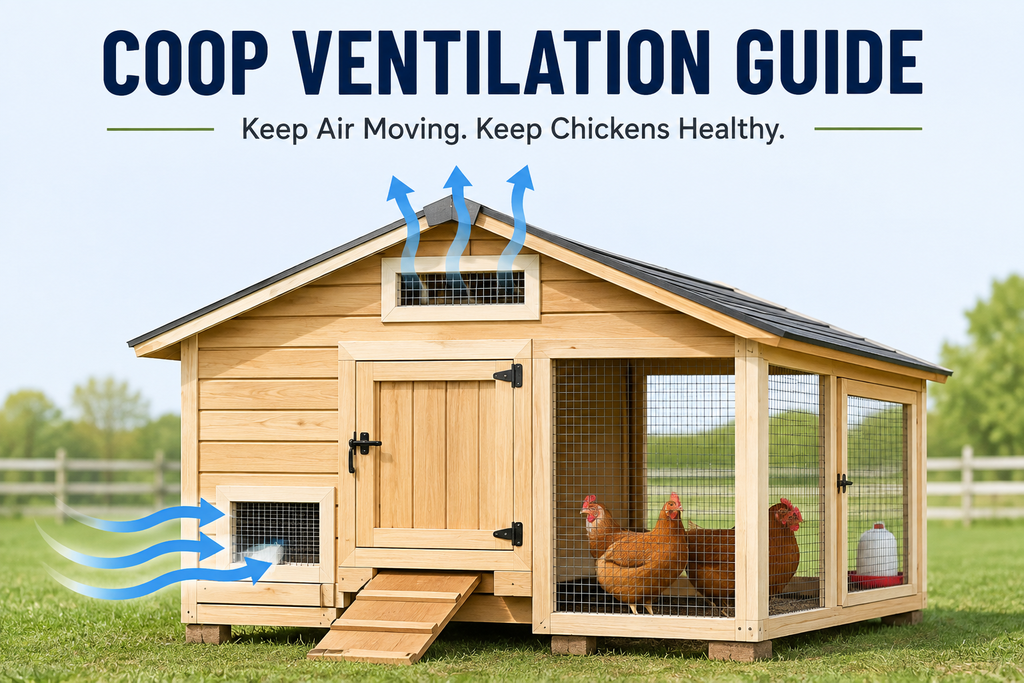
A strong Coop Ventilation Guide starts with smart vent placement. Warm, moist air naturally rises, so upper vents can help stale air escape. Lower or side openings can bring in fresh air.
However, do not place openings where cold air blows directly onto roosting birds. Penn State recommends positioning openings away from prevailing winds and directing incoming air upward so it mixes before reaching the flock.
2. Control Moisture and Ammonia
Your coop should smell clean, not strongly of ammonia. If you smell ammonia or see condensation on windows and walls, increase airflow and remove wet bedding.
Good chicken coop airflow also works with good litter management. Remove wet spots, repair water leaks, and keep bedding dry.
3. Adjust for the Weather
A practical Coop Ventilation Guide must work in every season.
Winter: Keep ventilation openings available while preventing direct drafts. Roof vents or partially opened windows can release moisture without exposing birds to strong wind.
Summer: Increase airflow substantially. Open windows, use secure mesh-covered openings, and consider outdoor-rated fans where electricity is safely installed.
Types of Coop Ventilation
Natural Ventilation
Natural ventilation uses windows, wall vents, roof vents, and wind. It costs less and works well for many small backyard coops. Additionally, it does not require electricity.
Mechanical Ventilation
Mechanical systems use fans to move air. They can provide more consistent poultry house ventilation, especially in larger or enclosed buildings.
However, fan size and placement should match the building and flock. Poorly positioned fans can create dead zones or drafts instead of uniform airflow.
Buying and Decision Guide
When choosing vents, windows, or fans, consider:
- Flock size: More birds create more heat and moisture.
- Coop size: Larger spaces need suitable airflow paths.
- Local climate: Hot climates often need more airflow.
- Winter conditions: Openings should allow moisture removal without chilling birds.
- Predator protection: Cover openings with strong, predator-resistant mesh.
- Maintenance: Choose components that are easy to inspect and clean.
For reference, UMN Extension recommends adequate indoor space as well as ventilation, while Penn State stresses that flock size and housing conditions affect ventilation needs.
Common Ventilation Mistakes to Avoid
Even a well-built coop can develop air-quality problems. Avoid these common errors:
- Sealing every opening during winter
- Creating direct drafts over roosts
- Relying only on a small window
- Ignoring wet bedding
- Blocking roof vents with insulation
- Using unsafe electrical equipment
- Adding a fan without considering airflow direction
Most importantly, do not judge ventilation only by temperature. Humidity, condensation, litter condition, and ammonia odors also matter.
Maintenance Tips for 2026
Check your ventilation system regularly. Clean dust from vents and fans, inspect mesh for damage, and make sure openings remain unobstructed.
Additionally, check the coop after major weather changes. During summer heat, airflow at bird level becomes especially important because ventilation helps chickens lose body heat.
A simple weekly check should include:
- Inspecting vents and screens
- Checking bedding for wet areas
- Looking for condensation
- Checking for ammonia odors
- Confirming fans operate safely
- Reviewing airflow around roosts
Conclusion
The best Coop Ventilation Guide approach is simple: keep air moving, control moisture, prevent direct drafts, and adjust ventilation as weather changes. In 2026, these basics remain essential for healthier backyard flocks worldwide.
Start by inspecting your existing vents today. Then improve airflow, manage bedding, and monitor your chickens closely. For more practical poultry advice.