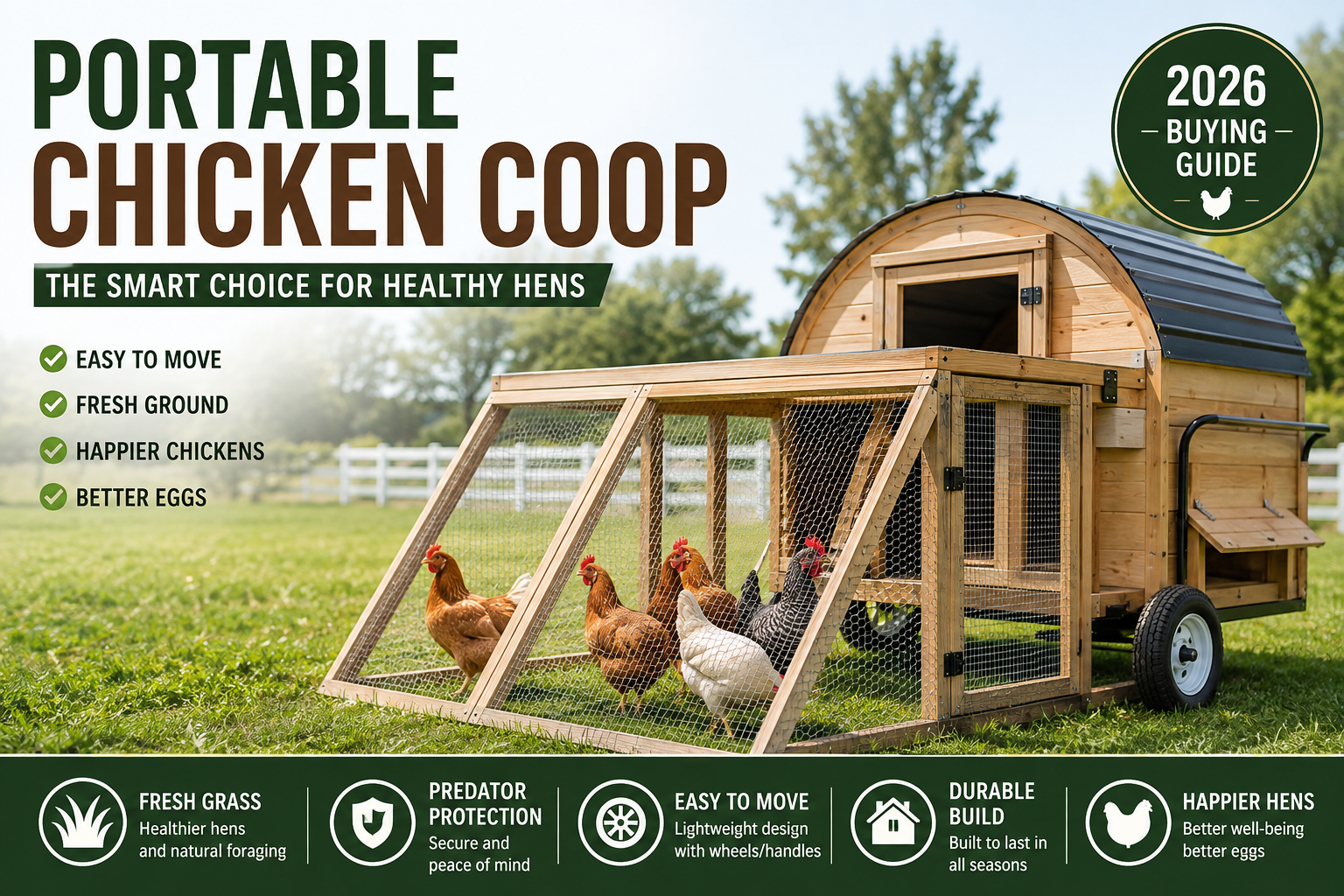
Portable Chicken Coop: A Smart Choice for 2026
A portable chicken coop gives backyard chicken keepers more flexibility, especially in 2026. Instead of keeping hens in one fixed area, you can move their shelter to fresh ground when needed. As a result, chickens get access to new grass while the ground around the coop gets time to recover.
For US backyard flock owners, this setup can also make daily chicken care easier. However, the best choice depends on flock size, climate, security, and how often you plan to move the coop.
Why Choose a Portable Chicken Coop?
A portable chicken coop offers several practical benefits for small and medium-sized flocks. Additionally, moving the coop can help spread manure across different areas of your yard.
Key benefits include:
- Fresh ground: Chickens can explore new areas regularly.
- Better lawn management: Moving the coop can reduce damage to one section.
- Flexible placement: You can move hens away from wet or muddy areas.
- Easy expansion: Many designs work well with a chicken coop with run.
- Natural foraging: Fresh grass and insects can provide extra enrichment.
A mobile chicken coop can also suit renters or homeowners who do not want a permanent structure.
Key Features to Consider
Before buying or building a portable chicken coop, examine its construction and daily usability.
Strong and Lightweight Design
The coop should remain sturdy while being easy enough for one or two people to move. Therefore, look for lightweight materials, strong handles, wheels, or a towable frame.
Predator Protection
Security should remain a top priority. Use strong wire mesh, secure doors, and protected openings. Additionally, check the frame for gaps where predators could enter.
Ventilation and Weather Protection
Good airflow helps reduce moisture and unpleasant odors. However, the coop should also protect chickens from rain, wind, snow, and extreme heat.
For hot climates, prioritize shade and cross-ventilation. In colder regions, provide protection from drafts while maintaining adequate airflow.
Space and Chicken Capacity
Avoid overcrowding. Each hen needs enough room to sleep, move, feed, and access the outdoor area. Therefore, always check the manufacturer’s recommended capacity before purchasing.
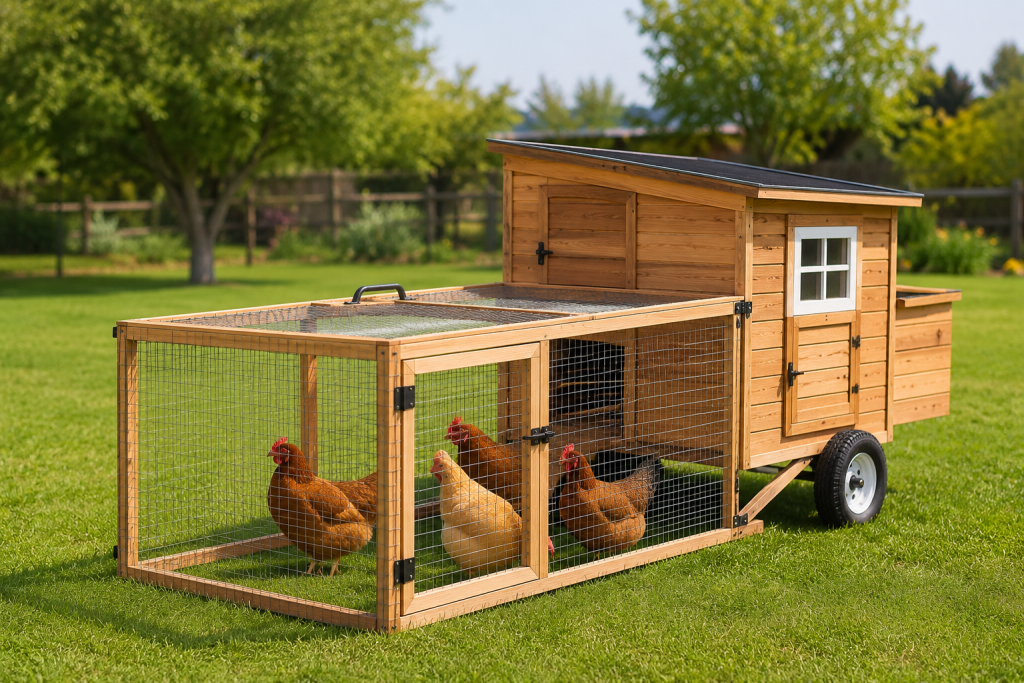
Types of Portable Chicken Coop
Different designs suit different backyard setups.
Chicken Tractor
A chicken tractor usually combines a lightweight shelter with an enclosed run. You can move it across grass, allowing chickens to forage while fertilizing the soil.
This option works especially well for owners with suitable outdoor space.
Wheeled Mobile Coop
A wheeled design makes frequent movement easier. Moreover, large models may work well for bigger flocks when the frame has durable wheels and balanced weight distribution.
Small Portable Coop
A small chicken coop can suit beginners with only a few hens. These models are usually easier to clean, move, and position in limited outdoor spaces.
How to Choose the Right Portable Chicken Coop
Use this simple buying guide before making a decision:
- Count your chickens: Choose enough space for your current flock.
- Check your climate: Look for suitable ventilation and weather protection.
- Measure your yard: Make sure you have enough room to move the unit.
- Inspect security: Choose predator-resistant doors and mesh.
- Check mobility: Wheels and handles should feel sturdy.
- Consider cleaning: Removable trays and accessible doors can save time.
- Review materials: Choose construction that can handle outdoor conditions.
Common Mistakes to Avoid
Even a quality portable chicken coop can cause problems when used incorrectly. First, do not overcrowd the housing. Second, avoid placing it permanently on wet or poorly drained ground.
Additionally, do not ignore predator risks simply because the coop is mobile. Check locks, mesh, and openings regularly. Finally, avoid choosing a model that is too heavy to move safely.
Maintenance and Care Tips
Regular maintenance keeps a portable chicken coop safer and more comfortable. Clean droppings and wet bedding frequently. Furthermore, inspect wheels, handles, hinges, locks, and mesh for damage.
Move the coop when the ground becomes heavily soiled or muddy. In addition, keep feeders and waterers clean and protected from contamination.
During extreme weather, monitor your chickens closely. If conditions become unsafe, move the coop to a more sheltered location or provide additional protection.
Conclusion
A portable chicken coop can be a practical solution for modern backyard chicken keeping. It provides flexibility, supports natural foraging, and can make yard management easier. However, always prioritize adequate space, predator protection, ventilation, durability, and easy movement.
If you are planning to raise chickens in 2026, compare several designs before buying. Choose a portable chicken coop that matches your flock size, local climate, yard space, and daily routine.
Leave a Reply