Predator-Proof Chicken Coop: The 2026 Safety Guide
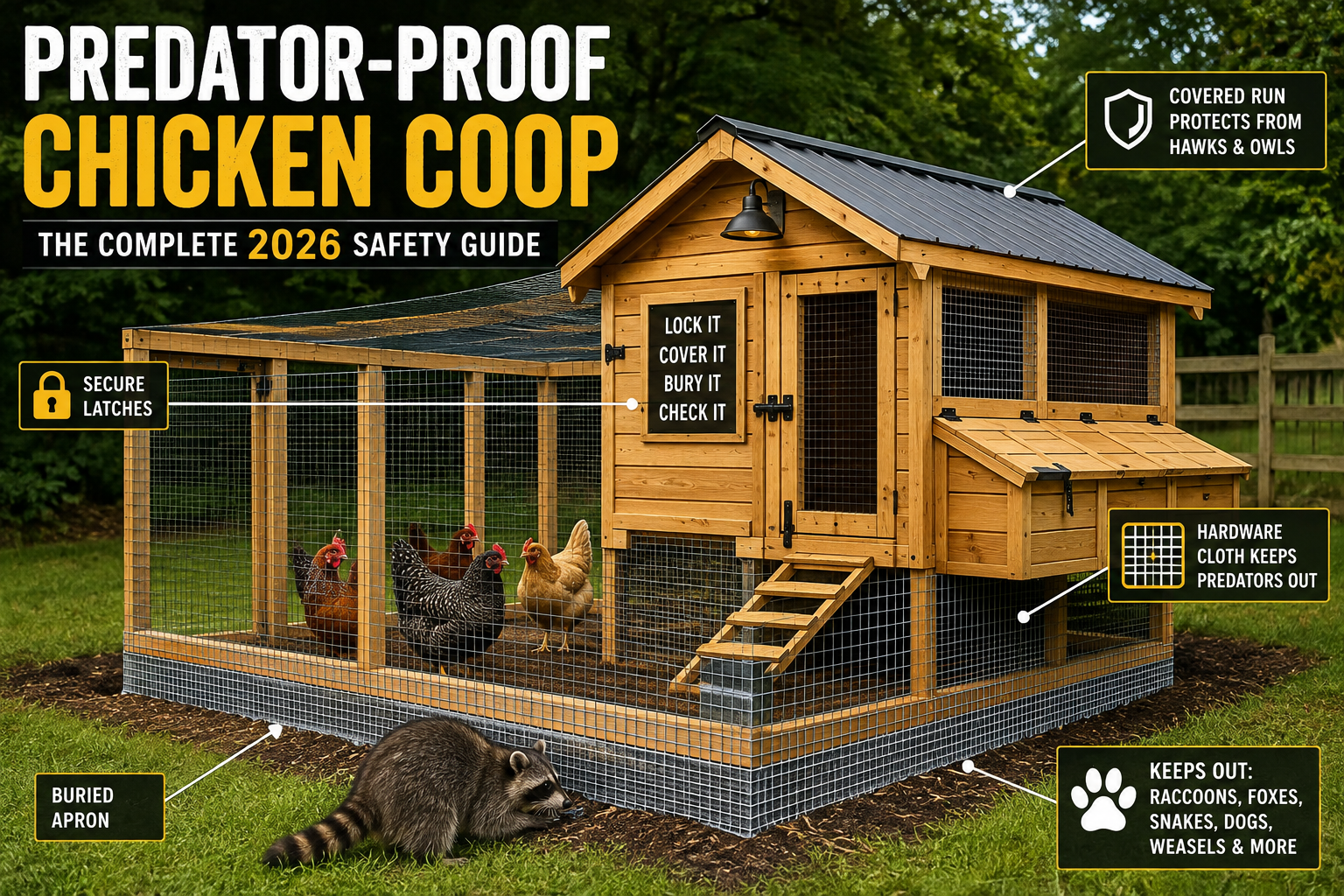
A Predator-Proof Chicken Coop is more important than ever for backyard poultry keepers. Foxes, raccoons, coyotes, snakes, dogs, weasels, hawks, and owls can all threaten chickens. Therefore, a secure coop should do more than keep birds inside. It should create several layers of protection against animals that climb, dig, squeeze, or attack from above.
Recent poultry guidance continues to stress secure housing, covered runs, strong mesh, and barriers around the ground.
Why a Predator-Proof Chicken Coop Matters
A weak fence can give predators an easy opportunity. However, a properly designed Predator-Proof Chicken Coop removes common entry points before an attack happens.
The best approach uses several defenses together:
- Strong welded hardware cloth
- Secure doors and latches
- A buried or outward-facing ground apron
- A covered chicken run
- Regular nighttime lock-up
- Clean storage for feed and food scraps
As a result, predators have fewer opportunities to reach your flock.
Key Features of a Predator-Proof Chicken Coop
Use Hardware Cloth
Chicken wire keeps chickens contained, but it should not serve as your main predator barrier. Instead, use strong hardware cloth over windows, vents, doors, and vulnerable sections.
Penn State Extension recommends heavy-gauge mesh for openings, while other university guidance recommends small-mesh fencing where raccoons and similar predators are common.
A chicken coop hardware cloth upgrade can therefore provide much better protection than ordinary chicken wire.
Protect the Ground
Digging predators often attack where the wall meets the soil. Therefore, extend hardware cloth around the perimeter.
Penn State Extension recommends burying wire at least 12 inches and bending the fence outward.
For extra protection, create an outward-facing apron. Additionally, secure the mesh firmly so animals cannot lift or pull it away.
Secure Every Door and Latch
A strong door is useless if a raccoon can open its latch. Therefore, choose a locking or two-step mechanism for every entry point.
Check doors each evening. If you use an automatic door, test it regularly to make sure it closes fully.
Types of Predator Protection
Raccoon-Proof Chicken Coop Features
Raccoons are clever and have strong paws. Consequently, simple hooks and weak wire can become serious vulnerabilities.
A raccoon-proof chicken coop should have:
- Small-mesh hardware cloth
- Strong screws and washers
- Locking latches
- Protected feed storage
- Secure nesting-box doors
Protection From Hawks and Owls
Predators can also attack from above. Therefore, do not leave the run open at the top.
University guidance recommends covering outdoor runs with mesh wire or netting to reduce attacks from hawks and owls.
Buying Guide: What Should You Look For?
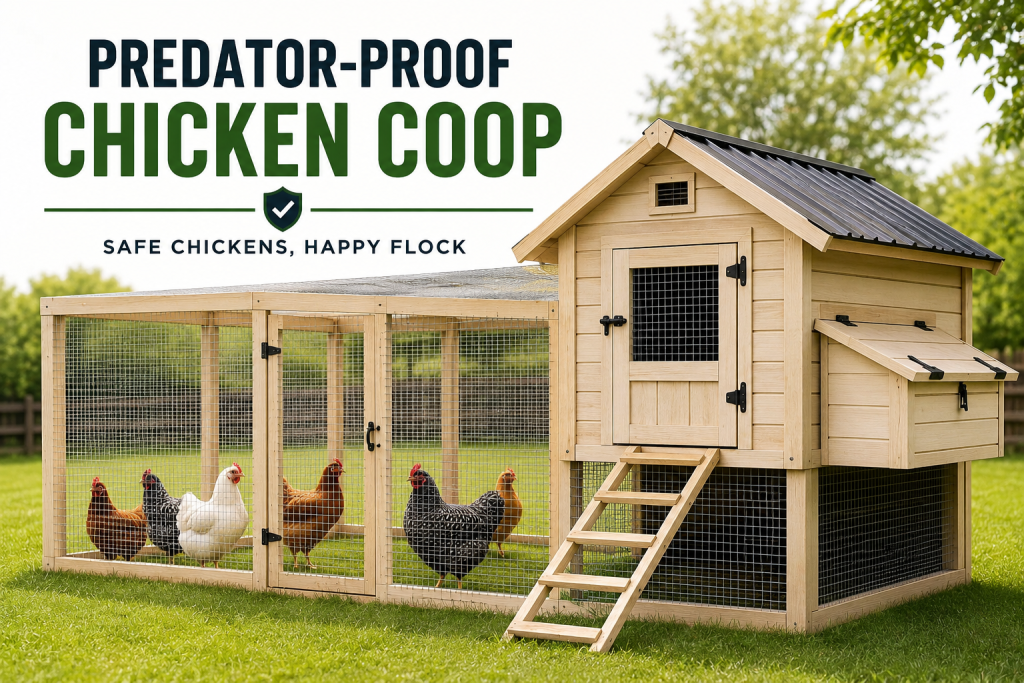
When choosing or building a Predator-Proof Chicken Coop, inspect the entire structure rather than focusing only on the walls.
Use this quick checklist:
- Inspect the mesh: Look for small openings and strong construction.
- Check the floor: Make sure predators cannot dig underneath.
- Test every latch: Try opening it from outside.
- Inspect the roof: Cover exposed runs against aerial predators.
- Check corners: Predators often target weak joints and gaps.
- Review ventilation: Keep airflow while protecting openings with strong mesh.
Additionally, choose a dry, well-drained location. Penn State Extension notes that good poultry housing should protect birds from weather, predators, injury, and theft.
Common Mistakes to Avoid
Even a well-built Predator-Proof Chicken Coop can fail because of small oversights.
Avoid these mistakes:
- Using chicken wire as the only security barrier
- Leaving doors open after dusk
- Forgetting to protect vents
- Leaving gaps beneath doors
- Failing to cover the run
- Leaving spilled feed outside
- Using weak staples or loose fasteners
Furthermore, inspect the perimeter after storms, digging, or ground movement. A tiny new gap can quickly become an entry point.
Maintenance Tips for 2026
Effective chicken coop predator protection requires ongoing checks. Therefore, inspect the coop at least once each week.
Look for:
- New holes or damaged mesh
- Loose screws and fasteners
- Digging around the perimeter
- Damaged doors or latches
- Gaps around vents and windows
- Signs of predator activity
Also, remove spilled food and keep the surrounding area clean. Predator-management guidance recommends reducing attractants and securing birds inside at night.
For 2026, Penn State Extension is also continuing education on predator control, including predator identification, coop security, wildlife deterrents, and regulations.
Conclusion
A Predator-Proof Chicken Coop does not depend on one product or one trick. Instead, it combines strong mesh, secure doors, ground protection, a covered run, and consistent daily checks.
Start by fixing the weakest point in your coop. Then inspect the structure regularly and improve each layer of protection. Build your Predator-Proof Chicken Coop today and give your flock a safer place to roost, feed, and thrive.
Leave a Reply