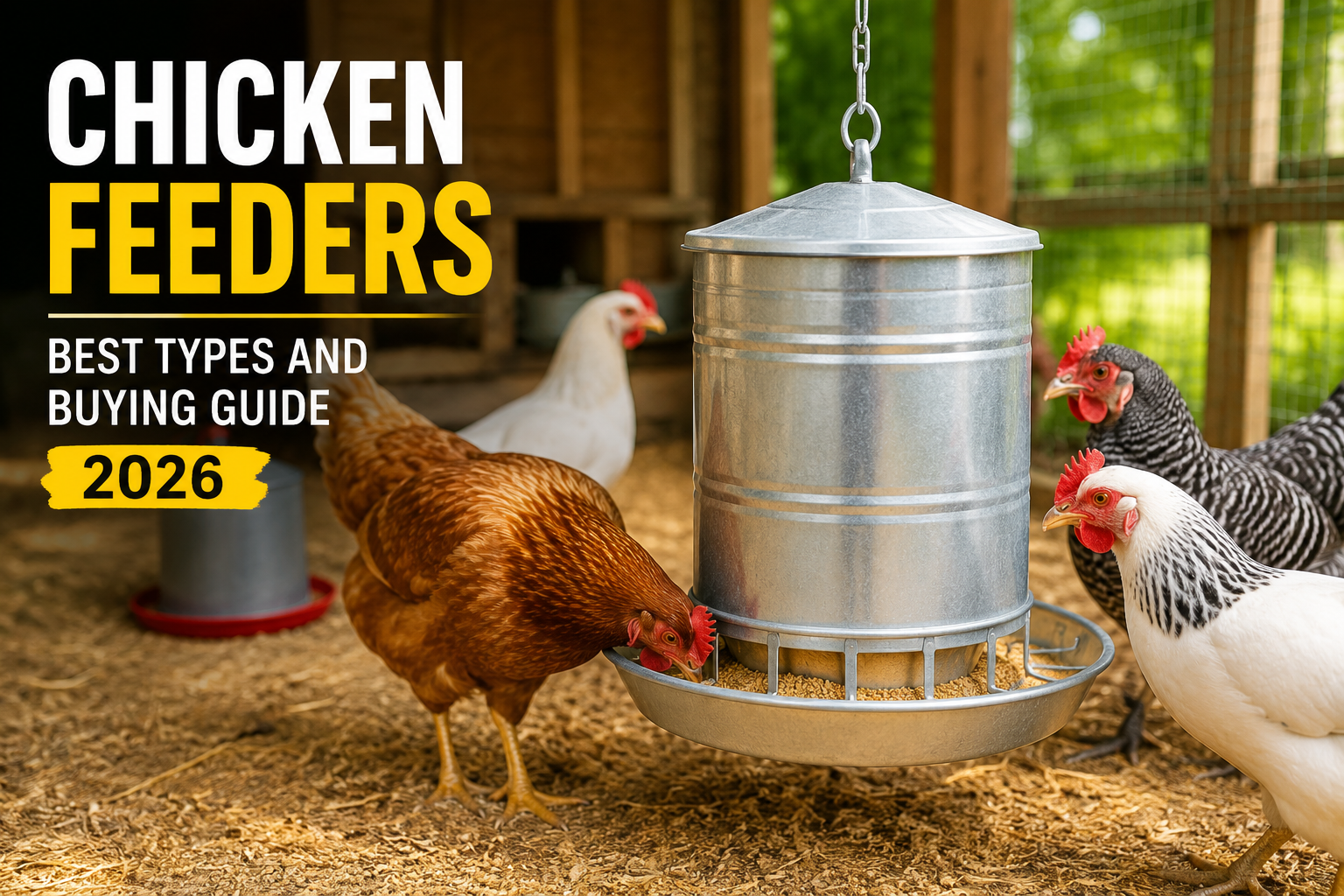
Chicken Feeders: Best Types and Buying Guide 2026
Choosing the right Chicken Feeders can make daily poultry care easier, cleaner, and more affordable. In 2026, backyard chicken owners and small poultry keepers are looking for feeders that reduce waste while keeping feed fresh and protected.
A good feeder does more than hold food. It can help prevent contamination, limit spilled feed, and give every bird better access to its daily ration. Therefore, choosing the right design is an important part of responsible chicken keeping.
Why Chicken Feeders Matter
Feed is one of the biggest ongoing costs for poultry owners. As a result, reducing unnecessary waste can save money over time. The University of Minnesota Extension notes that feeder designs with inward-curved sides can make it harder for chickens to scatter feed.
Additionally, feeder placement affects cleanliness. A raised or hanging feeder can reduce the amount of bedding and manure that enters the feed.
The best Chicken Feeders should:
- Keep feed dry and protected.
- Reduce spilling and scratching.
- Give all birds enough feeding space.
- Be easy to refill and clean.
- Match the size and age of your chickens.
Key Features to Consider
1. Size and Feeding Space
Choose a feeder based on flock size and bird age. For example, young chicks need smaller equipment that they can easily reach.
As birds grow, increase their available feeder space. UMN Extension recommends about 1 linear inch per chick initially and more space as pullets grow.
2. Height and Design
The feeder should sit around the appropriate height for your chickens. A hanging chicken feeder can also discourage birds from standing inside the feed container.
Furthermore, adjustable designs allow you to raise the feeder as the flock grows. This can help reduce contamination and feed waste.
3. Material and Durability
Plastic feeders are usually lightweight and easy to clean. However, metal options can provide greater durability for some poultry setups.
Look for strong construction, smooth surfaces, and parts that are easy to remove for cleaning.
Types of Chicken Feeders
Tube and Hanging Feeders
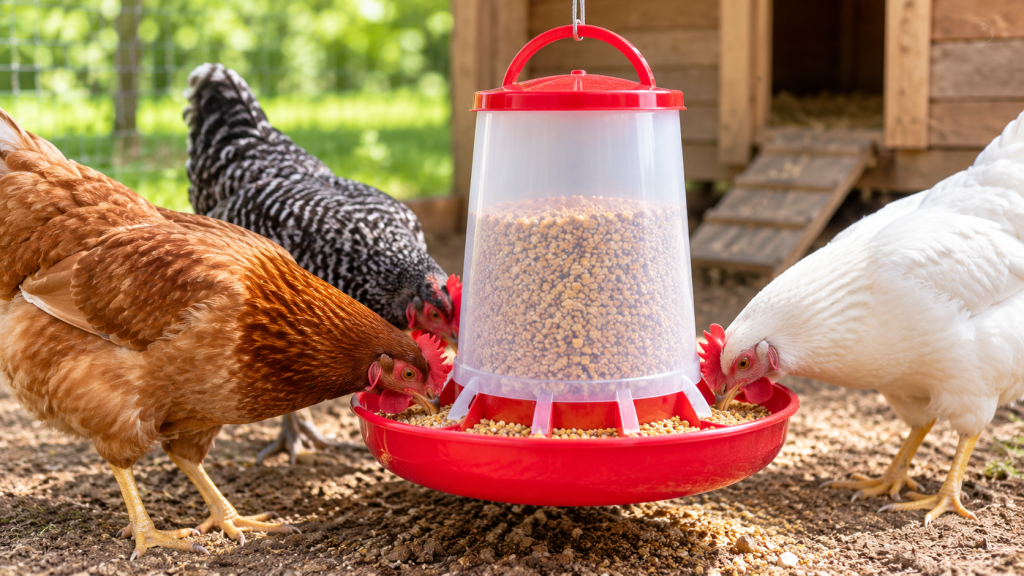
Tube feeders are popular because they can hold a useful amount of feed while taking up limited floor space. They work particularly well with pellets and crumbles.
Hanging models can also be adjusted as chickens grow. Therefore, they are a practical choice for many backyard flocks.
Trough Feeders
Trough feeders provide a long feeding area, making them useful when several chickens need access at the same time.
However, open troughs can allow chickens to scratch feed onto the ground. Choose a design with a suitable lip or guard to limit waste.
Automatic Chicken Feeders
Automatic chicken feeders can help owners who cannot refill feed every day. Some models use timed mechanisms, while others provide larger storage capacity.
Additionally, automatic systems can reduce the need for frequent manual feeding. However, always check the mechanism regularly to make sure feed continues to flow correctly.
No-Waste Chicken Feeders
A no-waste chicken feeder focuses on reducing spillage and scratching. Designs with protective openings or inward-curved sides can help keep feed inside the container.
For many backyard owners, this type can provide better value because less feed ends up in the litter.
How to Choose the Best Chicken Feeders
Before buying, consider these five points:
- Flock size: Choose enough feeding space for every bird.
- Bird age: Select equipment that chicks and adult chickens can reach safely.
- Feed type: Make sure the feeder works well with mash, pellets, or crumbles.
- Location: Keep feed protected from rain, moisture, wild birds, and pests.
- Cleaning: Select a design that is easy to empty, wash, and inspect.
Common Chicken Feeder Mistakes to Avoid
Even good Chicken Feeders can cause problems when used incorrectly.
Avoid these common mistakes:
- Filling the feeder completely when chickens waste large amounts.
- Leaving old or damp feed inside.
- Placing feeders directly on dirty bedding.
- Using a feeder that is too small for the flock.
- Ignoring spilled feed around the coop.
- Choosing a design that does not suit the type of feed.
UMN Extension recommends keeping feeders clean and protecting them from wild birds as part of good poultry biosecurity.
Chicken Feeder Maintenance Tips
Clean your Chicken Feeders regularly and remove old feed before adding fresh feed. Check for moisture, mold, cracks, or blocked feeding openings.
Also, clean the surrounding area when feed spills. This helps discourage pests and keeps the chicken area more hygienic.
Store extra feed in a moisture-proof, animal-proof container. This is especially important because damp or spoiled feed can lose quality.
Final Thoughts
The best Chicken Feeders should match your flock size, chicken age, feed type, and daily routine. Whether you choose a hanging model, tube feeder, trough, automatic system, or no-waste design, focus on cleanliness, durability, accessibility, and waste reduction.
In 2026, smarter feeder choices can make backyard poultry care simpler and more efficient. Choose the right Chicken Feeders for your flock, keep them clean, and check them regularly for safe and reliable feeding.
Leave a Reply