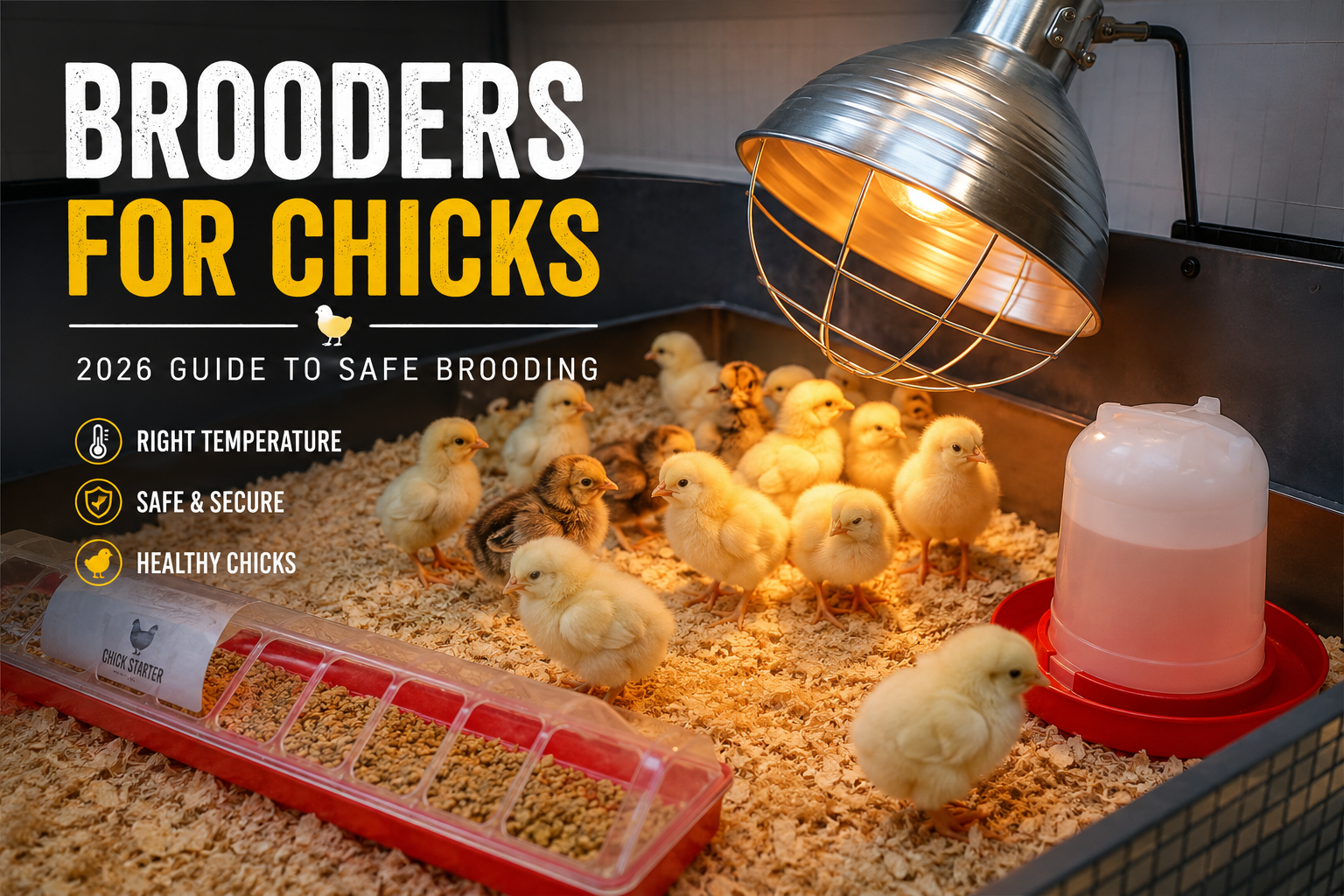
Brooders for Chicks: 2026 Guide to Safe Brooding
Raising baby chickens can be exciting, but the first few weeks need careful attention. Brooders for Chicks provide the warmth, shelter, and controlled environment young birds need while they develop. For US backyard keepers, small farmers, and poultry owners worldwide, choosing the right brooder can make a major difference in chick survival and growth.
In 2026, poultry keepers have more options than ever, from traditional heat lamps to electric heating panels. However, good brooding still depends on safe temperatures, clean equipment, enough space, fresh water, and proper feed.
Why Brooders for Chicks Matter
Newly hatched chicks cannot control their body temperature well during their early days. Therefore, they need an external heat source until they develop enough feathers.
A properly prepared brooder helps:
- Maintain a stable temperature
- Protect chicks from drafts and predators
- Give birds easy access to food and water
- Reduce crowding and piling
- Provide a clean, dry place to grow
According to Penn State Extension, chicks should generally have about 92–95°F at chick level during the first week. The temperature can then decrease by about 5°F each week.
Key Features of Brooders for Chicks
Temperature Control
Temperature is one of the most important parts of a chicken brooder setup. Measure the heat at chick level rather than relying only on the room temperature.
Watch chick behavior as well. If birds crowd tightly under the heat source, they may be cold. Conversely, if they move far away from the heat, they may be too warm. Comfortable chicks usually spread evenly around the heated area.
Safe Heat Source
A brooder heat lamp remains a popular option, but it must be secured properly. Electric heating panels and other approved heating systems can also provide controlled warmth.
Additionally, keep heat sources away from flammable materials. Never depend on an unstable lamp or loose electrical cord.
Space and Ventilation
Chicks need enough room to move toward or away from heat. Therefore, avoid overcrowding the brooder as the birds grow.
Penn State recommends increasing floor space as chicks age, starting at about ¼ square foot per bird during the first week and increasing it during later weeks.
Ventilation also matters. However, avoid direct drafts across the chicks.
Types of Brooders for Chicks
Heat Lamp Brooders
Heat lamps are widely used because they can produce substantial heat for groups of chicks. However, they require careful installation and monitoring.
For extra protection, some poultry guides recommend having more than one heat source so chicks are not left without heat if one lamp fails.
Electric Heating Panel Brooders
Heating panels provide a different approach. Chicks can move underneath the warm surface when they need heat and then move away when they are comfortable.
As a result, these systems can offer a practical option for smaller backyard flocks.
DIY Box Brooders
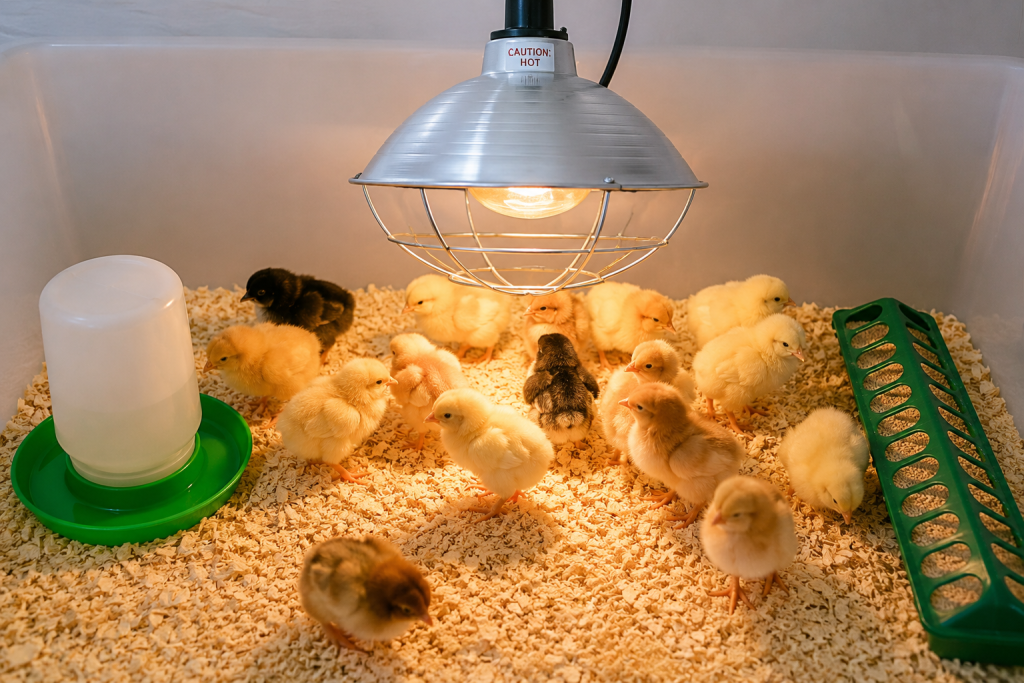
A simple wooden or plastic brooder can work well for a small flock. The design should provide:
- A secure heat source
- Dry, absorbent bedding
- Fresh water
- Chick starter feed
- Good ventilation
- Protection from drafts
Buying Guide: How to Choose
Before buying Brooders for Chicks, consider these factors:
- Flock size: Choose equipment with enough capacity for your number of birds.
- Temperature control: Look for reliable adjustment and monitoring.
- Safety: Select stable equipment designed for poultry use.
- Cleaning: Smooth, accessible surfaces make sanitation easier.
- Energy use: Compare electricity or fuel requirements.
- Expansion: Make sure the brooder can accommodate growing chicks.
Additionally, prepare the brooder before the chicks arrive. Penn State Extension recommends setting up and warming the brooding area in advance so the equipment and floor reach the correct temperature.
Common Brooder Mistakes to Avoid
Even a good brooder can fail because of poor management. Avoid these common mistakes:
- Overheating chicks
- Allowing cold drafts
- Using slippery flooring
- Keeping feeders directly beneath the heat source
- Providing too little space
- Leaving dirty waterers
- Ignoring unusual chick behavior
Wet litter should also be removed promptly. Furthermore, young chicks should receive a suitable starter feed rather than adult layer feed.
Maintenance and Care Tips
Check Brooders for Chicks several times each day, especially during the first week. Observe whether chicks eat, drink, move normally, and spread comfortably around the heat.
Clean waterers regularly and keep bedding dry. As chicks grow, increase their available floor, feeder, and water space.
Before bringing in a new batch, thoroughly clean and disinfect previously used brooding equipment. Penn State recommends preparing equipment well before chicks arrive.
Conclusion
The right Brooders for Chicks can give young poultry a warm, safe start during their most vulnerable weeks. In 2026, poultry keepers can choose from heat lamps, heating panels, and DIY systems, but safe temperature control and daily observation remain essential.
Choose equipment based on flock size, safety, energy use, and ease of cleaning. Most importantly, watch the chicks themselves because their behavior often provides the clearest sign that the brooder temperature is right.
Ready to raise healthier chicks? Choose Brooders for Chicks that provide reliable warmth, enough space, and a safe environment from day one.
Leave a Reply