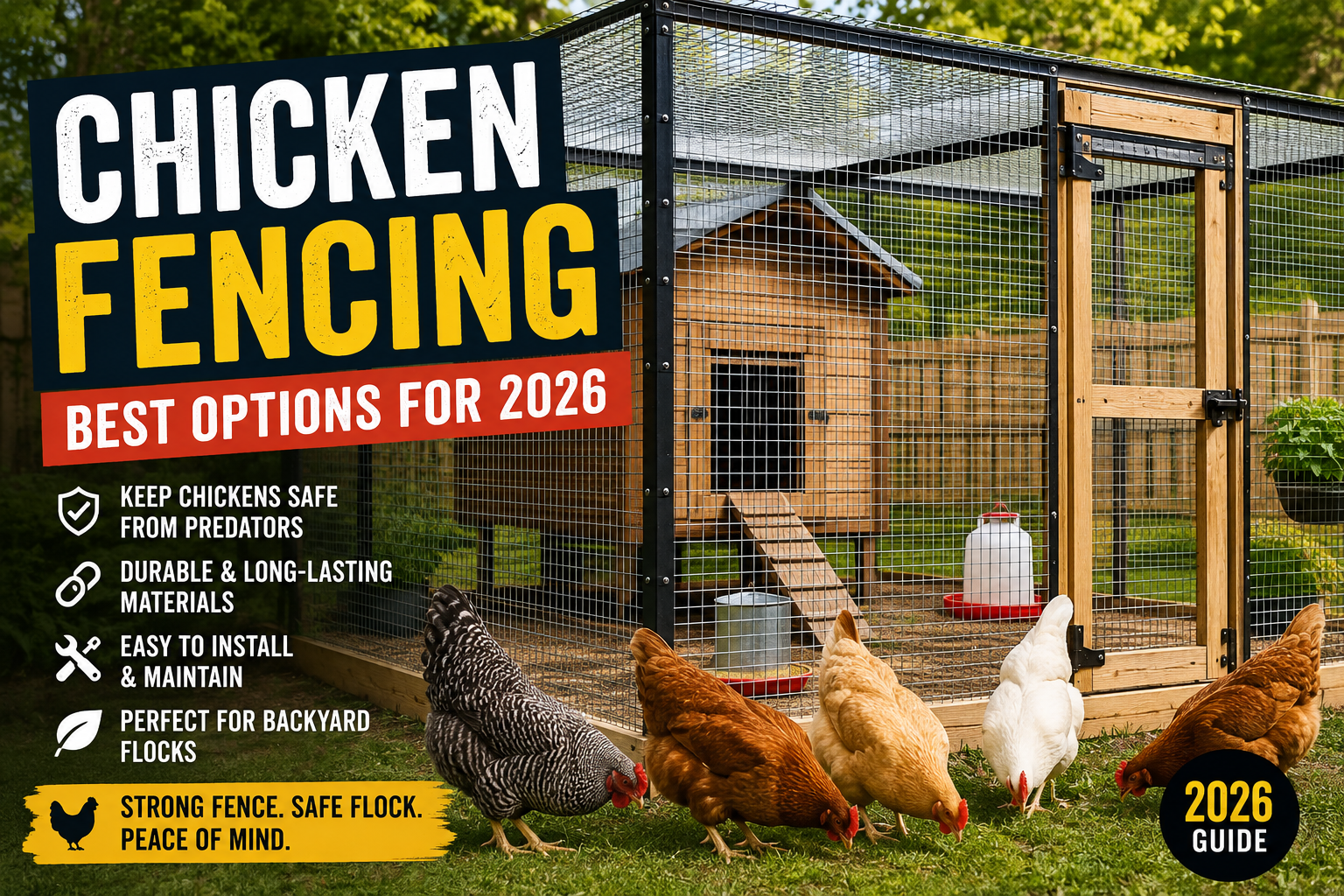
Chicken Fencing: Best Options for 2026
If you keep backyard chickens, Chicken Fencing is one of the most important investments you can make. A strong fence keeps your flock inside while helping protect it from foxes, raccoons, dogs, hawks, and other predators. In 2026, poultry owners are also paying more attention to secure outdoor runs and better protection from wild birds.
For US homeowners, the right setup can make daily chicken care easier. However, fencing should do more than mark a boundary. It should provide real protection without creating sharp edges or dangerous gaps.
Why Chicken Fencing Matters
Good Chicken Fencing gives chickens a safe area to scratch, forage, dust-bathe, and move around. Additionally, a secure enclosure can reduce the risk of predator attacks and prevent birds from wandering into gardens, roads, or neighboring properties.
Penn State Extension recommends covered outdoor runs, secure nighttime housing, buried fencing, and small mesh openings to improve poultry protection.
A well-designed enclosure can also help with flock management. As a result, owners can spend less time chasing escaped birds and more time checking feed, water, eggs, and overall flock condition.
Key Features to Consider in Chicken Fencing
Mesh Size
Mesh size matters because predators can squeeze through surprisingly small openings. Therefore, choose a strong, small-mesh material when predator protection is the main goal.
Hardware cloth is often a better security choice than lightweight chicken wire. Small openings can also reduce contact between chickens and wild birds.
Height and Coverage
The fence should be tall enough to discourage chickens from flying or jumping over it. Additionally, covering the top of the run can help protect birds from hawks and owls.
Penn State Extension recommends covering outdoor runs with mesh wire or netting to reduce risks from flying predators.
Underground Protection
A fence can fail if predators simply dig underneath it. For this reason, bury the lower portion of the fencing or create an outward-facing buried apron.
Penn State Extension recommends burying wire along the pen border and extending part of it outward to discourage digging predators.
Types of Chicken Fencing
Hardware Cloth
Hardware cloth is a popular choice for secure Chicken Fencing. It provides smaller openings and strong protection around coops, doors, windows, and runs.
However, quality varies. Choose a durable galvanized product designed for outdoor use.
Poultry Netting
Poultry netting works well when you need a lightweight boundary. It is especially useful for temporary areas and movable chicken runs.
However, lightweight netting alone may not stop determined predators. Therefore, combine it with stronger barriers where predator pressure is high.
Electric Poultry Fencing
Electric fencing can provide an additional layer of protection. Penn State Extension notes that electric fencing can help deter predators around poultry areas, particularly where digging or climbing creates problems.
How to Choose the Right Chicken Fencing
Before buying, consider these factors:
- Predators: Identify foxes, raccoons, dogs, coyotes, snakes, or birds of prey common in your area.
- Flock size: Larger flocks need more outdoor space.
- Location: Check slopes, drainage, trees, and possible digging points.
- Permanence: Decide whether you need a permanent run or movable fencing.
- Budget: Spend more on critical security points rather than decorative features.
Also, check local city, county, or homeowners’ association rules before building a permanent poultry enclosure. Poultry regulations can vary by location.
Common Chicken Fencing Mistakes
Even expensive fencing can fail because of poor installation. Avoid these common mistakes:
- Leaving gaps around gates and doors
- Using weak mesh against strong predators
- Failing to secure the fence bottom
- Leaving sharp or loose wire exposed
- Not covering the top of the outdoor run
- Forgetting to lock chickens inside at night
Additionally, inspect the entire enclosure after storms or heavy wind. A small opening can quickly become a major escape or predator problem.
Chicken Fencing Maintenance Tips
Regular maintenance keeps Chicken Fencing effective throughout the year. Walk around the enclosure every week and check for holes, loose posts, damaged mesh, and signs of digging.
Trim vegetation near the fence when it becomes difficult to inspect the ground. Also, repair damaged sections immediately instead of waiting for a larger problem.
Wild birds can create additional biosecurity concerns. Current poultry guidance recommends separating backyard flocks from wild birds and using enclosed shelters and fenced outdoor areas where practical.
Conclusion
The best Chicken Fencing depends on your flock, property, budget, and local predator pressure. However, strong mesh, secure gates, buried protection, and an enclosed top can create a much safer chicken run.
In 2026, focus on protection rather than appearance alone. Choose durable materials, inspect the enclosure regularly, and improve weak points before predators find them. With the right Chicken Fencing, your chickens can enjoy outdoor space while you gain greater peace of mind.
Ready to upgrade your flock’s protection? Start by checking your current fence for gaps, weak mesh, and digging points today.
Leave a Reply