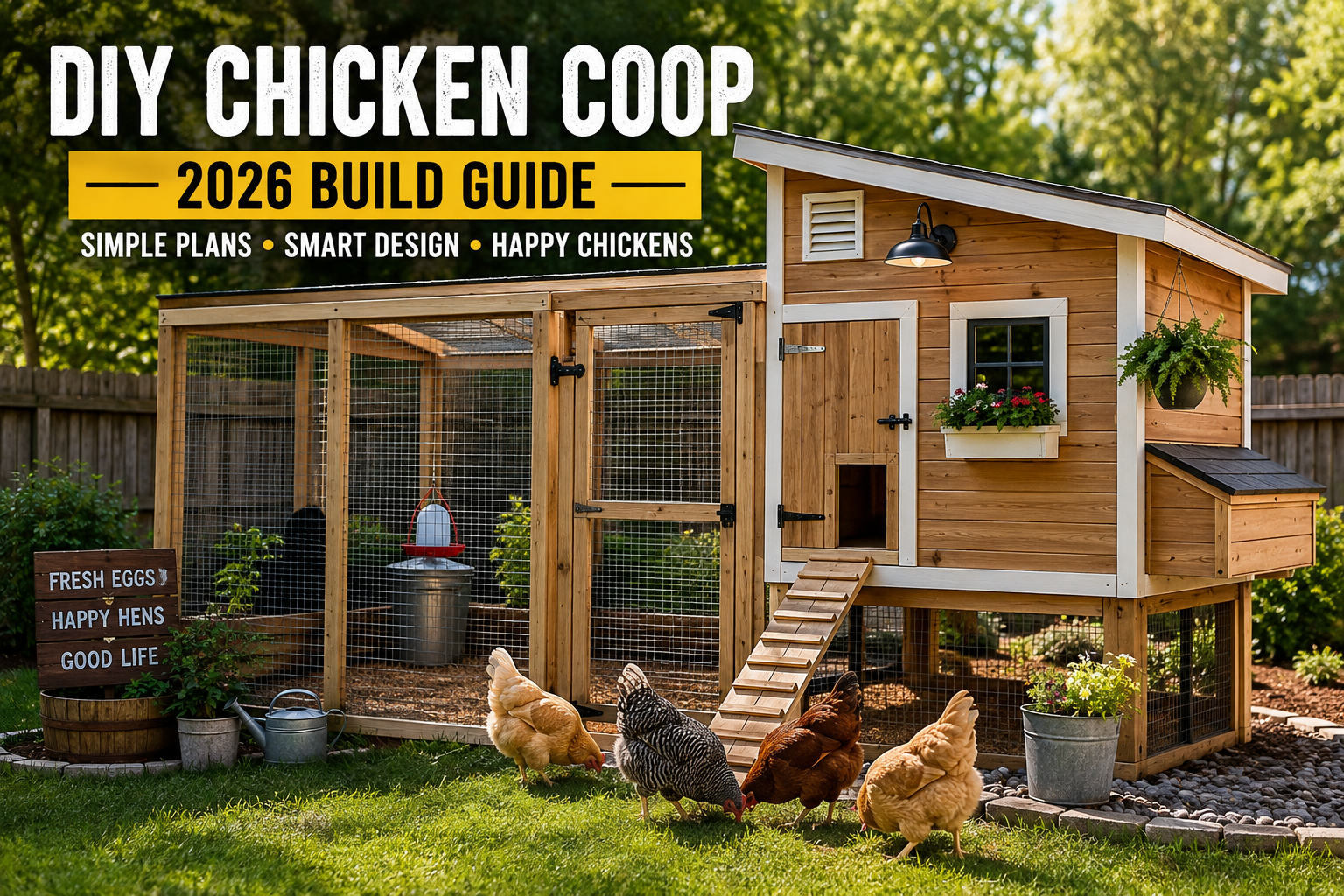
DIY Chicken Coop: Complete 2026 Guide
Building a DIY Chicken Coop can save money while giving your flock a safer, more comfortable home. In 2026, backyard chicken keeping remains popular with families who want fresh eggs and a more self-sufficient lifestyle. However, a good coop needs more than four walls and a roof. It must provide enough space, fresh air, protection, and easy access for daily care.
Why Build a DIY Chicken Coop?
A well-planned DIY Chicken Coop gives you control over the design, materials, and budget. Additionally, you can adapt the structure to your climate, yard size, and flock.
The main benefits include:
- Lower construction costs
- Custom sizing for your flock
- Easier cleaning and egg collection
- Better predator protection
- Flexible ventilation and shade
- Reuse of suitable wood and other materials
As a result, a homemade coop can be more practical than a small prebuilt model.
DIY Chicken Coop Size and Key Features
Before buying materials, calculate your flock size. Oregon State University Extension recommends at least 3 square feet of indoor space per bird when chickens have outdoor access, while birds without outdoor access need considerably more room.
DIY Chicken Coop Ventilation
Fresh air is essential. However, ventilation should not create cold drafts directly around roosting birds. Place vents high on walls or near the roof so warm, moist air can escape.
Predator Protection
A predator-proof chicken coop should protect birds from animals that dig, climb, squeeze, or attack from above. Use strong welded mesh around openings and secure doors with reliable latches.
Additionally, extend fencing below ground or create an outward-facing barrier around the run. Penn State Extension recommends burying wire around the perimeter to discourage digging predators.
Nest Boxes and Roosts
Provide approximately one nest box for every three to four hens. Place the boxes below the roosting bars so chickens are less likely to sleep inside them.
For roosts, use smooth lumber with rounded edges. Most importantly, remove sharp screws, exposed wire, and other hazards.
Types of DIY Chicken Coop Designs
Raised Chicken Coop
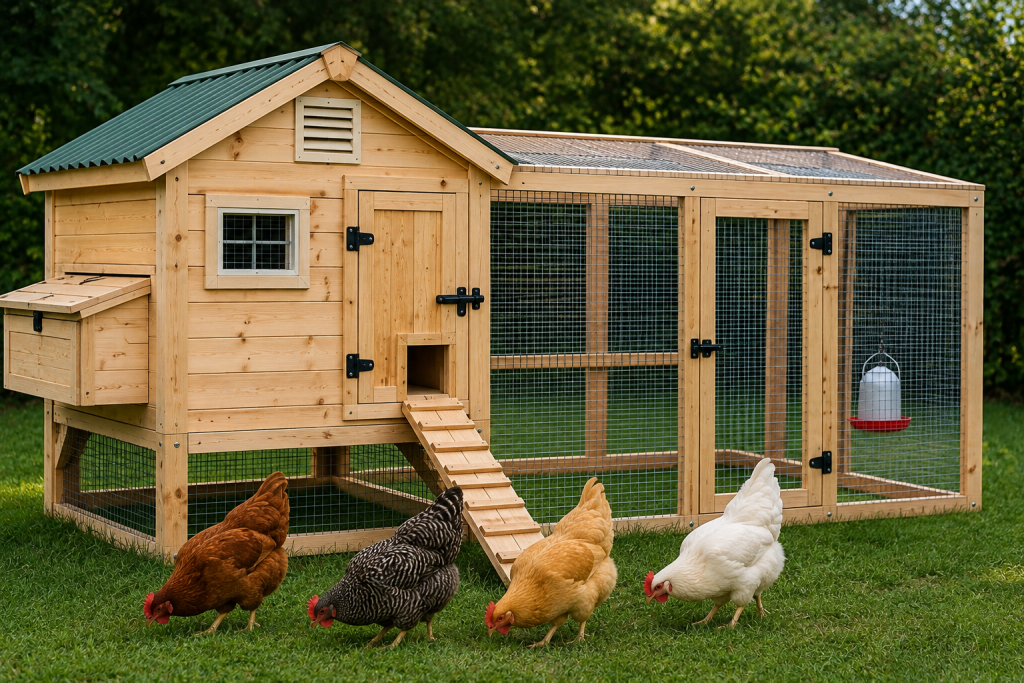
A raised design keeps the floor away from damp ground and can improve airflow underneath. It also makes cleaning easier in some yards.
Walk-In Coop
A walk-in DIY Chicken Coop provides excellent access for cleaning, collecting eggs, and checking birds. Therefore, it works especially well for larger flocks.
Converted Shed Coop
An unused shed can become a practical backyard chicken coop. Add ventilation, nesting boxes, roosts, secure doors, and predator-resistant mesh. A 2026 guide from the Old Farmer’s Almanac also highlights shed conversion as a practical coop approach.
DIY Chicken Coop Buying and Building Guide
Before construction, make a simple plan and shopping list.
- Check local chicken and zoning rules.
- Decide how many birds you will keep.
- Choose a dry, well-drained location.
- Measure the indoor coop and outdoor run.
- Select weather-resistant materials.
- Plan doors, nest boxes, roosts, and ventilation.
- Add predator protection before bringing chickens home.
Local rules vary widely. Therefore, contact your city or county planning office before construction, especially in urban or suburban areas.
Common DIY Chicken Coop Mistakes
Even a simple project can fail when planning gets rushed. Avoid these common problems:
- Making the coop too small
- Using weak fencing against predators
- Blocking ventilation during winter
- Leaving gaps around doors and windows
- Building on poorly drained ground
- Placing nest boxes above roosts
- Choosing difficult-to-clean flooring
- Forgetting shade in hot climates
Additionally, do not assume that “chicken wire” provides complete predator protection. Stronger welded hardware cloth offers better security for vulnerable openings.
DIY Chicken Coop Maintenance Tips
A DIY Chicken Coop needs regular care. Clean wet bedding quickly and check the floor, roof, mesh, hinges, and locks for damage.
Every few days, inspect water and feeders. Furthermore, look for signs of digging around the run. Repair weak points immediately rather than waiting for a predator to find them.
In hot weather, increase shade and airflow. In cold weather, keep the coop dry and draft-free while maintaining necessary ventilation. Chickens generally handle cold better when their housing stays dry.
Final Thoughts
A successful DIY Chicken Coop does not need to look complicated. Instead, focus on space, ventilation, drainage, easy cleaning, and strong predator protection. Start with a clear chicken coop plan, build slightly beyond your minimum space needs, and inspect the finished structure carefully.
Ready to start? Sketch your DIY Chicken Coop today, check your local rules, gather your materials, and build a safe home your flock can enjoy throughout 2026.
Leave a Reply