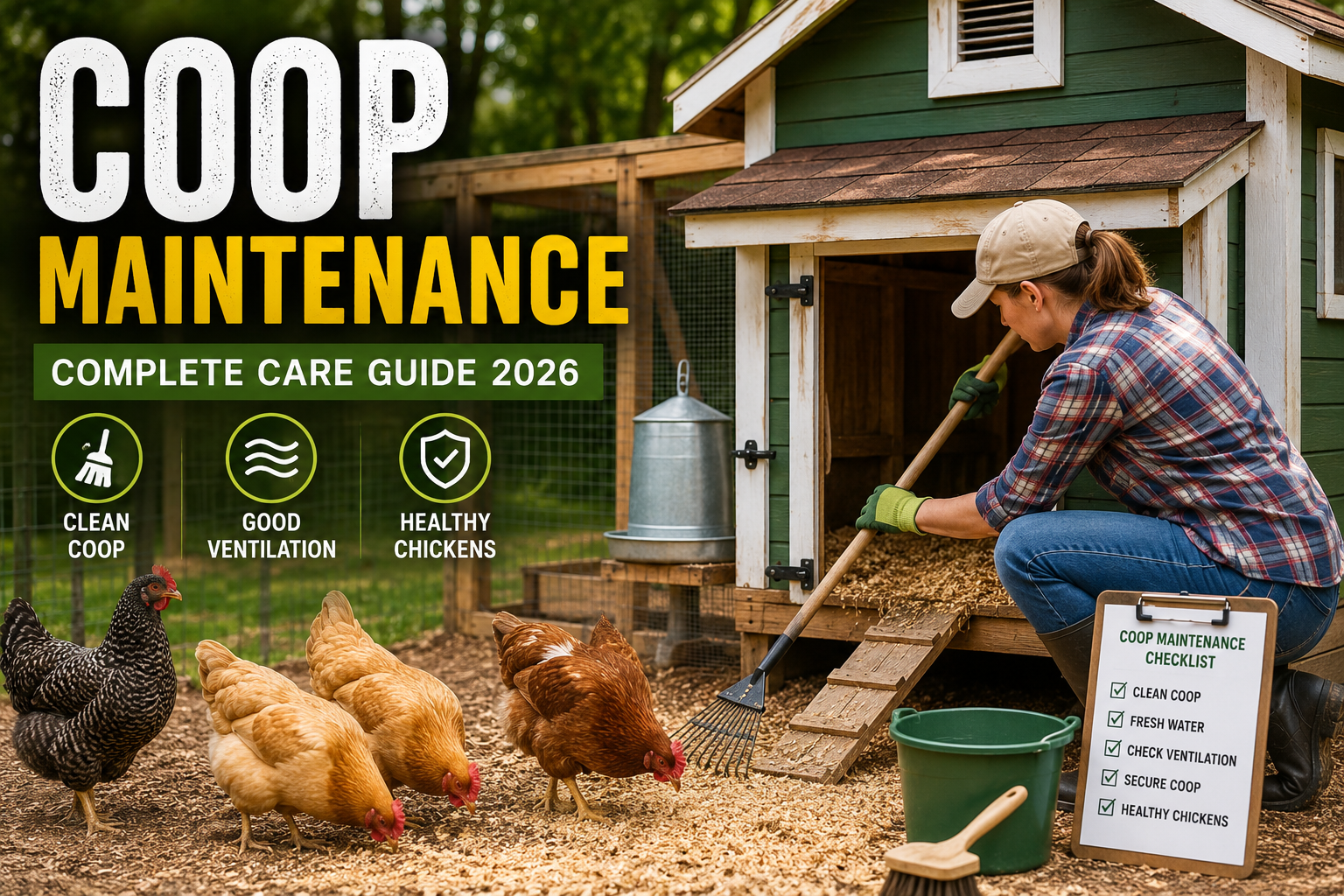
Coop Maintenance 2026: Complete Chicken Coop Care Guide
Coop Maintenance is one of the most important parts of keeping a healthy backyard flock in 2026. A clean, dry, secure coop protects chickens from disease, pests, predators, moisture, and extreme weather. For US chicken keepers and flock owners worldwide, a simple maintenance routine can prevent expensive problems later.
Good Coop Maintenance does not have to take hours every day. Instead, a consistent schedule makes cleaning easier and gives you a chance to spot problems before they affect your birds.
Why Coop Maintenance Matters
Regular Coop Maintenance improves both chicken welfare and flock management. Wet bedding, manure buildup, poor airflow, and dirty water can create unhealthy conditions.
For example, University of Minnesota Extension recommends regular coop cleaning to control sanitation and odor. It also advises cleaning feeders and waterers regularly and completing a thorough cleaning at least once a year.
Additionally, proper ventilation helps remove moisture and ammonia. Penn State Extension notes that good airflow should bring in fresh air while removing excess moisture and gases from the coop.
Key Coop Maintenance Factors
1. Chicken Coop Cleaning
Coop Maintenance should include regular removal of manure, wet bedding, spilled feed, feathers, and debris.
A practical routine includes:
- Remove wet or heavily soiled bedding.
- Clean dirty areas around roosts and nests.
- Wash feeders and waterers regularly.
- Remove cobwebs and accumulated dust.
- Deep-clean the coop periodically.
- Allow cleaned surfaces to dry before adding fresh bedding.
Clean surroundings also help reduce odors and pests. UMN Extension recommends weekly cleaning or cleaning as needed to control manure and odor buildup.
2. Chicken Coop Ventilation
Good Coop Maintenance also means checking airflow throughout the year. Ventilation removes stale air and moisture, but openings should not create strong drafts directly over roosting birds.
Check vents, windows, and roof openings for:
- Blockages
- Dust buildup
- Broken screens
- Water leaks
- Poor airflow
If you smell ammonia or see condensation, improve ventilation and remove wet manure or bedding.
3. Chicken Bedding Maintenance
Dry bedding is essential. Wood shavings and properly managed straw can help keep the floor comfortable and reduce moisture.
However, remove wet patches quickly, especially around waterers. Wet litter can increase ammonia and create an uncomfortable environment for chickens.
Types of Coop Maintenance
Daily Maintenance
Daily Coop Maintenance should focus on basic checks:
- Provide clean, fresh water.
- Check feed supplies.
- Remove obvious wet bedding.
- Collect eggs.
- Observe chickens for unusual behavior.
- Check doors and locks.
Weekly Maintenance
Weekly tasks should include more detailed Coop Maintenance:
- Clean feeders and waterers.
- Remove accumulated manure.
- Replace badly soiled bedding.
- Inspect nest boxes.
- Check vents and windows.
- Look for signs of rodents or pests.
- Inspect fences and doors.
Seasonal Maintenance
Seasonal checks are also important. Before winter, inspect cracks, drafts, insulation, ventilation, and water systems. During hot weather, prioritize airflow, shade, and reliable access to fresh water.
How to Build a Simple Maintenance Routine
A good Coop Maintenance schedule should be realistic for your flock size.
Every day: check birds, water, feed, doors, and obvious messes.
Every week: clean equipment, refresh bedding, remove manure, and inspect the structure.
Every month: inspect for parasites, rodents, damaged hardware, leaks, and ventilation problems.
At least once a year: perform a deeper cleaning and inspect the entire coop and surrounding run.
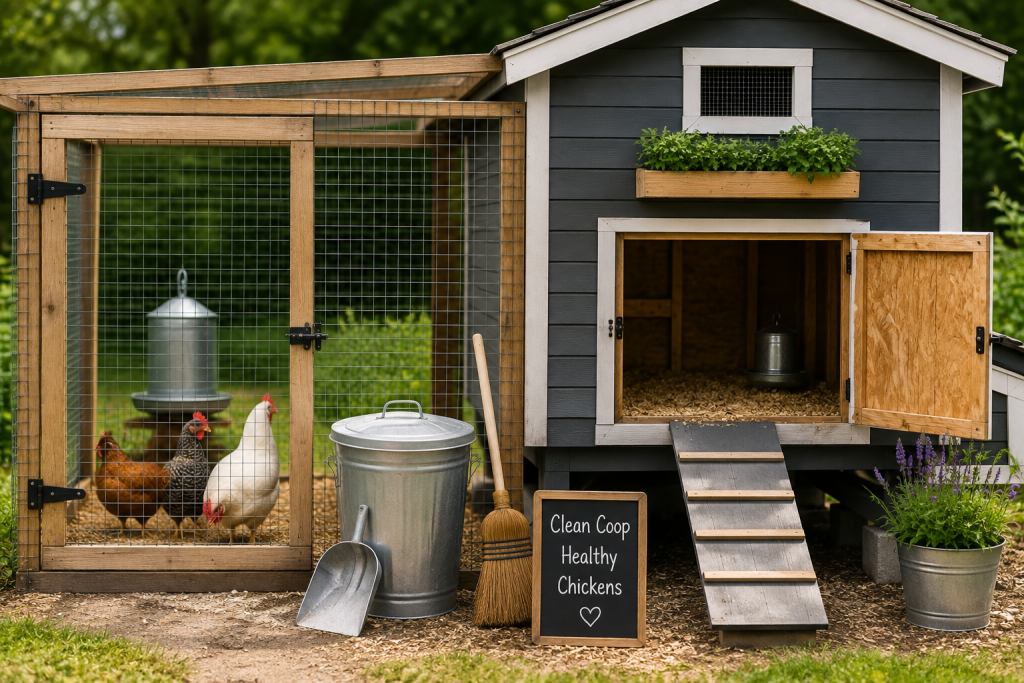
Common Coop Maintenance Mistakes to Avoid
Even experienced chicken keepers can overlook small problems. Avoid these common mistakes:
- Closing every ventilation opening during cold weather.
- Allowing wet bedding to remain for too long.
- Leaving spilled feed around the coop.
- Ignoring small holes that rodents or predators can use.
- Forgetting to clean waterers.
- Using strong cleaning products incorrectly.
- Overcrowding the coop.
- Failing to inspect the roof for leaks.
Biosecurity matters as well. Penn State Extension recommends limiting contact with wild birds, controlling rodents, cleaning equipment, and using appropriate biosecurity practices to reduce disease risks.
Smart Coop Maintenance Tips for 2026
Modern flock owners can make Coop Maintenance easier with simple upgrades.
Consider using:
- Automatic chicken doors
- Easy-clean nest boxes
- Removable manure trays
- Covered feeders
- Automatic water systems
- Predator-resistant hardware cloth
- Ventilation monitors
- Motion-activated security lights
These tools can reduce daily work while improving safety and cleanliness.
University of Minnesota Extension chicken care guide
Conclusion
Effective Coop Maintenance protects your chickens and makes flock ownership easier. By keeping bedding dry, maintaining ventilation, cleaning equipment, controlling pests, and checking for structural problems, you can create a safer environment throughout 2026.
Start with a simple daily, weekly, monthly, and seasonal routine. As a result, Coop Maintenance becomes a manageable habit instead of a difficult chore. Take a few minutes today to inspect your coop and fix the first problem you find.
Leave a Reply