Chicken Nesting Boxes: What You Need to Know in 2026
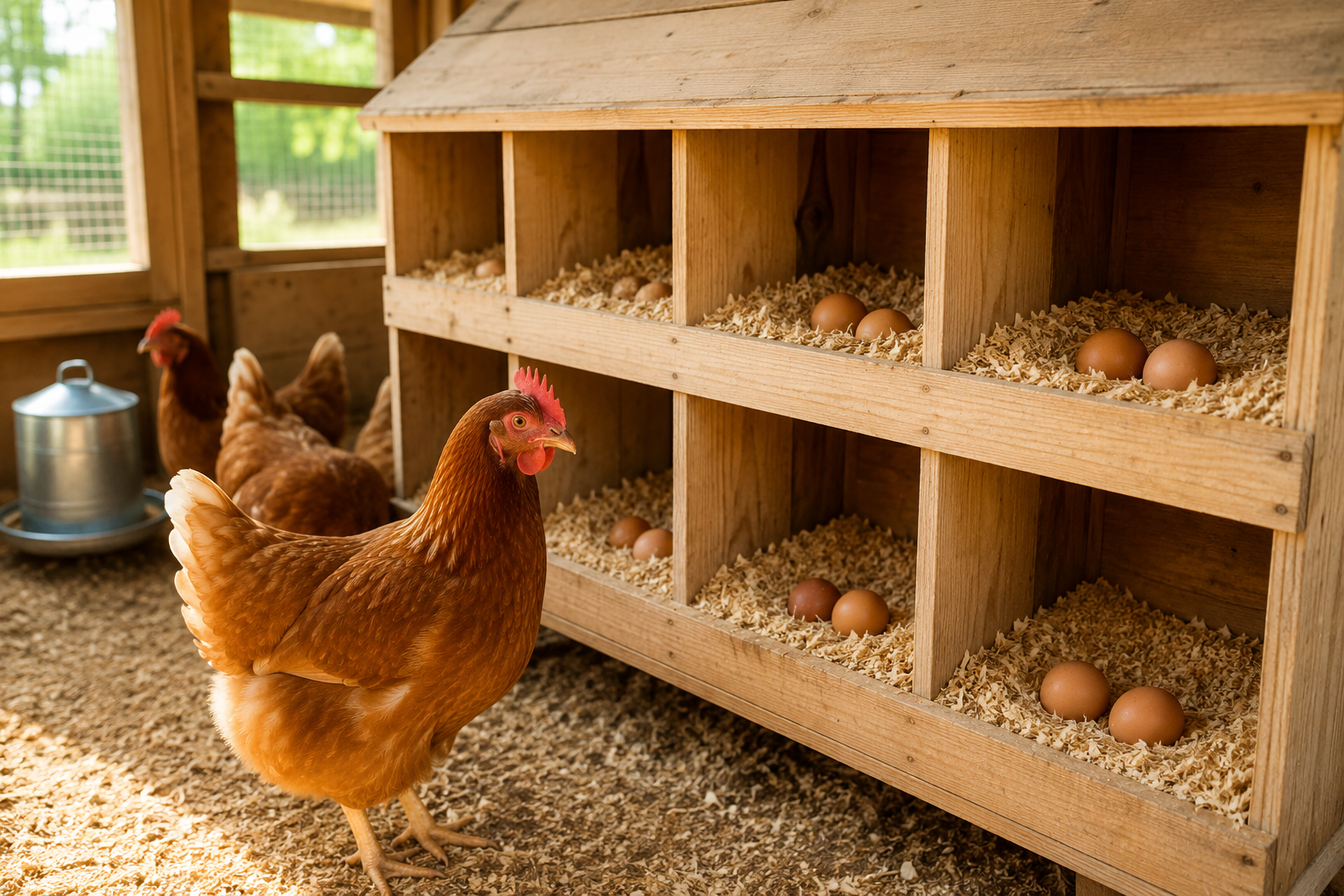
Chicken Nesting Boxes are one of the most important parts of a well-designed chicken coop. They give hens a quiet, safe place to lay eggs. Additionally, the right nest can help keep eggs cleaner, reduce breakage, and make daily egg collection easier.
For backyard chicken keepers, choosing the right nesting setup can make a big difference. However, simply adding a box is not enough. Size, height, location, bedding, ventilation, and cleanliness all matter.
Current poultry guidance continues to recommend providing enough nesting space for the flock. Penn State Extension recommends at least a 12-by-12-inch nest and generally suggests one nest for about every four hens, while other extension guidance recommends one for every four to five birds.
Why Chicken Nesting Boxes Matter
Good Chicken Nesting Boxes encourage hens to lay in one predictable location. As a result, you can collect eggs faster and spend less time searching around the coop.
A suitable nest also protects eggs from unnecessary damage. Clean, dry bedding provides cushioning and helps absorb moisture. Moreover, a secluded nesting area can make hens feel more comfortable.
The main benefits include:
- Cleaner eggs
- Less egg breakage
- Easier daily collection
- Better coop organization
- More comfortable laying conditions
- Reduced risk of hens laying in hidden corners
Chicken Nesting Boxes: Key Features to Consider
1. Choose the Right Chicken Nest Box Size
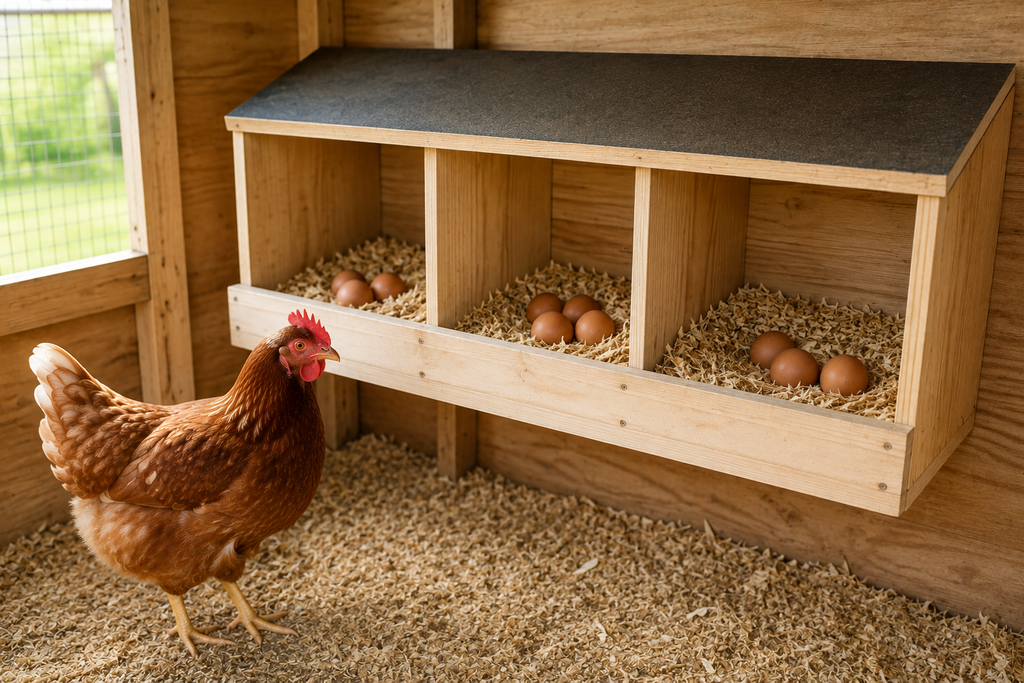
A standard chicken nest box size should give a hen enough room to enter, turn, and sit comfortably. A 12-by-12-inch box works well for many standard-sized hens, while larger breeds may need more space.
However, avoid making the box excessively large. If several hens try to share one oversized nest, eggs can become crowded and break more easily.
2. Use Clean Nesting Box Bedding
Nesting box bedding should stay clean and dry. Pine shavings are commonly recommended because they provide cushioning and absorb moisture.
Additionally, replace soiled bedding quickly. Damp or dirty bedding can lead to stained eggs and an unhygienic laying environment.
3. Place Boxes in a Quiet Location
Hens usually prefer a darker and more secluded place to lay. Therefore, position chicken coop nesting boxes away from busy walkways, bright windows, and noisy equipment.
Keep nests separate from roosting areas. This reduces the amount of manure that can fall into the boxes overnight. Penn State recommends placing nests at least 2 feet above the floor and away from roosts.
Types of Chicken Nesting Boxes
Wooden Nesting Boxes
Wooden boxes are traditional and affordable. They can also be built into many DIY chicken coop designs.
However, untreated or rough wood can absorb moisture and make cleaning harder. Use smooth, durable surfaces where possible.
Plastic Nesting Boxes
Plastic boxes are easy to wipe down and resist moisture. Therefore, they can be a practical choice for keepers who want simple maintenance.
Roll-Away Nesting Boxes
Roll-away designs allow eggs to move into a protected collection area after laying. As a result, hens have less opportunity to peck or damage freshly laid eggs.
These systems can be especially useful for larger backyard flocks.
How Many Nesting Boxes Do You Need?
A common starting point is one nest for every four to five hens.
For example:
- 4 hens: 1–2 nests
- 8 hens: 2 nests
- 12 hens: 3 nests
- 16 hens: 4 nests
- 20 hens: 4–5 nests
Interestingly, hens may still choose the same favorite box even when several are available. Therefore, provide enough options but expect some boxes to be more popular than others.
Buying Guide: How to Choose the Best Chicken Nesting Boxes
Before buying, check these factors:
- Size: Make sure the box suits your chicken breed.
- Material: Choose a durable and easy-to-clean surface.
- Access: Make egg collection simple.
- Ventilation: Avoid damp, poorly ventilated locations.
- Bedding: Ensure the design can hold clean nesting material.
- Installation: Secure boxes firmly so they do not move.
- Flock size: Provide enough nests for your number of hens.
Common Mistakes to Avoid
Even the best chicken nesting boxes can fail when they are poorly installed or maintained.
Avoid these common mistakes:
- Making boxes too small
- Putting nests directly under roosts
- Using wet or dirty bedding
- Placing boxes in bright, busy areas
- Providing too few nests
- Leaving broken eggs inside
- Ignoring hens that repeatedly lay on the coop floor
Egg collection also matters. Extension guidance recommends collecting eggs regularly because longer exposure increases the chance of dirt, breakage, and other problems.
Chicken Nesting Boxes Maintenance Tips
Check the nests regularly and remove dirty bedding as needed. Furthermore, clean the boxes thoroughly when bedding becomes soiled or compacted.
Collect eggs at least once or twice each day. UMN Extension also recommends twice-daily egg collection as part of normal chicken care.
Finally, inspect each box for cracks, sharp edges, loose hardware, pests, or moisture. A few minutes of maintenance can keep the laying area cleaner and safer.
Conclusion
Choosing the right Chicken Nesting Boxes can improve egg collection, reduce breakage, and create a more comfortable coop for your hens. Start with the correct size, provide enough nests, use clean bedding, and place them in a quiet area.
Additionally, inspect and clean your Chicken Nesting Boxes regularly. With the right setup and consistent care, your hens can have a clean, comfortable place to lay throughout 2026.
Ready to improve your chicken coop? Choose suitable Chicken Nesting Boxes based on your flock size, chicken breed, and available space.
Leave a Reply