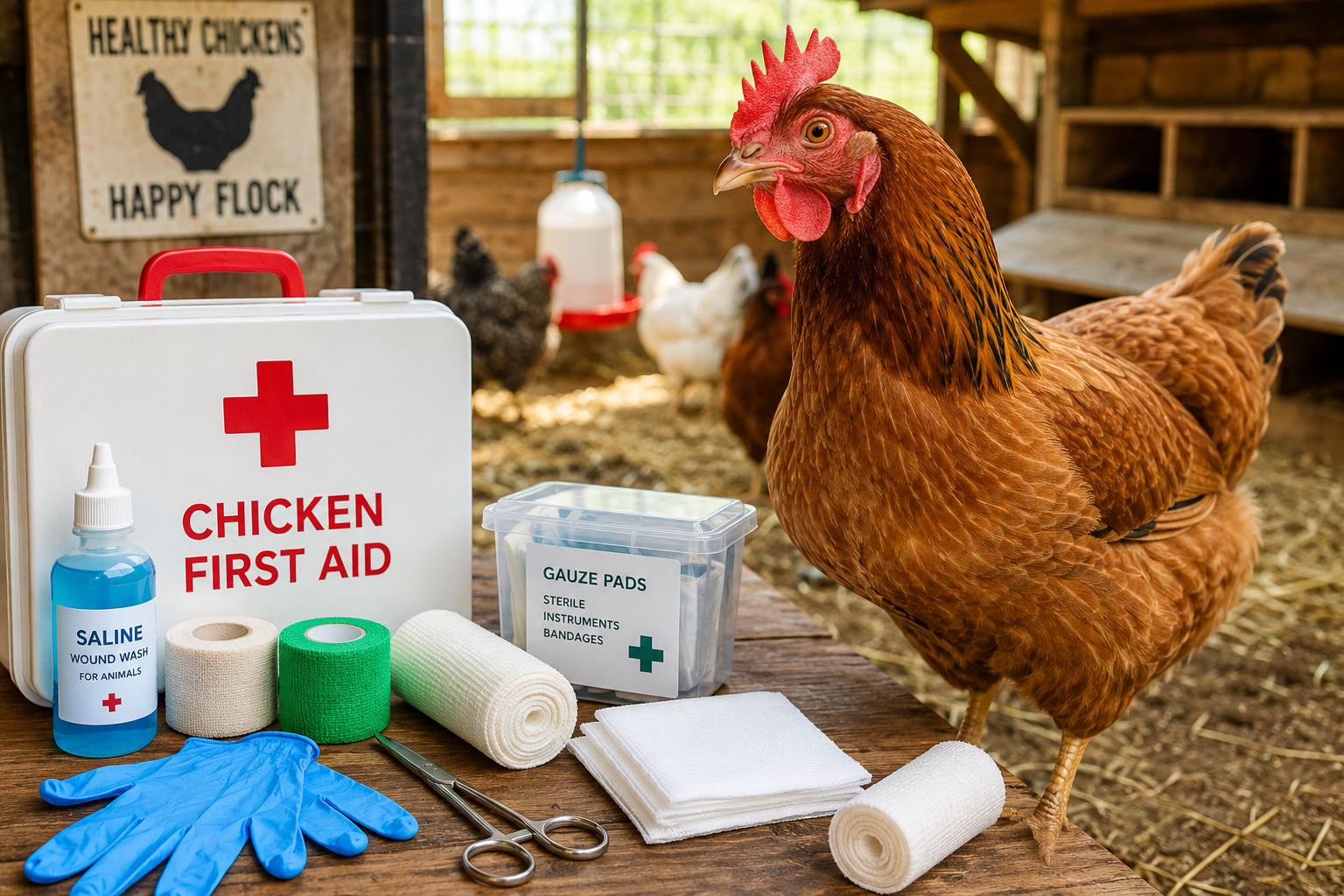
Chicken First Aid: Essential 2026 Care Guide
Chicken First Aid can make a major difference when a backyard chicken gets injured, stressed, or suddenly becomes unwell. For US and worldwide poultry keepers, quick action can help prevent a small problem from becoming a serious one.
However, first aid does not replace professional veterinary care. Instead, it provides short-term support while you assess the chicken and decide what to do next.
Why Chicken First Aid Matters in 2026
Chickens can suffer injuries from flock fights, sharp objects, predators, falls, or accidents around the coop. Additionally, heat, cold, poor housing, and stressful conditions can affect poultry health.
A prepared keeper can respond calmly instead of searching for supplies during an emergency.
Basic Chicken First Aid can help you:
- Control minor bleeding
- Clean small wounds
- Protect injured skin
- Separate an injured bird from the flock
- Monitor changes in behavior
- Support safe recovery while seeking veterinary advice
Chicken First Aid Kit Essentials
A small poultry first aid kit should stay clean, organized, and easy to reach. Therefore, check your supplies regularly and replace anything expired, dirty, or damaged.
Basic Supplies
Consider keeping:
- Sterile gauze pads
- Clean bandages
- Disposable gloves
- Saline wound-cleaning solution
- Clean towels
- Tweezers
- Small scissors
- Digital thermometer
- Disposable syringes for appropriate veterinary-directed use
- A separate recovery box
You can also add a [external link placeholder: reputable veterinary poultry-care resource] for professional guidance.
Safe Wound Care
Chicken wound care should begin with gentle handling. Move the bird to a quiet, clean area and inspect the injury carefully.
For a minor surface wound, gently clean it with an appropriate sterile solution. Avoid aggressive scrubbing because it can damage tissue.
If bleeding continues, appears heavy, or comes from a serious injury, contact a veterinarian promptly.
Chicken First Aid for Common Problems
Different emergencies require different responses. Consequently, never assume that one treatment works for every injury.
Cuts and Minor Wounds
Small cuts may occur after fighting or contact with sharp objects. First, separate the injured chicken from aggressive flock members.
Then inspect the wound and gently clean visible dirt. Keep the bird somewhere clean and dry while you monitor its condition.
If the wound is deep, badly contaminated, swollen, or infected-looking, seek veterinary care.
Sprains and Leg Injuries
A chicken that suddenly avoids walking may have an injury. However, limping can also signal other health problems.
Place the bird in a safe recovery area with easy access to food and water. Do not force a chicken to walk or attempt complicated splinting without professional advice.
Predator or Serious Injuries
Predator attacks require special attention. Even when an injury looks small, deeper tissue damage or infection may exist.
Keep the chicken warm, quiet, and separated. Then contact an avian or poultry veterinarian as soon as possible.
Chicken First Aid: When to Call a Vet
First aid should never delay professional treatment when a chicken has a serious problem.
Seek veterinary advice quickly if you notice:
- Heavy or uncontrolled bleeding
- Trouble breathing
- Severe weakness or collapse
- Deep wounds
- Suspected broken bones
- Serious predator injuries
- Eye injuries
- Severe swelling
- Inability to stand
- Sudden neurological signs
Additionally, contact a veterinarian if the chicken does not improve or its condition gets worse.
How to Use Chicken First Aid Safely
Good handling reduces stress. Therefore, approach an injured chicken slowly and support its body securely.
Keep the recovery space:
- Clean and dry
- Quiet and low-stress
- Safe from other chickens
- Free from sharp objects
- Easy to monitor
Provide normal access to clean water and appropriate feed unless a veterinarian advises otherwise.
Never give human medicines to a chicken without veterinary guidance. Some medications can be dangerous to birds or may create food-safety concerns.
Common Mistakes to Avoid
Even experienced keepers can make mistakes during an emergency. Fortunately, most are preventable.
Avoid these common errors:
- Ignoring small wounds.
- Returning an injured bird to the flock too soon.
- Using dirty equipment.
- Applying unsuitable household chemicals.
- Giving human medication without veterinary advice.
- Delaying treatment for serious injuries.
- Handling a distressed chicken too roughly.
As a result, a simple first aid plan can improve both safety and decision-making.
Chicken First Aid Maintenance Tips
Check your kit every few months. Replace used supplies immediately so you are ready for the next emergency.
Also, inspect your coop and run for hazards. Remove exposed nails, sharp wire, broken equipment, and other objects that could cause injuries.
Additionally, monitor flock behavior every day. Early changes can sometimes reveal health or injury concerns before they become obvious.
Final Thoughts
A prepared poultry keeper can respond faster when an accident happens. However, Chicken First Aid should focus on safe temporary care, careful observation, and timely veterinary support.
Build a simple first aid kit, inspect your flock daily, and keep emergency supplies ready. Most importantly, learn to recognize serious symptoms and seek professional help when needed.
Ready to prepare your flock for emergencies? Create your poultry first aid kit today and review your coop for potential hazards.