Coccidiosis in Chickens: Complete 2026 Guide to Prevention, Treatment, and Healthy Flocks
Keeping chickens healthy starts with understanding common diseases. Coccidiosis in Chickens remains one of the biggest challenges for backyard keepers and commercial poultry farms in 2026. However, early detection and proper management can prevent serious losses. If you raise chickens in the United States or anywhere else in the world, learning about this disease will help protect your flock.
Why Coccidiosis in Chickens Matters
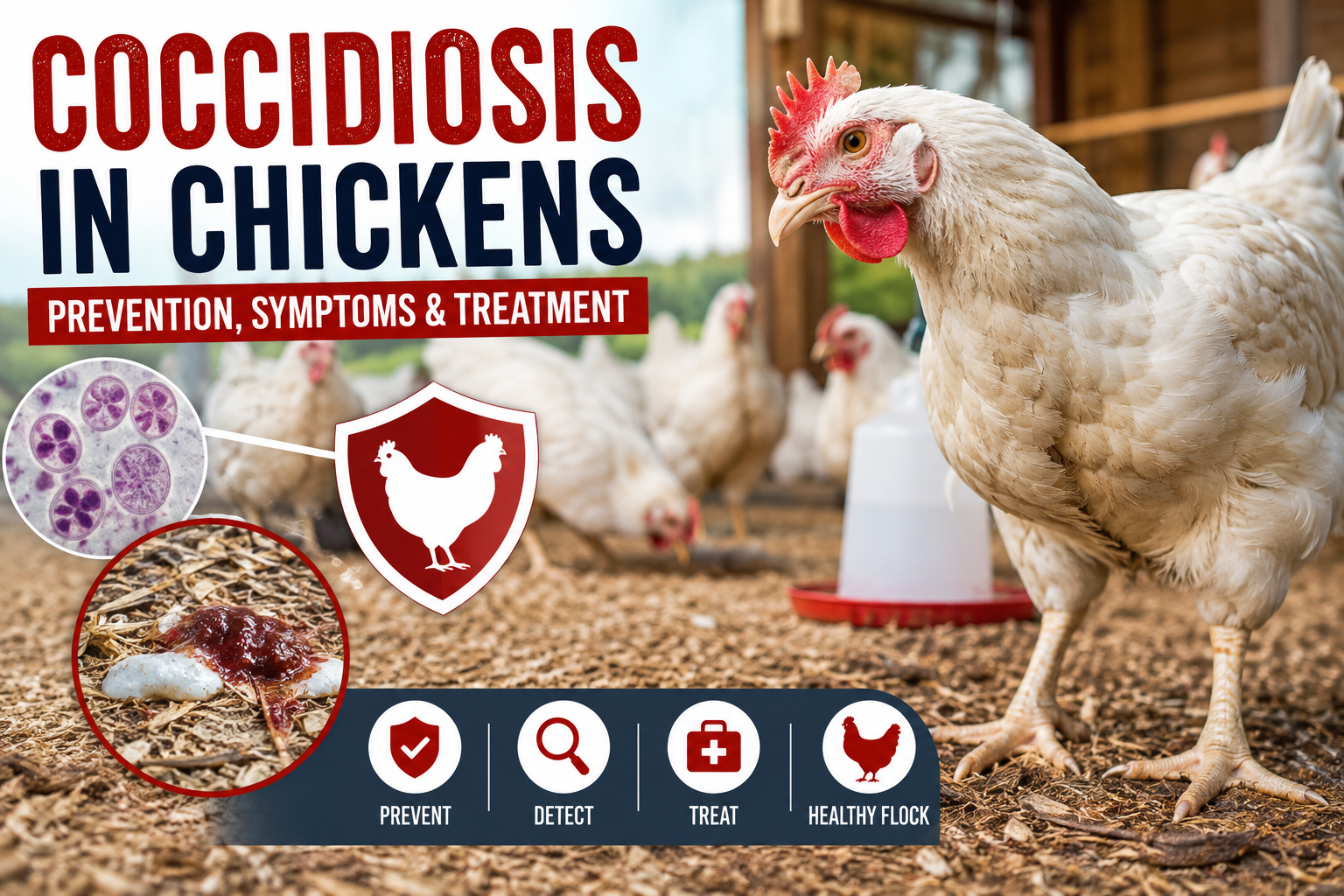
Coccidiosis in Chickens is caused by microscopic parasites called Eimeria. These parasites attack the intestinal lining, reducing nutrient absorption and weakening birds.
As a result, infected chickens grow slowly, lay fewer eggs, and may even die if treatment comes too late. Additionally, young chicks under 16 weeks are especially vulnerable because their immune systems are still developing.
Early prevention saves money, improves flock health, and reduces stress for poultry keepers.
Key Features of Coccidiosis in Chickens
Early Warning Signs
Recognizing symptoms early makes treatment much more effective.
Common signs include:
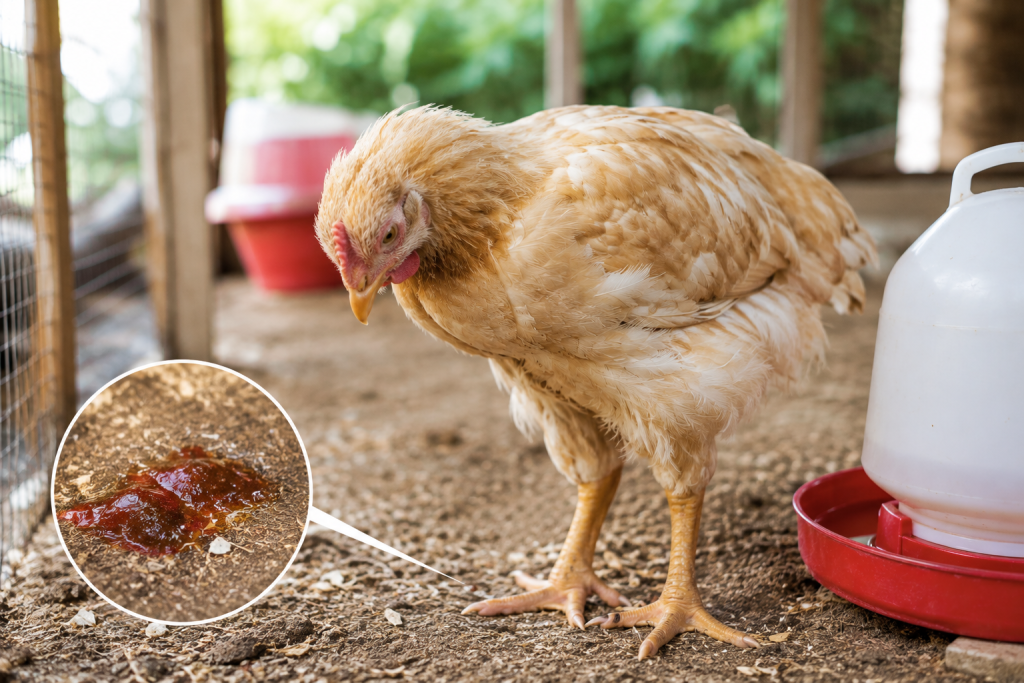
- Bloody or watery droppings
- Reduced appetite
- Weight loss
- Drooping wings
- Ruffled feathers
- Pale combs
- Weakness
- Reduced egg production
Several of these symptoms also appear in other backyard chicken diseases, so proper diagnosis is important.
How Chickens Become Infected
The parasite spreads through contaminated litter, soil, feed, or water.
Risk factors include:
- Wet bedding
- Overcrowded coops
- Dirty drinkers
- Poor ventilation
- Warm and humid weather
Therefore, keeping the coop clean greatly lowers infection risk.
Types of Coccidiosis in Chickens
Intestinal Coccidiosis
This is the most common form. It affects the digestive tract and often causes diarrhea and poor growth.
Severe Hemorrhagic Coccidiosis
Some parasite species damage the intestines so badly that chickens pass bloody droppings. Immediate treatment is essential.
Mild Subclinical Infection
Not every infected bird appears sick. However, mild infections can still reduce growth and egg production while spreading parasites to healthy birds.
Buying and Decision Guide
Whether you own five hens or five thousand birds, prevention is always cheaper than treatment.
Before purchasing new chickens:
- Buy from reputable breeders.
- Ask about vaccination history.
- Quarantine new birds for at least two weeks.
- Inspect birds for signs of illness.
- Keep young chicks separate from older birds.
You should also invest in quality feeders, drinkers, and dry bedding to reduce disease exposure.
Treatment Options for Coccidiosis in Chickens
If you suspect Coccidiosis in Chickens, act quickly.
Recommended steps include:
- Isolate sick birds.
- Replace wet bedding immediately.
- Clean feeders and water containers.
- Provide fresh drinking water.
- Consult a veterinarian for diagnosis.
- Use approved medications when recommended.
Modern coccidiosis treatment for poultry often includes anticoccidial medications prescribed according to local veterinary guidelines.
Never use medication without following dosage instructions.
Common Mistakes to Avoid
Many flock owners accidentally increase disease risks.
Avoid these common mistakes:
- Ignoring early symptoms
- Allowing wet litter to remain
- Overcrowding birds
- Mixing sick and healthy chickens
- Skipping coop cleaning
- Using medications without diagnosis
- Forgetting quarantine procedures
Additionally, replacing bedding regularly helps stop parasite buildup.
Maintenance and Care Tips
Preventing Coccidiosis in Chickens requires consistent flock management.
Daily Care
- Provide clean water.
- Remove wet bedding.
- Check droppings.
- Observe bird behavior.
Weekly Care
- Clean feeders.
- Sanitize drinkers.
- Replace litter if damp.
- Improve ventilation.
Long-Term Prevention
- Rotate outdoor runs when possible.
- Reduce overcrowding.
- Feed balanced nutrition.
- Practice healthy chicken flock management.
- Consider vaccination where available and recommended by poultry veterinarians.
These simple habits greatly reduce parasite pressure over time.
Frequently Asked Questions
Can chickens recover from coccidiosis?
Yes. Early diagnosis and proper treatment give most chickens an excellent chance of recovery.
Is coccidiosis contagious?
Yes. The parasite spreads through contaminated droppings, litter, feed, and water.
Can humans catch chicken coccidiosis?
No. The species affecting chickens do not normally infect humans.
How can I prevent future outbreaks?
Maintain dry bedding, provide clean water, reduce overcrowding, quarantine new birds, and monitor flock health every day.
Conclusion
Coccidiosis in Chickens remains one of the most preventable poultry diseases in 2026. Fortunately, good sanitation, early detection, proper nutrition, and responsible flock management greatly reduce the risk of infection. Whether you raise backyard hens or commercial poultry, acting quickly protects your birds and improves long-term productivity. Start applying these prevention strategies today to keep Coccidiosis in Chickens from affecting your flock.
Leave a Reply