Vent Gleet in Chickens: What It Means in 2026
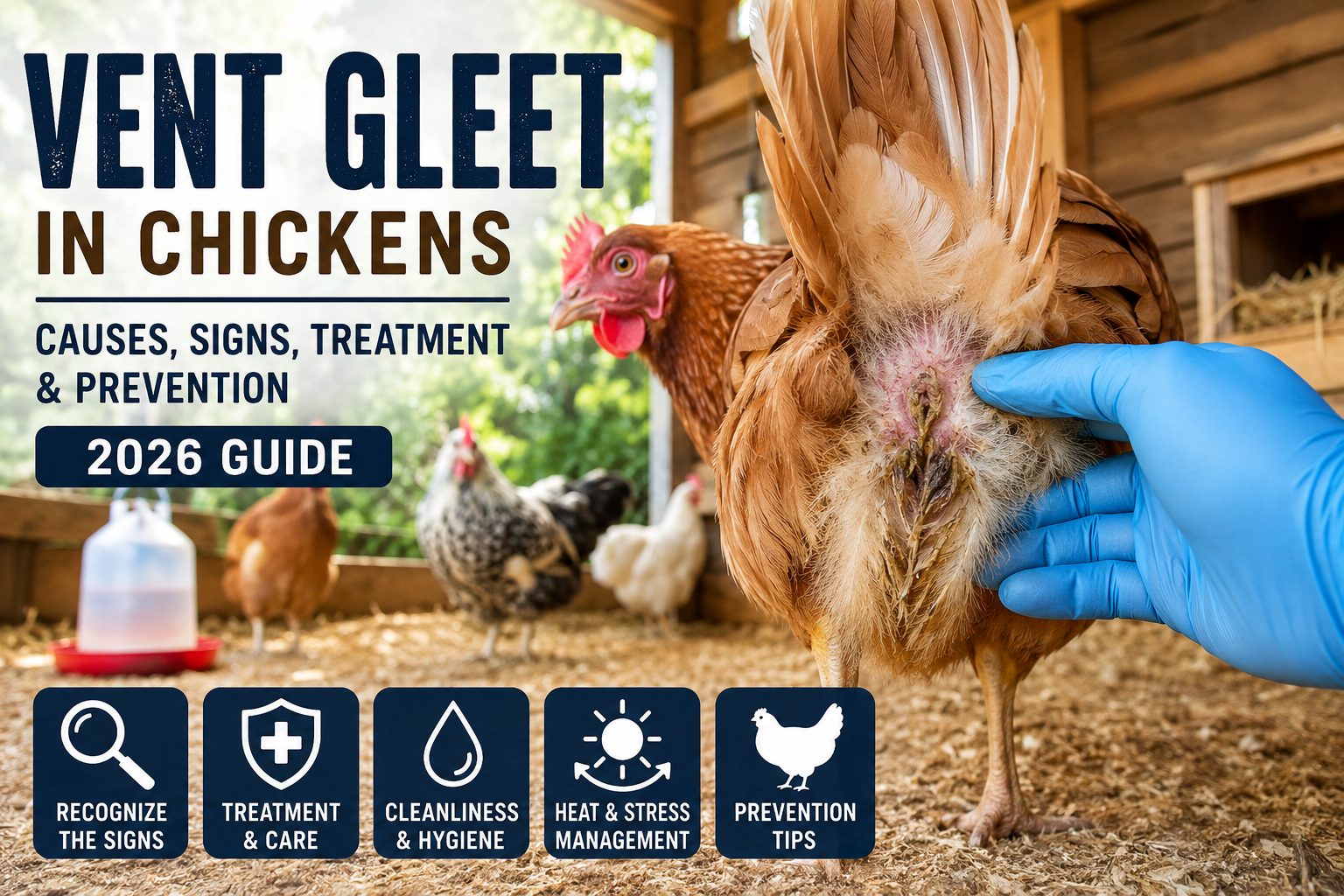
Vent Gleet is a term commonly used by backyard chicken keepers for a condition involving a dirty, irritated, or inflamed vent. You may notice wet or stuck feathers, unusual discharge, redness, or a bad smell around the cloaca.
However, Vent Gleet is not always one specific disease. Veterinary references also use the term for urate vent scalding and diuresis syndrome, which can be linked to heat, humidity, nutrition, and other flock-management factors.
For chicken owners, spotting changes early matters. Additionally, a dirty vent can attract flies or encourage other chickens to peck at the affected bird.
Why Vent Gleet Matters
A healthy chicken should normally have relatively clean feathers around the vent. Therefore, persistent soiling deserves attention.
Vent problems can become more serious when the skin becomes irritated or when other chickens begin pecking. In severe cases, vent pecking can cause serious injury and even death.
Possible warning signs include:
- Wet or dirty feathers around the vent
- Red or irritated skin
- Foul-smelling discharge
- Frequent straining
- Changes in droppings
- Reduced appetite or activity
- Reduced egg production
- Increased attention from other flock members
Vent Gleet Causes and Risk Factors
There is no single cause behind every case. Instead, several factors may contribute to vent irritation or soiling.
Heat and Humidity
Hot weather can increase the risk of conditions associated with urate buildup and vent scalding. Merck Veterinary Manual notes that diuresis syndrome, also called urate vent scalding or Vent Gleet, increases during spring and summer.
Therefore, provide shade, good airflow, and plenty of clean drinking water during hot weather.
Nutrition and Water Balance
Diet also matters. Excesses or imbalances involving protein, minerals, and electrolytes can contribute to some poultry disorders. As a result, chickens should receive a complete, age-appropriate commercial ration rather than an unbalanced homemade diet.
Poor Coop Hygiene
Wet litter and dirty housing can increase exposure to bacteria and parasites. Additionally, soiled feathers can keep moisture against the skin and make irritation worse.
Regularly remove wet bedding and keep feeders and drinkers clean.
How to Check for Vent Gleet
If you suspect Vent Gleet, gently examine the chicken in good lighting.
Step 1: Check the Vent
Look for feces, wet feathers, redness, swelling, scabs, blood, or unusual discharge. A healthy vent should not have persistent heavy soiling.
Step 2: Check the Chicken’s Behavior
Look for lethargy, reduced eating or drinking, changes in droppings, or reduced egg production. These signs can indicate that the problem extends beyond the skin around the vent.
Step 3: Check the Coop
Inspect litter, ventilation, temperature, waterers, and feeding practices. This can help identify environmental factors that may be affecting several birds.
Vent Gleet Care and Treatment
Treatment depends on the underlying cause. Therefore, avoid assuming that every dirty vent needs an antibiotic or antifungal medication.
For mild external soiling, gently clean the affected area with lukewarm water and dry the feathers carefully. Avoid aggressive scrubbing because irritated skin can become more damaged.
Next, improve coop hygiene and ventilation. Provide fresh water and a balanced poultry diet.
If the condition persists, worsens, or affects multiple birds, contact a veterinarian experienced with poultry. A professional can determine whether the problem involves infection, parasites, reproductive disease, digestive problems, or a management issue.
Important: Do not give antibiotics, antifungals, dewormers, or other medications without appropriate veterinary guidance. Medication choice and egg withdrawal requirements can vary.
Common Mistakes to Avoid
When managing Vent Gleet, avoid these common mistakes:
- Ignoring persistent symptoms: A recurring dirty vent may signal a deeper problem.
- Using random medications: Treatment should match the cause.
- Keeping wet bedding: Replace damp or heavily soiled litter quickly.
- Overlooking heat stress: Improve shade, airflow, and water access during hot weather.
- Ignoring flock behavior: Separate a bird that is being aggressively pecked.
- Cleaning too harshly: Gentle cleaning is safer for irritated skin.
Preventing Vent Gleet in 2026
Prevention starts with daily flock management. Keep the coop dry, maintain good ventilation, and provide fresh water every day.
Additionally, inspect your chickens regularly. Early detection allows you to identify abnormal droppings, vent irritation, parasites, prolapse, or other health problems before they become severe.
Good poultry vent care also includes maintaining appropriate nutrition and avoiding overcrowding. Merck notes that environmental and management factors can contribute to several backyard poultry problems.
When to Call a Veterinarian
Seek professional help quickly if you notice:
- Blood around the vent
- Significant swelling
- Tissue protruding from the vent
- Severe weakness
- Difficulty passing an egg
- Persistent discharge
- Rapid worsening
- Multiple affected chickens
A protruding reproductive tract can indicate cloacal or oviduct prolapse, which can become life-threatening and may attract aggressive pecking from flock mates.
Conclusion
Vent Gleet can look like a simple dirty vent, but persistent symptoms should not be ignored. Good hygiene, balanced nutrition, fresh water, ventilation, and regular health checks can help reduce risk. However, serious or recurring cases need professional diagnosis because several different poultry problems can cause similar signs.
If you keep backyard chickens in 2026, make Vent Gleet part of your routine health checks. Early action can protect the affected bird and help keep the entire flock healthy.
Leave a Reply