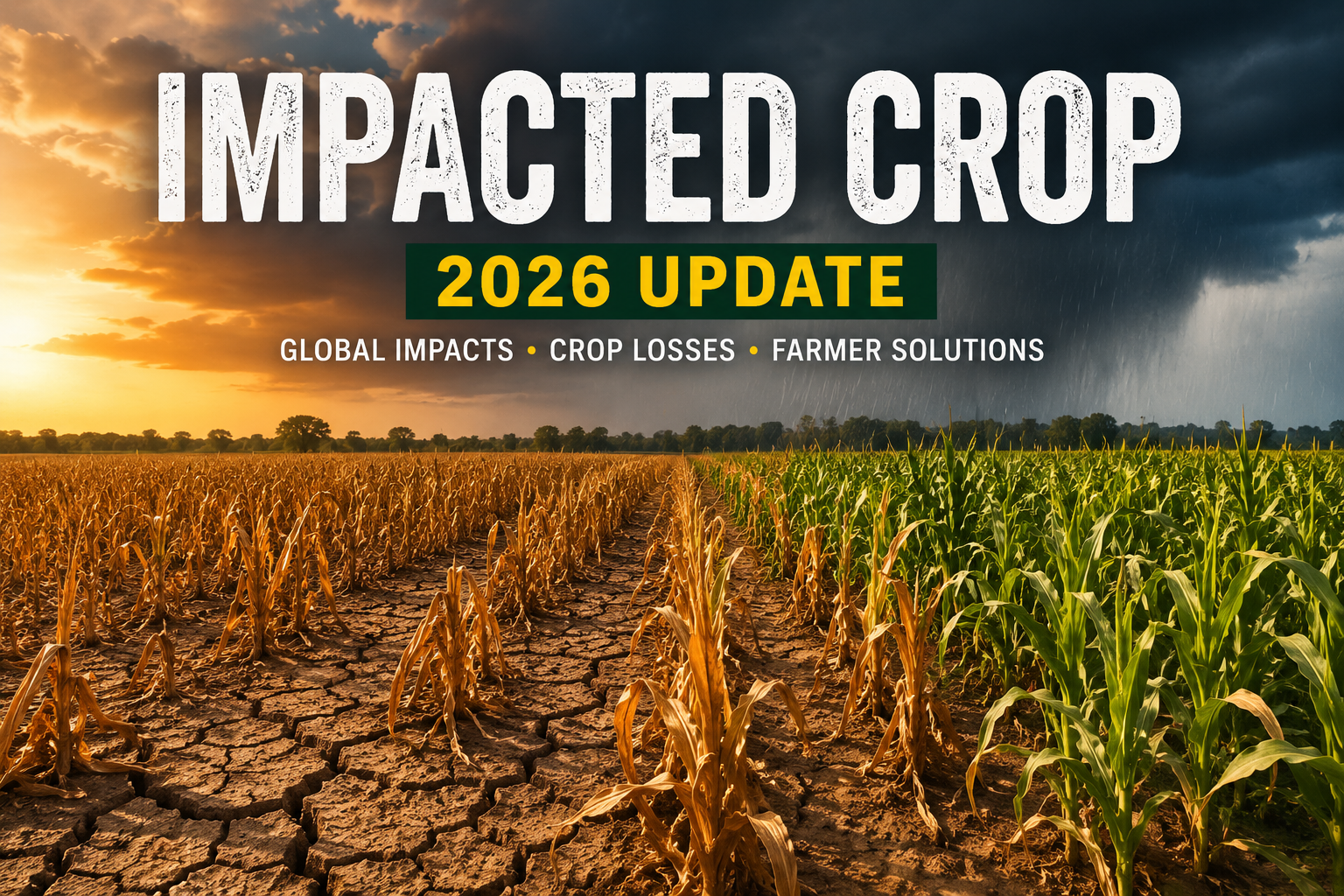
Impacted Crop 2026: Latest Global Farming Update
The Impacted Crop situation is becoming a major global agriculture story in 2026. Extreme heat, drought, floods, disease, and supply problems are putting pressure on farmers across major food-producing regions. For US consumers, this matters because crop losses can affect food supplies, farm income, and grocery prices.
Recent reports show that the problem is not limited to one country. Europe has faced severe heat and drought, while Canadian farmers are dealing with crop disease. Additionally, the developing El Niño pattern could create new risks for crops and food markets later this year.
Why Impacted Crop News Matters in 2026
An Impacted Crop can mean farmland or harvested produce affected by weather, pests, disease, water shortages, or other disruptions. However, the effects can reach far beyond the farm.
When yields fall, farmers may face higher production costs and lower income. As a result, food processors, exporters, retailers, and consumers can also feel the pressure.
Recent European estimates show the scale of the issue. A June heatwave was linked to an estimated 9 million tonnes of lost grain production and around €2 billion in lost revenue.
Main factors affecting crops
The biggest risks currently include:
- Extreme heat during critical growth stages
- Drought and limited irrigation water
- Heavy rain and flooding
- Fungal and other crop diseases
- Rising fertilizer and energy costs
- Transport and export disruptions
Impacted Crop: Key Factors to Watch
Weather and water availability
Water remains one of the most important factors in crop production. Dry conditions can reduce plant growth, while excessive rain can damage roots and increase disease pressure.
For example, Canadian farmers have reported serious disease concerns after unusually wet conditions. Wheat, canola, and pulse crops face particular risks as harvest approaches.
Pakistan is also monitoring heavy rainfall and flood risks. The Pakistan Meteorological Department’s August 22 bulletin warned of widespread rain and thunderstorms in several agricultural areas, with the Indus River at Guddu expected to reach medium flood level after 72 hours.
Heat and drought pressure
Heat can reduce crop quality and yield, especially during flowering and grain filling. Moreover, drought can force growers to reduce planted acreage or spend more on irrigation.
Europe has seen especially severe conditions in 2026. French maize production, for example, has been reported at about 35% below 2025 levels amid extreme heat and drought.
Types of Impacted Crop Conditions
Drought-impacted crops
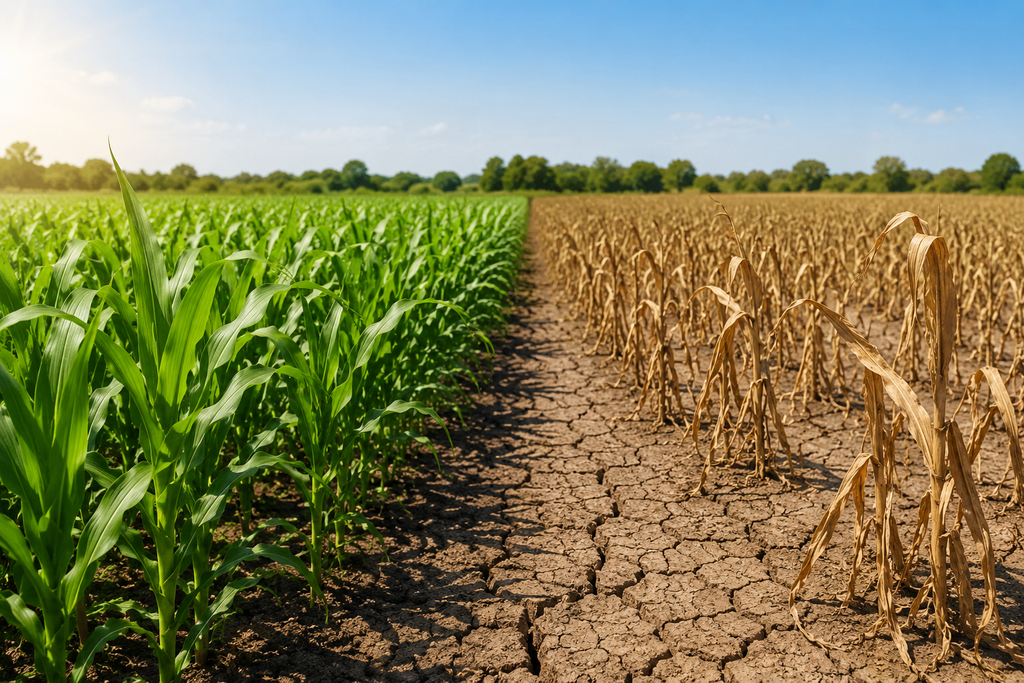
Drought reduces available soil moisture and irrigation supplies. Consequently, crops may mature early, produce smaller yields, or fail completely.
Flood-impacted crops
Flooding can cover fields, erode soil, damage roots, and delay harvesting. Additionally, standing water can increase fungal disease and reduce grain quality.
Disease-impacted crops
Wet weather often creates favorable conditions for fungal diseases. Farmers may need additional crop protection, which increases costs and can reduce profits.
Impacted Crop: What Farmers Should Do
Farmers should first identify the cause and severity of damage. Then they can decide whether to harvest, treat, replant, or claim available assistance.
A practical response includes:
- Inspect affected fields quickly.
- Record damage with photographs and field notes.
- Check local weather and crop advisories.
- Contact agricultural extension specialists.
- Review crop insurance requirements.
- Compare the cost of recovery with expected yield.
- Protect remaining healthy plants.
For US producers, USDA programs may provide technical or financial assistance following qualifying disasters. In 2026, USDA has announced support for producers affected by drought and severe weather in several areas.
Common Mistakes to Avoid
Farmers dealing with an Impacted Crop should avoid making rushed decisions.
Common mistakes include:
- Waiting too long to document damage
- Ignoring disease symptoms
- Applying treatments without professional advice
- Over-irrigating damaged fields
- Harvesting without checking quality
- Failing to contact insurers within required deadlines
Instead, growers should use local agricultural guidance and keep detailed records.
Maintenance and Recovery Tips
Recovery depends on the crop, soil, and cause of damage. However, several practices can improve resilience.
Farmers can improve soil health with organic matter, reduce water loss through mulching, and select varieties suited to local conditions. Additionally, efficient irrigation and better weather monitoring can help reduce future losses.
Crop diversification can also reduce risk. If one crop fails, other crops may still provide income.
2026 Outlook for Global Agriculture
The outlook remains mixed. Some regions continue to report favorable crop conditions, while others face severe weather and production challenges.
The developing El Niño is another important factor. Reuters reports that forecasters see a greater than 90% chance of a very strong 2026 event, with potential effects on coffee, cocoa, corn, fisheries, and other agricultural sectors.
Therefore, farmers, traders, food companies, and consumers should continue watching weather forecasts and crop reports throughout the remainder of 2026.
Conclusion
The Impacted Crop story is becoming increasingly important as extreme weather, disease, water shortages, and market disruptions affect agriculture worldwide. Farmers can reduce risk by monitoring fields early, protecting soil and water, using reliable agricultural advice, and documenting losses carefully.
For consumers, the situation may also influence food prices and availability. Stay informed through trusted agricultural agencies and current crop reports, and follow future updates as the 2026 growing season develops.
Leave a Reply