Introduction: What Is Sour Crop?
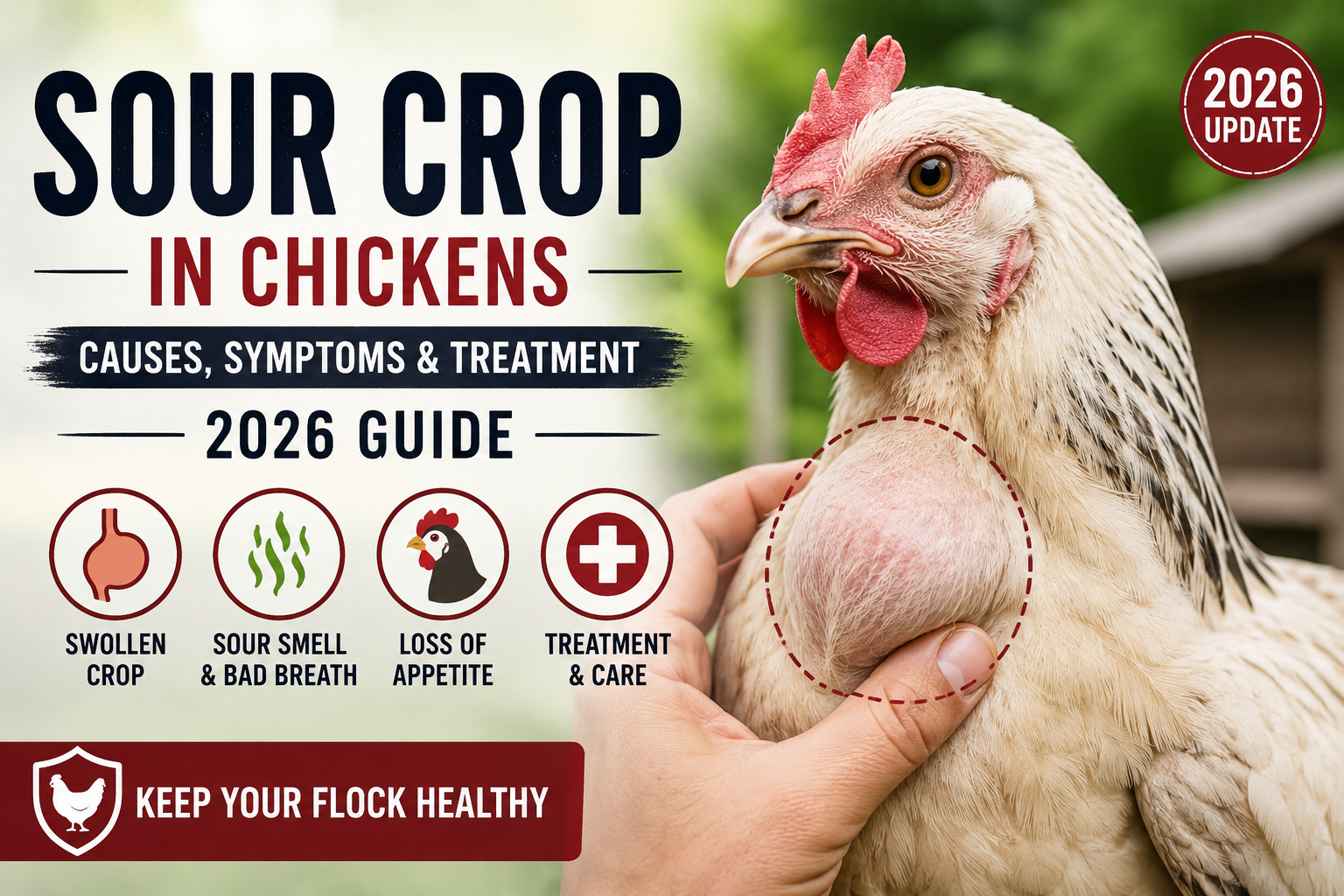
Sour Crop is a digestive problem that can affect chickens when the crop does not empty normally and yeast or other microorganisms become overgrown. For backyard chicken keepers in the US and around the world, recognizing the early signs can help prevent a minor crop problem from becoming more serious.
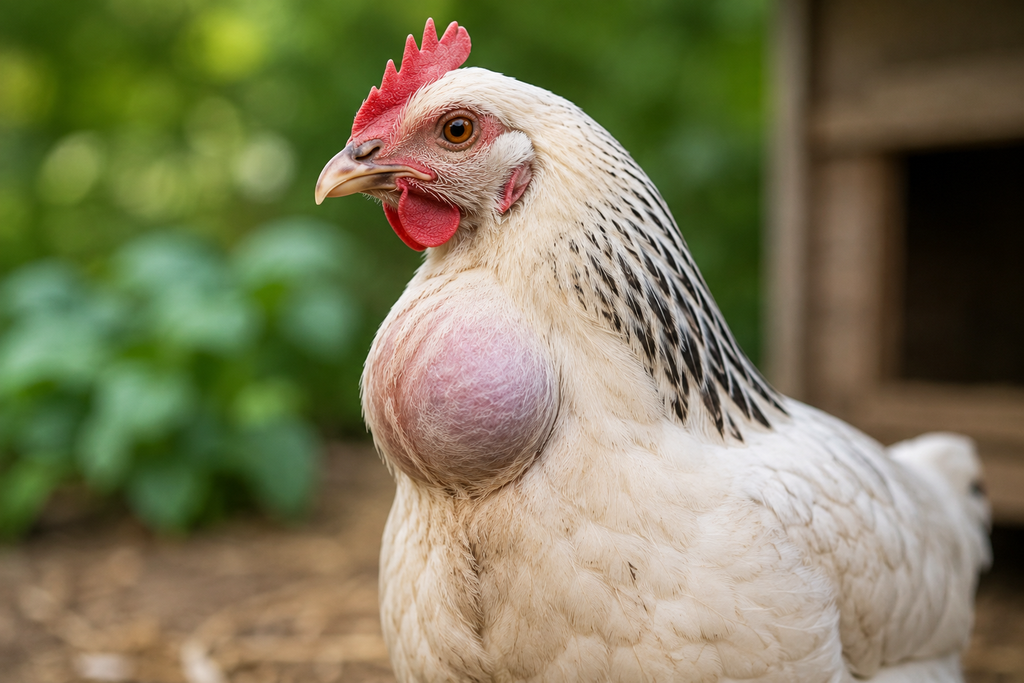
The crop is a small pouch at the base of a chicken’s neck. It temporarily stores food before digestion continues. However, when food remains in the crop for too long, abnormal fermentation can occur. As a result, the crop may feel soft, swollen, or unusually full.
Important: A swollen crop does not always mean Sour Crop. Other conditions, including crop impaction, can produce similar signs.
Why Sour Crop Matters
Healthy digestion is important for a chicken’s growth, energy, egg production, and overall condition. Therefore, crop problems deserve attention when a bird shows unusual behavior.
Common warning signs include:
- A soft or balloon-like crop
- Unpleasant-smelling breath
- Reduced appetite
- Weight loss
- Less activity
- Difficulty swallowing
- Regurgitation
- A crop that remains full for an unusually long time
Additionally, some chickens may appear normal at first. Therefore, checking the crop at the right time can provide useful information.
Sour Crop Symptoms to Watch
Sour Crop Symptoms
One of the most noticeable Sour Crop symptoms is a crop that remains full after the chicken has had several hours without food. The crop may feel soft and fluid-filled rather than firm.
Another common sign is a sour or fermented odor from the mouth. However, symptoms can vary between birds. Therefore, owners should look at the whole picture instead of relying on one sign.
Impacted Crop vs Sour Crop
It is important to understand the difference between an impacted crop and Sour Crop. An impacted crop usually contains a firm mass of food or material that cannot move normally. In contrast, a sour crop often feels soft and may contain fluid or fermented contents.
Because the two conditions can overlap, repeated crop problems should receive veterinary attention.
Common Causes and Risk Factors
Several factors can contribute to crop problems.
Poor Diet
A diet with excessive treats, long grass, fibrous material, or unsuitable foods can interfere with normal digestion. Therefore, chickens should receive a balanced commercial feed as their primary diet.
Limited Access to Water
Fresh water supports normal digestion. If chickens cannot drink enough, food may move through the digestive system less effectively.
Underlying Health Problems
Parasites, infections, digestive disorders, or other illnesses may affect crop movement. As a result, recurring Sour Crop in chickens should not simply be treated as an isolated feeding problem.
Types of Chicken Crop Problems
Sour Crop
Sour Crop is commonly associated with abnormal fermentation and yeast overgrowth. The crop may remain soft and full, while the bird may develop bad-smelling breath.
Impacted Crop
An impacted crop contains material that becomes difficult to pass. It can feel firm or packed. However, an impacted crop and a sour crop can sometimes occur together.
Slow-Emptying Crop
Some chickens develop a crop that empties slowly without having obvious impaction. This may indicate an underlying digestive or muscular problem.
Buying and Decision Guide: What Should You Keep Ready?
Chicken owners can prepare a simple care kit with:
- Clean drinking water
- Quality complete poultry feed
- A clean feeding area
- A suitable poultry-safe enclosure
- Contact information for a poultry veterinarian
However, avoid using random human medicines or home remedies without professional advice.
Common Mistakes to Avoid
When dealing with suspected Sour Crop, avoid these common mistakes:
- Do not force large amounts of liquid into the bird’s mouth.
- Do not squeeze or aggressively massage a swollen crop.
- Do not withhold food for long periods without veterinary guidance.
- Do not assume every swollen crop has the same cause.
- Do not ignore repeated crop problems.
- Do not use medications without appropriate veterinary advice.
Aggressive handling can increase the risk of aspiration or injury. Therefore, gentle observation and professional guidance are safer approaches.
Sour Crop Care and Prevention Tips
Prevention starts with good flock management. Keep feeders and drinkers clean, provide fresh water daily, and offer a balanced diet.
Additionally, limit access to moldy feed, spoiled food, and excessive treats. Keep bedding clean and monitor chickens for changes in appetite, droppings, weight, and behavior.
If a chicken repeatedly develops Sour Crop, loses weight, stops eating, becomes weak, or has difficulty breathing or swallowing, contact a poultry veterinarian promptly.
Conclusion: Protect Your Flock in 2026
Sour Crop can be concerning, but early observation and good flock management can help chicken keepers respond responsibly. Learn to check the crop, recognize Sour Crop symptoms, provide clean water and proper nutrition, and avoid risky home treatments.
Leave a Reply