Introduction
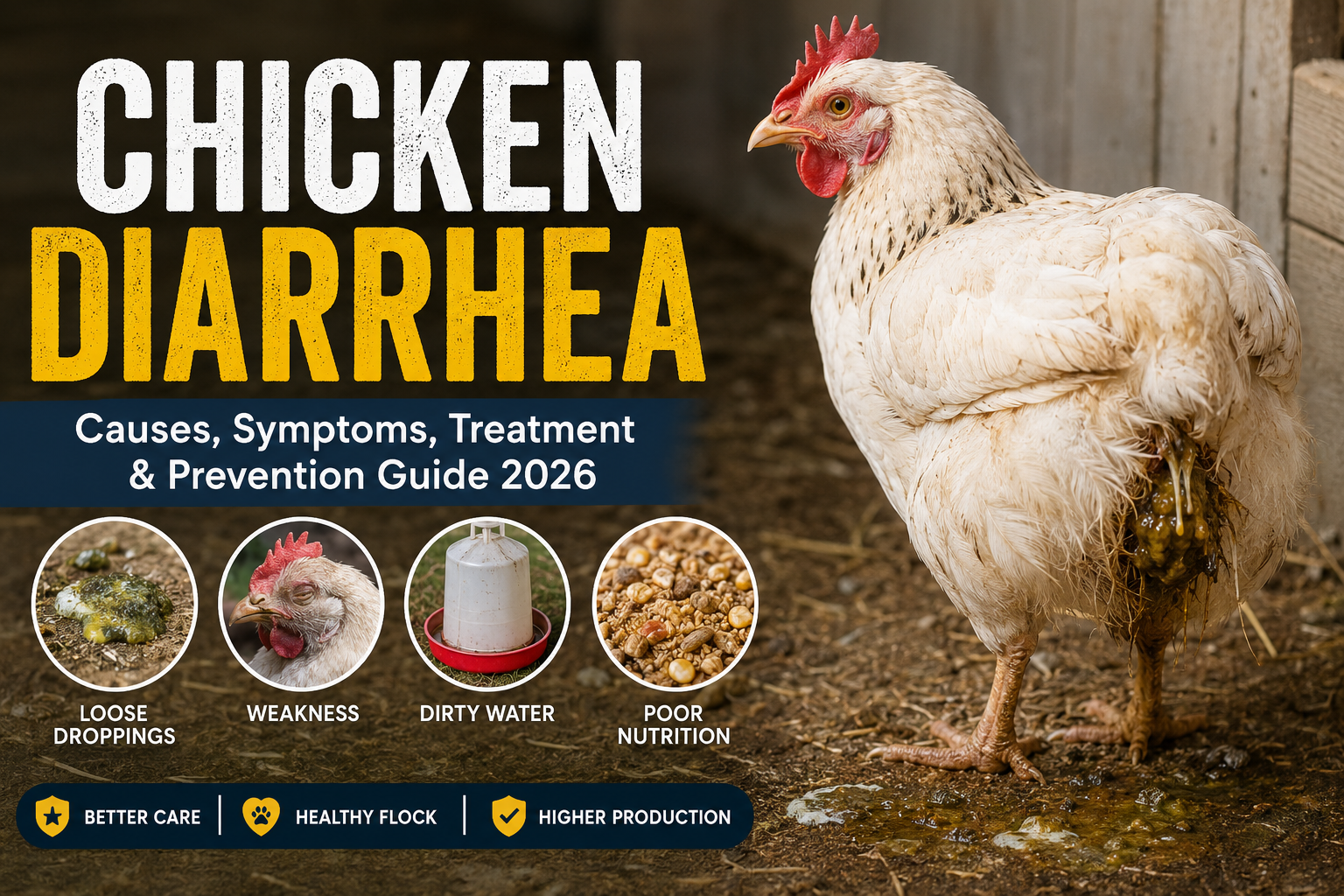
Chicken Diarrhea can be an early warning sign that something is wrong with a bird’s digestive system. For backyard keepers and poultry owners worldwide, noticing changes in droppings is important because chickens often hide illness until they become seriously unwell.
However, not every loose dropping means disease. Chickens can produce occasional watery or unusual droppings naturally. Persistent changes, especially when combined with weakness, weight loss, poor appetite, or reduced egg production, deserve closer attention.
Why Chicken Diarrhea Matters in 2026
Chicken Diarrhea can have many possible causes. These include poor-quality feed, contaminated water, parasites, intestinal infections, stress, sudden diet changes, and certain toxins.
Additionally, young chickens can face a higher risk from some intestinal diseases. Coccidiosis, for example, can cause diarrhea, weight loss, reduced production, and sometimes death.
Therefore, poultry owners should look at the whole bird rather than judging health from droppings alone.
Chicken Diarrhea: Key Causes to Consider
1. Coccidiosis
Coccidiosis is an important cause of digestive illness in poultry. It results from protozoan parasites that affect different parts of the intestinal tract. Signs can include diarrhea, weight loss, poor growth, and reduced performance.
Wet and heavily soiled litter can increase the risk because coccidia thrive in these conditions. As a result, clean, dry housing plays an important role in prevention.
2. Worms and Other Parasites
Internal worms can sometimes contribute to loose droppings and poor condition. However, many infected birds show few obvious signs unless the infestation becomes significant.
A fecal examination can help identify parasite eggs and guide appropriate treatment.
3. Feed and Water Problems
Poor-quality feed, sudden diet changes, spoiled food, or contaminated water can contribute to digestive upset. Chickens also need reliable access to clean water, and their water requirements increase during hot weather.
[Internal link: Homemade Chicken Feed Recipe]
4. Infectious Diseases
Bacterial and viral infections can also affect the digestive system. Some infections cause diarrhea alongside other signs such as weakness, respiratory problems, poor growth, or falling egg production.
Types of Chicken Droppings to Watch
Normal Droppings
Healthy chickens can produce different types of droppings throughout the day. Some normal cecal droppings may look softer and smell stronger than ordinary feces.
Therefore, one unusual dropping does not automatically indicate illness.
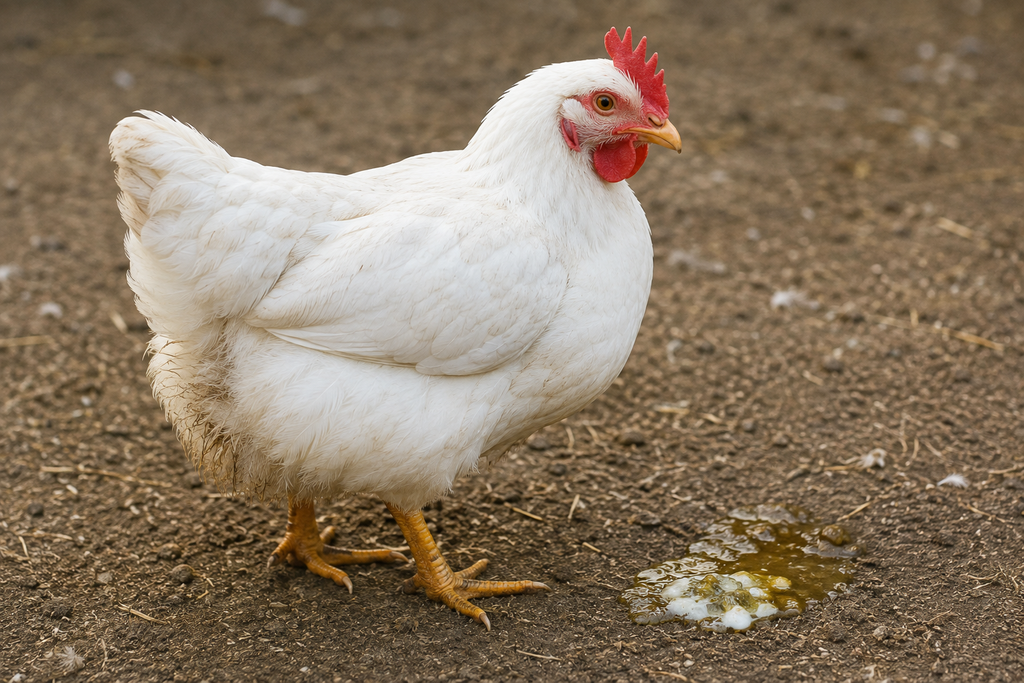
Concerning Droppings
Watch for repeated changes such as:
- Persistent watery droppings
- Blood in the feces
- Greenish-white diarrhea with other illness signs
- Large changes in frequency or appearance
- Droppings around the vent
- Diarrhea combined with weakness or weight loss
Greenish-white diarrhea can occur with serious infections, including avian influenza, particularly when other warning signs appear.
Chicken Diarrhea: What Should You Do?
If a bird develops persistent diarrhea, start with basic supportive management while arranging professional advice when needed.
- Check clean water: Make sure fresh, safe drinking water remains available.
- Review feed: Remove spoiled or moldy feed and avoid sudden dietary changes.
- Inspect the coop: Replace wet or heavily contaminated litter.
- Watch the flock: Look for reduced appetite, lethargy, breathing problems, weight loss, or falling egg production.
- Separate a sick bird when appropriate: This can help reduce contact with the rest of the flock.
- Contact a poultry veterinarian: Persistent or severe signs may require fecal testing or other diagnostic work.
Do not give antibiotics, dewormers, or other medicines without appropriate veterinary guidance. Medication rules can differ between countries, and food-producing birds have specific withdrawal and safety requirements.t
Common Mistakes to Avoid
Many owners make simple mistakes when dealing with poultry digestive problems. Avoid these common errors:
- Treating every loose dropping as an infection
- Giving random antibiotics
- Ignoring bloody diarrhea
- Keeping wet litter in the coop
- Allowing dirty drinking water
- Changing feed suddenly
- Waiting too long when several birds become sick
Additionally, do not assume that a home remedy will solve the underlying cause. Proper diagnosis is especially important when several birds show similar symptoms.
Chicken Health Care and Prevention Tips
Good prevention can reduce many causes of Chicken Diarrhea. Keep housing clean, provide balanced feed, maintain fresh water, and control excessive moisture in litter.
Regular observation also matters. Check the birds daily for changes in behavior, appetite, drinking, droppings, feathers, and egg production. Merck Veterinary Manual recommends good management, sanitation, nutrition, and biosecurity as key parts of poultry disease control.
When to Seek Urgent Veterinary Help
Seek professional poultry-health advice quickly if diarrhea is severe, bloody, persistent, or affects multiple birds. Sudden deaths, breathing problems, neurological signs, major drops in egg production, or rapid flock-wide illness are especially concerning.
For suspected serious infectious disease, avoid moving birds between locations until appropriate veterinary or animal-health authorities provide guidance.
Conclusion
Chicken Diarrhea is a symptom, not a single disease, so finding the underlying cause is essential. Clean water, quality feed, dry litter, good hygiene, careful observation, and timely veterinary advice can help protect your flock in 2026. If Chicken Diarrhea continues or appears with serious warning signs, contact a qualified poultry veterinarian rather than relying on guesswork.
Leave a Reply