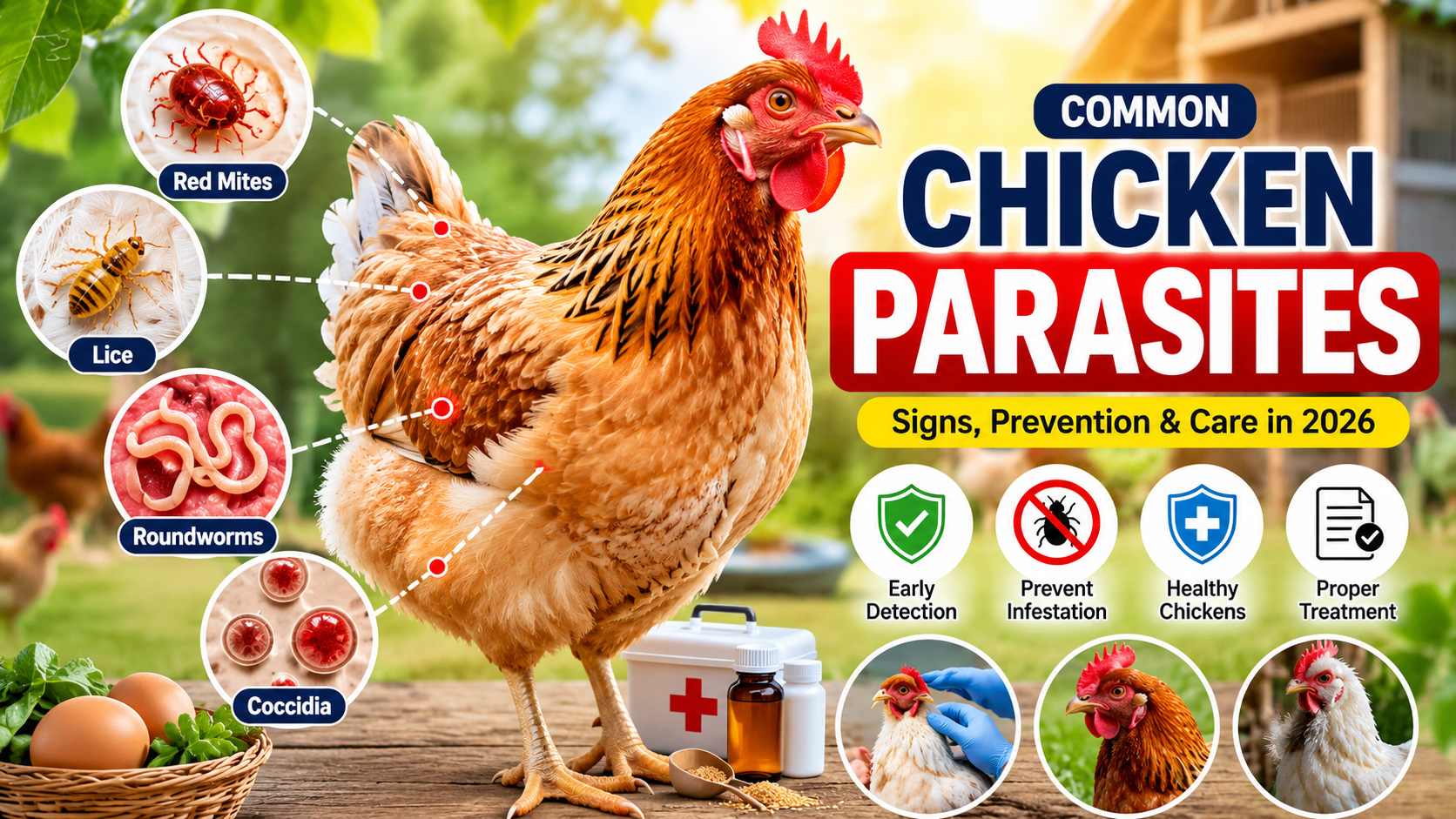
Common Chicken Parasites: What Every Keeper Should Know in 2026
Common Chicken Parasites can affect backyard flocks, farm chickens, and commercial poultry. These tiny pests may cause itching, weight loss, poor egg production, weakness, and other health problems. For US chicken keepers and poultry owners worldwide, early detection is one of the best ways to protect a flock.
Fortunately, most parasite problems become easier to manage when owners check their birds regularly. Additionally, clean housing, good flock management, and proper veterinary guidance can reduce the risk.
Why Common Chicken Parasites Matter
Common Chicken Parasites can live on a chicken’s skin or inside its digestive system. Some spread quickly from one bird to another. Therefore, ignoring early signs can allow a small problem to become a flock-wide issue.
Watch for these warning signs:
- Frequent scratching or feather picking
- Dirty feathers around the vent
- Pale combs or wattles
- Weight loss
- Reduced egg production
- Diarrhea or abnormal droppings
- Restlessness at night
- Broken or damaged feathers
However, these symptoms can have several causes. A veterinarian can help confirm the problem before treatment begins.
Types of Common Chicken Parasites
External Parasites in Chickens
External parasites live on or around the chicken’s body. The most common examples include mites, lice, and fleas.
Chicken mites and lice can irritate the skin and damage feathers. Some mites feed on blood, while others remain around feather shafts or the skin. As a result, heavily affected birds may become weak or stressed.
Red mites can be especially difficult to spot because they often hide in cracks and housing areas during the daytime. Therefore, checking the coop at night can sometimes reveal activity.
Internal Parasites in Poultry
Internal parasites live inside the chicken. Roundworms, tapeworms, and coccidia are among the problems poultry owners may encounter.
A chicken worm infestation can affect digestion and nutrient absorption. Consequently, affected birds may lose weight even when they continue eating.
Coccidia can damage the intestinal tract and may cause diarrhea, weakness, or poor growth. Young birds can be particularly vulnerable, so proper flock management is important.
How to Check for Common Chicken Parasites
Regular inspection helps identify Common Chicken Parasites before they spread.
Follow these simple steps:
- Carefully examine the skin around the vent and under the wings.
- Check feathers for unusual debris, eggs, or insects.
- Inspect the comb and wattles for unusual paleness.
- Monitor droppings and eating habits.
- Look through coop cracks, roosts, and nesting areas.
- Keep records of unusual weight loss or lower egg production.
Additionally, separate a visibly sick bird when appropriate and seek professional veterinary advice.
Prevention and Care Tips
Preventing Common Chicken Parasites starts with good daily management. A clean, dry, well-maintained coop gives parasites fewer places to thrive.
Important prevention steps include:
- Clean bedding regularly.
- Keep feeders and waterers clean.
- Reduce excessive moisture inside the coop.
- Avoid overcrowding.
- Inspect new birds before introducing them.
- Maintain clean nesting boxes.
- Check birds regularly.
- Keep wild birds and rodents away from feed areas.
Furthermore, rotate outdoor areas when practical. Good sanitation can help reduce parasite pressure, although it cannot eliminate every risk.
Buying and Treatment Decisions
When dealing with Common Chicken Parasites, avoid choosing a treatment simply because it worked for another flock. Different parasites require different approaches.
Before using a product, consider:
- The suspected parasite
- Chicken age and condition
- Egg and meat withdrawal requirements
- Product labeling and local regulations
- Veterinary recommendations
Never use livestock or household chemicals on chickens unless the product specifically allows that use. Additionally, follow dosage and application instructions carefully.
Common Mistakes to Avoid
Many poultry owners make simple mistakes when managing Common Chicken Parasites.
Avoid these common errors:
- Treating birds without identifying the parasite
- Treating only one bird when the flock may be affected
- Ignoring the coop environment
- Repeating treatments without professional guidance
- Using products not approved for poultry
- Failing to monitor birds after treatment
As a result, incorrect treatment can waste money and may create unnecessary risks for chickens and people.
Maintaining a Healthy Flock in 2026
Good prevention remains the best defense against Common Chicken Parasites. Build parasite checks into your normal flock routine instead of waiting for serious symptoms.
Additionally, keep an eye on changes in appetite, behavior, feathers, droppings, and egg production. If several birds become sick or symptoms become severe, contact a poultry veterinarian promptly.
Conclusion
Common Chicken Parasites can affect chickens at any time, but regular inspections and proper coop care can greatly improve flock management. Learn to recognize early warning signs, keep housing clean, and use treatments responsibly.
Most importantly, do not guess when a bird appears seriously ill. Work with a qualified veterinarian to identify the parasite and choose an appropriate treatment. Check your flock regularly today and take preventive action to keep your chickens healthy throughout 2026.
Leave a Reply