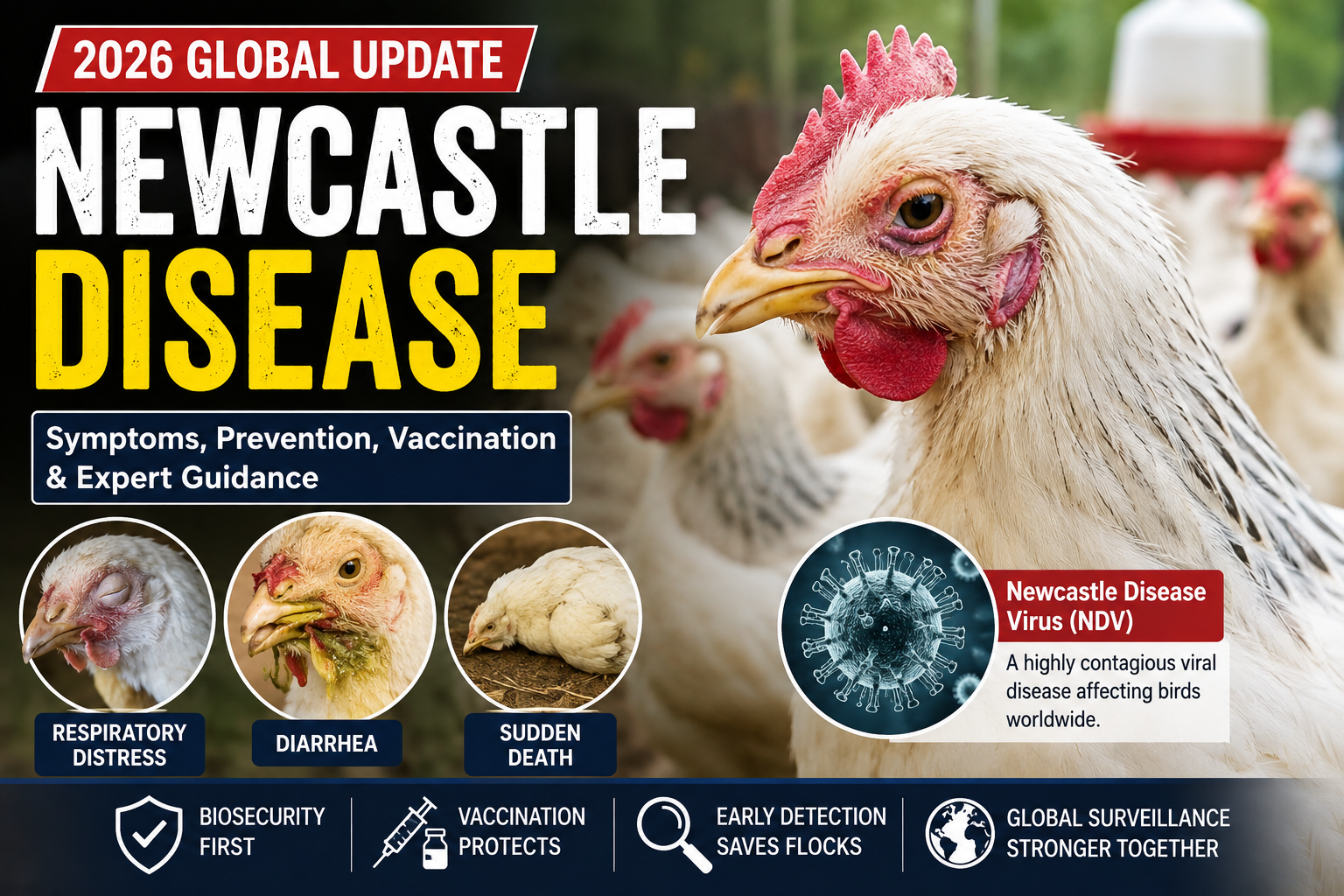
Newcastle Disease: 2026 Global Update
Newcastle Disease remains a major concern for poultry producers, backyard flock owners, veterinarians, and animal-health authorities worldwide in 2026. The disease is highly contagious and can affect domestic and wild birds. According to the World Organisation for Animal Health (WOAH), virulent forms are internationally notifiable.
For readers in the United States and other major poultry markets, the key message is simple: prevention and early reporting remain essential. Moreover, official disease alerts can change quickly, so producers should monitor national veterinary authorities and the WOAH WAHIS platform for current events.
Why Newcastle Disease Matters in 2026
Newcastle Disease can spread rapidly through susceptible flocks. The virus can move through direct contact with infected birds and through contaminated feces, respiratory material, equipment, clothing, food, and water.
As a result, an outbreak can create serious economic problems. Farmers may face bird losses, lower egg production, movement restrictions, cleaning costs, and trade disruption.
The disease also matters because its signs can resemble highly pathogenic avian influenza. Therefore, laboratory testing plays an important role in confirming a suspected case.
Key Newcastle Disease Factors to Watch
Newcastle Disease Symptoms
Newcastle Disease symptoms can vary according to the virus strain, bird species, age, immune status, and other infections. Common signs include:
- Coughing, sneezing, gasping, or breathing problems
- Depression and loss of appetite
- Diarrhea
- Tremors or unusual nervous behavior
- Paralysis or twisted neck
- Sudden reduction in egg production
- Abnormal eggs
- Sudden death in severe outbreaks
However, some infected birds may show limited clinical signs. WOAH notes that highly virulent forms can cause severe disease and high mortality.
Newcastle Disease Virus and Transmission
The Newcastle disease virus is avian paramyxovirus type 1 (APMV-1). Virulent strains can cause severe respiratory, digestive, or neurological disease.
Furthermore, contaminated people, tools, vehicles, housing, litter, feed, and water can help spread infection between flocks. Strong poultry biosecurity therefore remains one of the most important defenses.
Types and Categories
Mild Forms
Lentogenic strains generally cause mild disease and are widespread. They may cause fewer serious outbreaks than highly virulent strains.
Moderate Forms
Mesogenic strains can cause more significant respiratory or systemic disease. Their impact depends on the bird and the specific virus involved.
Highly Virulent Forms
Velogenic strains can cause severe disease, including neurological or digestive signs and high mortality. WOAH classifies infection with qualifying virulent Newcastle virus as a listed disease requiring notification.
Newcastle Disease Prevention and Response Guide
There is no substitute for a strong prevention plan. Farmers and flock owners should:
- Limit contact with unknown or sick birds.
- Control farm access and keep visitors away from poultry areas.
- Clean and disinfect equipment, footwear, housing, and vehicles.
- Separate new or returning birds before introducing them to a flock.
- Follow veterinary vaccination advice for the local disease situation.
- Report unusual illness or deaths to the appropriate veterinary authority.
A Newcastle disease vaccine can form an important part of flock protection, particularly in commercial poultry systems. However, vaccination programs should follow local veterinary guidance because vaccination does not replace surveillance and biosecurity. WOAH recommends appropriate vaccines and surveillance as part of disease-control systems.
Common Mistakes to Avoid
Many outbreaks become harder to control when basic precautions fail. Avoid these common mistakes:
- Buying birds without checking their health status
- Mixing new birds with an established flock immediately
- Sharing dirty equipment between farms
- Ignoring sudden respiratory or neurological signs
- Moving birds during a suspected outbreak
- Assuming vaccination alone prevents every infection
- Delaying contact with a veterinarian or animal-health authority
Additionally, do not diagnose the disease from symptoms alone. Because several poultry diseases can look similar, professional laboratory confirmation remains important.
Care Tips for Poultry Owners
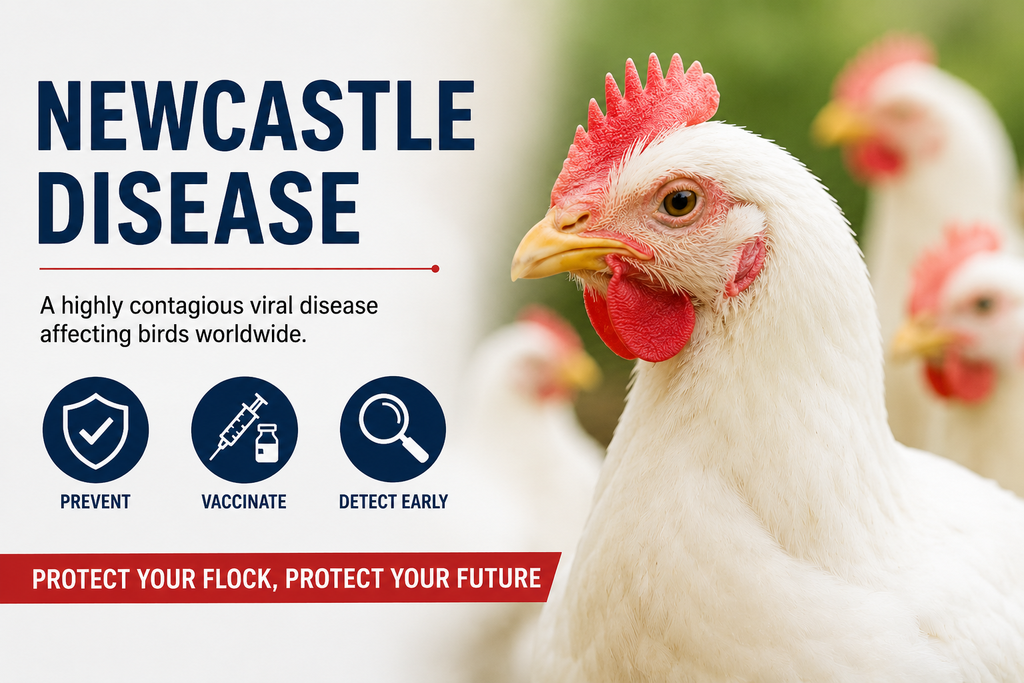
Good daily management can reduce the risk of Newcastle Disease. Keep housing clean, provide safe drinking water, control rodents and pests, and reduce unnecessary contact between domestic and wild birds.
Moreover, keep accurate records of bird purchases, vaccinations, illness, deaths, and flock movements. These records can help veterinarians investigate a suspected outbreak quickly.
For current 2026 developments, readers should check official government veterinary services and WOAH disease alerts, because the international disease situation can change as new reports arrive.
Conclusion
Newcastle Disease continues to require close attention from the global poultry sector in 2026. The strongest defense combines vaccination where appropriate, strict poultry biosecurity, surveillance, rapid testing, and prompt reporting.
If you keep poultry, review your prevention plan today and contact a qualified veterinarian when birds develop unusual respiratory, digestive, neurological, or mortality signs. Staying informed through trusted animal-health authorities is one of the best ways to reduce the impact of Newcastle Disease.
Leave a Reply