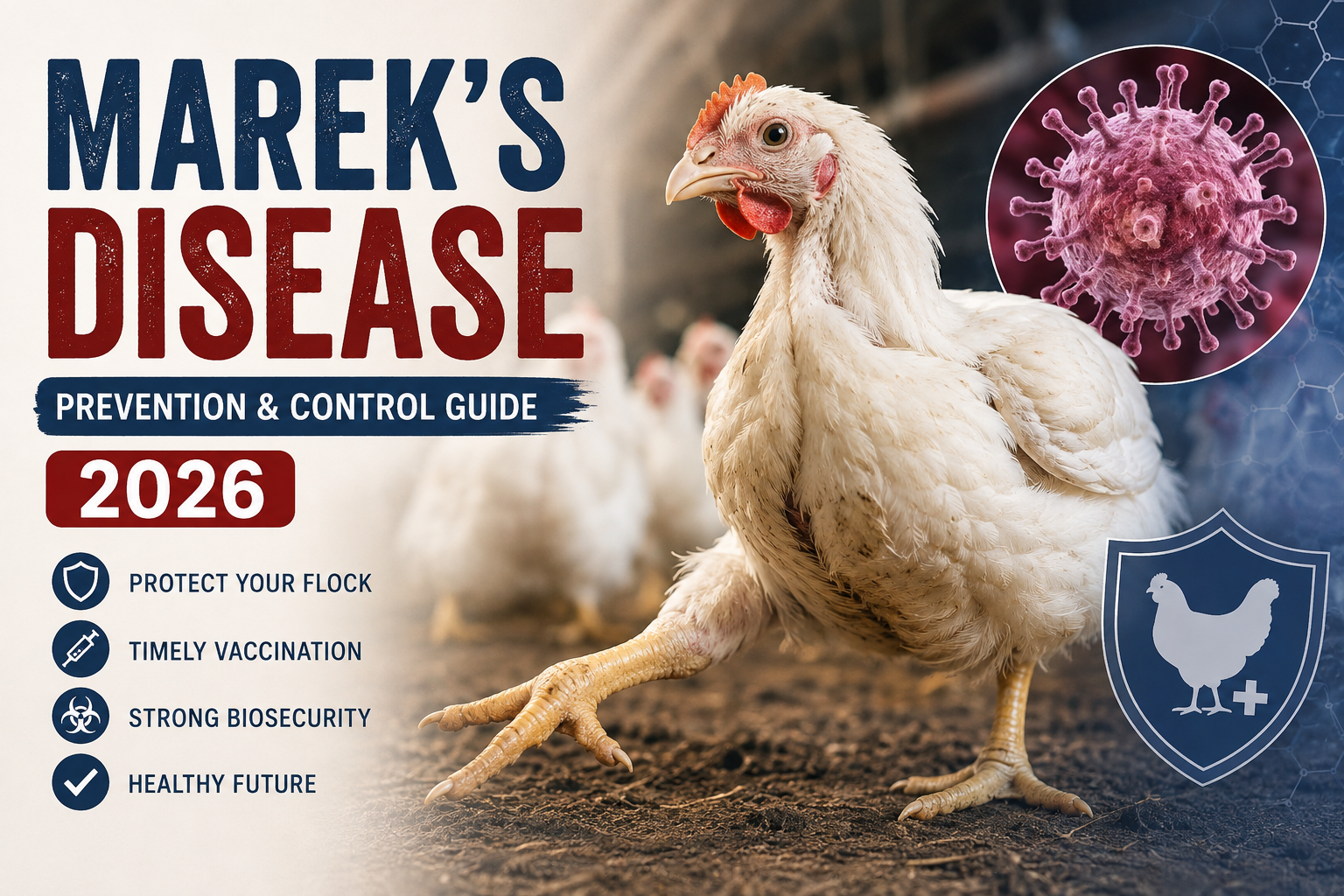
Marek’s Disease: What Chicken Owners Need to Know in 2026
Marek’s Disease remains an important concern for chicken owners, backyard keepers, and commercial poultry producers worldwide in 2026. This highly contagious viral disease can affect nerves, internal organs, and the immune system. Therefore, understanding the warning signs and prevention methods can help protect a flock.
The disease is caused by Marek’s disease virus, an alphaherpesvirus that spreads mainly through infected feather dander and dust. Importantly, infected birds can remain carriers and continue releasing virus into the environment.
Why Marek’s Disease Matters
Marek’s disease can cause serious health and production problems. Some infected chickens develop paralysis or tumors, while others may show few obvious signs. As a result, the disease can sometimes remain unnoticed until birds become weak or die.
The virus is widespread in poultry environments. Moreover, it can survive for months in contaminated litter and dust. This makes good poultry biosecurity especially important for both backyard and commercial flocks.
Key concerns include:
- Leg weakness or paralysis
- Weight loss and poor growth
- Tumors in internal organs
- Reduced flock performance
- Increased mortality in severe outbreaks
Marek’s Disease Symptoms to Watch For
Recognizing Marek’s disease symptoms early can help owners seek professional advice quickly. However, symptoms can vary depending on the virus strain, bird age, vaccination status, and other factors.
Neurological Signs
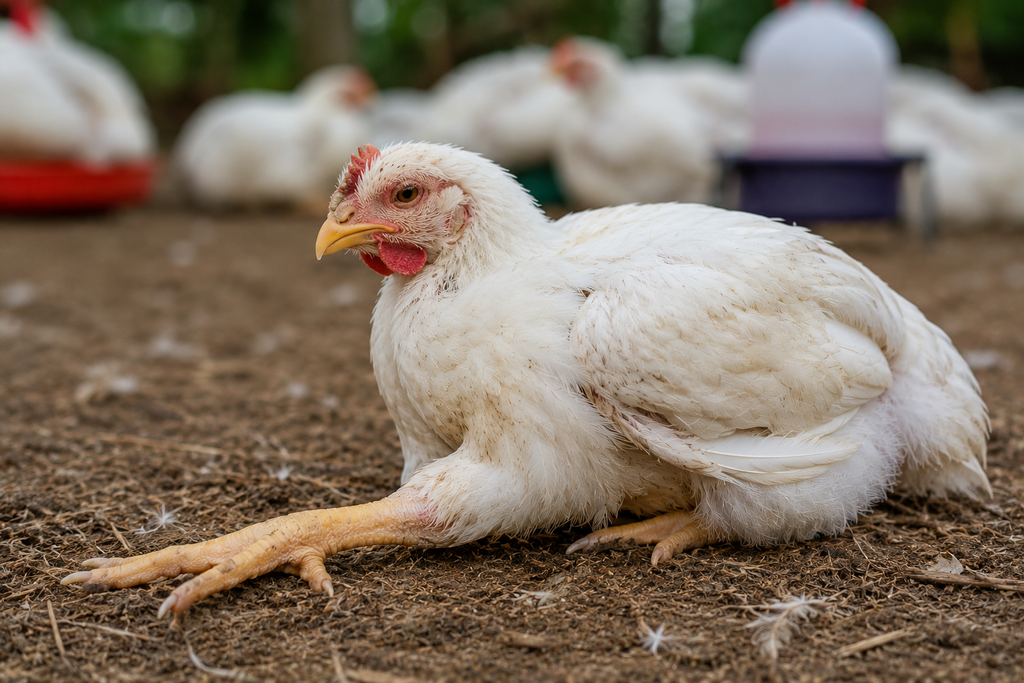
One of the most recognizable signs is leg paresis or paralysis. Affected chickens may stand with one leg stretched forward and the other backward. Additionally, birds may have difficulty walking or reaching food and water.
Eye and Internal Signs
Some birds develop ocular disease, which can cause a grayish iris and irregular pupil margins. Other chickens may develop tumors in organs such as the liver, spleen, kidneys, heart, lungs, or muscles.
How Marek’s Disease Spreads
Marek’s disease spreads easily between chickens. The virus becomes infectious in feather-follicle tissue and can enter the environment through dander. Therefore, contaminated dust, litter, clothing, equipment, and movement between poultry areas can contribute to transmission.
Once the virus enters a flock, infection can spread quickly. Vaccination reduces the risk of clinical disease, but it does not completely prevent infection or virus shedding.
Marek’s Disease Vaccine and Prevention
The most important protection against Marek’s disease is vaccination. Veterinary guidance recommends vaccination as a central control measure, together with strong sanitation and biosecurity.
When Should Chickens Be Vaccinated?
Vaccination is normally given at hatch or in ovo. Early protection matters because young chickens are highly susceptible to exposure. Backyard owners can often request vaccination when purchasing chicks from a hatchery.
Common vaccine types include:
- Turkey herpesvirus (HVT)
- SB-1 or related avirulent strains
- CVI988/Rispens
However, vaccine choice and availability can vary by region. Therefore, poultry owners should follow local veterinary recommendations and product instructions.
How Is Marek’s Disease Diagnosed?
A diagnosis should come from a poultry veterinarian or qualified diagnostic laboratory. Clinical signs alone are not always enough because several poultry diseases can cause similar problems.
Veterinarians may evaluate flock history, clinical signs, gross lesions, and tissue samples. Additionally, PCR, histopathology, immunohistochemistry, or virus testing may help confirm the diagnosis.
Merck Veterinary Manual — Marek’s Disease in Poultry
Buying and Flock Management Guide
When adding chickens to a flock, prevention should begin before the birds arrive.
- Buy vaccinated chicks: Ask the hatchery about Marek’s disease vaccination.
- Limit unnecessary bird movement: Avoid mixing birds from unknown sources.
- Keep housing clean: Remove accumulated litter and reduce dust.
- Control visitors: Use dedicated footwear and clothing around poultry.
- Monitor new birds: Watch closely for weakness, paralysis, or unusual behavior.
Common Mistakes to Avoid
Several management mistakes can increase disease risks.
- Assuming vaccination makes infection impossible
- Buying unvaccinated chicks without checking their history
- Allowing excessive dust and feather dander to build up
- Mixing new birds immediately with an established flock
- Ignoring unexplained paralysis or weight loss
- Attempting to diagnose tumors without veterinary testing
Additionally, antibiotics do not cure Marek’s disease because it is caused by a virus. Current veterinary guidance states that there is no treatment for the disease itself, making prevention especially important.
Maintenance and Biosecurity Tips for 2026
Good chicken disease prevention starts with consistent daily management. Keep feeders and waterers clean, reduce dust, manage litter properly, and avoid unnecessary contact between different poultry groups.
Furthermore, clean equipment before moving it between pens. If a flock experiences unusual deaths, paralysis, or tumors, contact a veterinarian or diagnostic laboratory instead of relying on home treatment.
Vaccination, sanitation, flock management, and genetic resistance all play roles in controlling Marek’s disease.
Conclusion
Marek’s disease remains a serious poultry health challenge in 2026, but practical prevention can greatly reduce the risk of clinical disease. Early vaccination, strong biosecurity, clean housing, and careful flock management are essential.
If you keep chickens, take unusual paralysis, weakness, weight loss, or unexplained deaths seriously. Most importantly, work with a poultry veterinarian to create a prevention plan suited to your local conditions. Protecting your flock starts with prevention today.
Leave a Reply