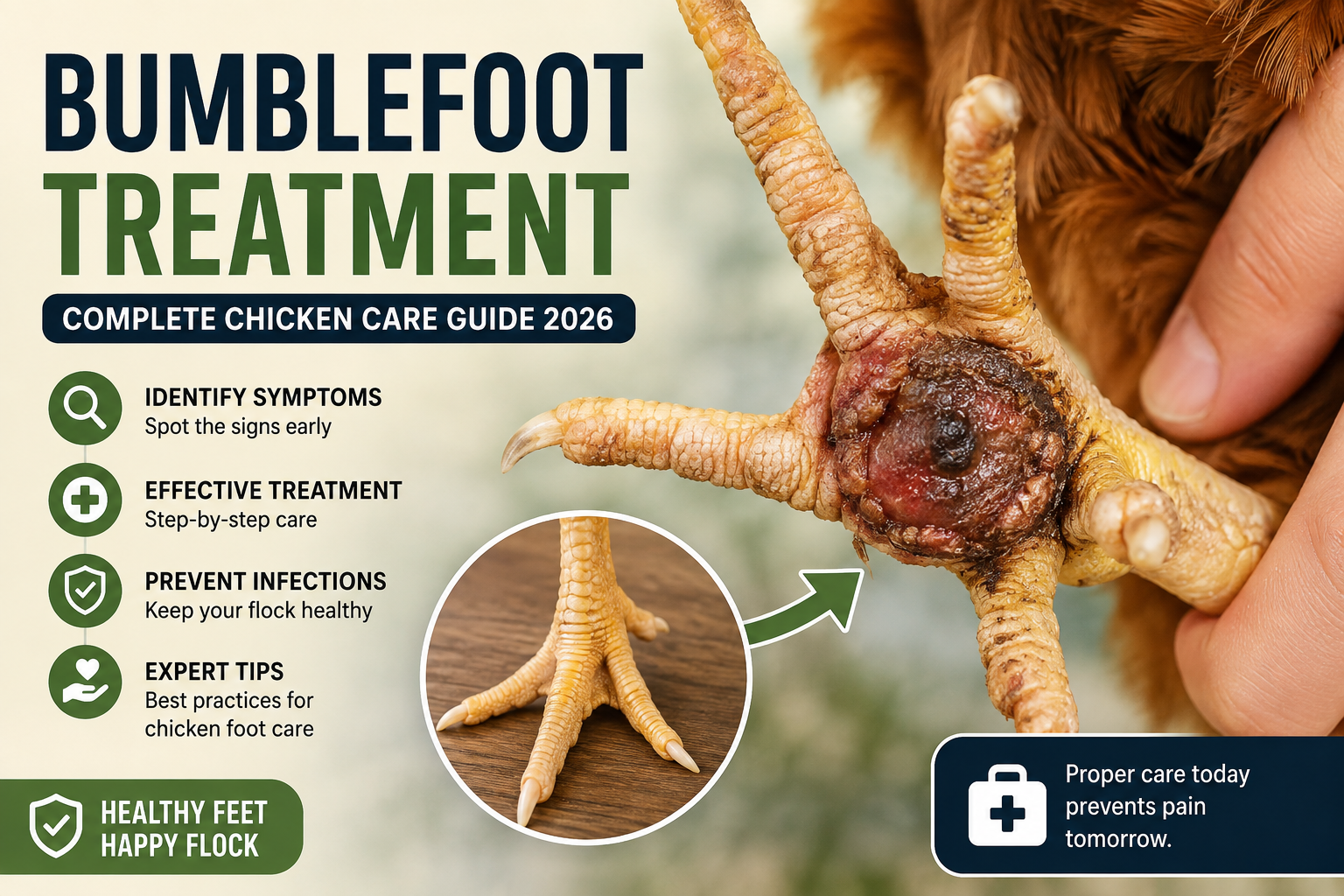
Bumblefoot Treatment: Complete 2026 Chicken Care Guide
Bumblefoot Treatment is important when a chicken develops a swollen, painful, or damaged footpad. Bumblefoot, also called pododermatitis, can begin with a small injury but may progress into a deeper bacterial infection. Therefore, early attention can help protect the bird from worsening pain, lameness, and more serious complications.
For backyard keepers and poultry owners worldwide, checking the feet regularly is a simple part of good flock management. In 2026, prevention remains just as important as treating an existing problem.
Why Bumblefoot Treatment Matters
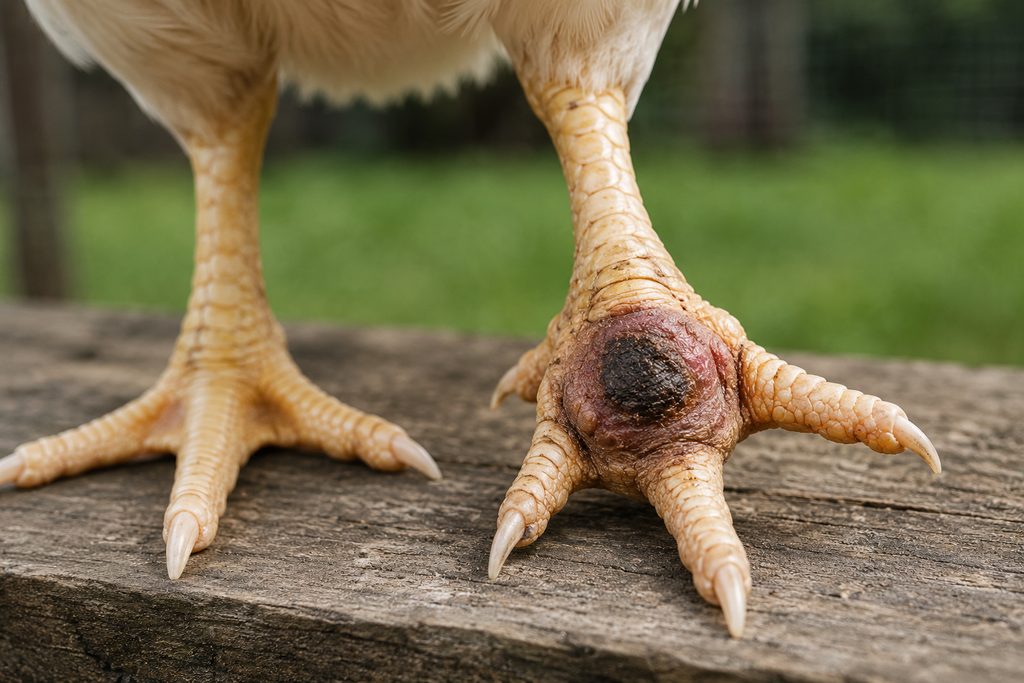
Bumblefoot commonly affects the footpad and may cause swelling, redness, scabs, ulcers, or limping. In chickens, injuries can allow bacteria such as Staphylococcus aureus to enter damaged tissue.
As a result, untreated infections can become deeper and may involve bones or joints. Additionally, birds with mobility problems may put extra pressure on the opposite foot, increasing the risk of another lesion.
Early Bumblefoot Treatment can therefore help:
- Reduce discomfort and inflammation
- Protect the foot from additional injury
- Limit bacterial spread
- Support normal movement
- Reduce the risk of recurring foot problems
Bumblefoot Treatment: Key Signs to Check
Bumblefoot Symptoms
Before starting Bumblefoot Treatment, inspect both feet carefully. Common warning signs include:
- Swollen footpads
- Red or irritated skin
- A dark scab or crust
- Open sores or ulcers
- Heat around the affected area
- Limping or reluctance to walk
- Reduced activity
However, not every swollen foot has the same cause. Therefore, severe swelling, worsening lameness, or signs of systemic illness should be evaluated by a veterinarian.
What Can Cause the Problem?
Bumblefoot often follows an injury that allows bacteria to enter the footpad. Sharp objects, rough surfaces, poor litter, inappropriate perches, excess body weight, and abnormal weight-bearing can increase risk.
Bumblefoot Treatment Options
1. Clean and Protect the Foot
For a minor wound, gently clean the affected area using an appropriate wound-cleaning method. Poultry-care guidance from the University of Minnesota Extension lists saline, suitable antiseptics, wound-care products, gauze, and vet wrap among useful supplies. Always follow product directions.
Keep the bird in a clean, dry area while the foot heals. Furthermore, changing wet or dirty bedding can reduce additional contamination.
2. Veterinary Assessment
If the lesion is deep, swollen, painful, persistent, or associated with significant lameness, professional assessment is important. A veterinarian may need to determine whether the infection has reached deeper tissues.
In advanced cases, treatment may require procedures to remove infected or dead tissue, along with appropriate medication. Do not attempt aggressive cutting or surgery at home. Bumblefoot Treatment should be tailored to the severity of the infection.
3. Antibiotics When Appropriate
Bacterial infections may require antimicrobial treatment. However, poultry owners should not randomly select antibiotics or use leftover medication.
Merck Veterinary Manual notes that antimicrobial treatment for staphylococcal infections should account for appropriate drug selection and egg or meat withdrawal requirements.
Types and Severity of Bumblefoot
Mild Cases
A mild case may involve redness, early swelling, or a small damaged area. Early cleaning, protection, dry housing, and correction of the underlying cause may help prevent progression.
Moderate Cases
Moderate infections can involve a visible scab, swelling, discomfort, and lameness. At this stage, veterinary guidance becomes increasingly valuable because deeper infection may be present.
Severe Cases
Severe disease may involve extensive swelling, significant pain, tissue damage, or deeper infection. Bumblefoot can progress to complications such as osteomyelitis or systemic infection, so professional care is particularly important.
Common Mistakes to Avoid
Avoid these mistakes when managing a chicken foot infection:
- Do not ignore limping. It can indicate significant pain or deeper disease.
- Do not cut deeply into the footpad. This can cause bleeding and additional tissue damage.
- Do not use random antibiotics. Drug choice and withdrawal periods matter.
- Do not keep the bird on wet bedding. Moist, dirty conditions can worsen wounds.
- Do not treat the wound while ignoring its cause. Sharp surfaces or poor housing can lead to recurrence.
Preventing Future Problems
Good management is one of the most effective ways to reduce recurring foot injuries. Remove sharp wires, splinters, and other hazards from the chicken area. Additionally, maintain clean and dry litter and inspect perches and flooring regularly.
Regularly check the feet of heavier birds, older birds, and chickens with previous leg problems. Moreover, maintaining appropriate body condition and providing suitable housing can reduce excessive pressure on the footpads.
Bumblefoot Treatment: When to Call a Vet
Seek veterinary help if the chicken cannot walk normally, the swelling is severe, the wound is deep, the condition keeps returning, or the bird becomes weak or stops eating. A veterinarian can assess whether bacteria have spread beyond the original lesion and determine whether additional treatment is required.
Because poultry medication rules differ between countries, food-producing birds also require special attention to approved drugs and withdrawal periods.
Conclusion
Early Bumblefoot Treatment can make a major difference in a chicken’s comfort and recovery. Start by identifying the cause, keeping the affected area clean and dry, protecting the bird from further injury, and seeking veterinary help when the condition is moderate or severe. With regular foot checks and better housing management, poultry owners can reduce the risk of future bumblefoot problems.
Leave a Reply