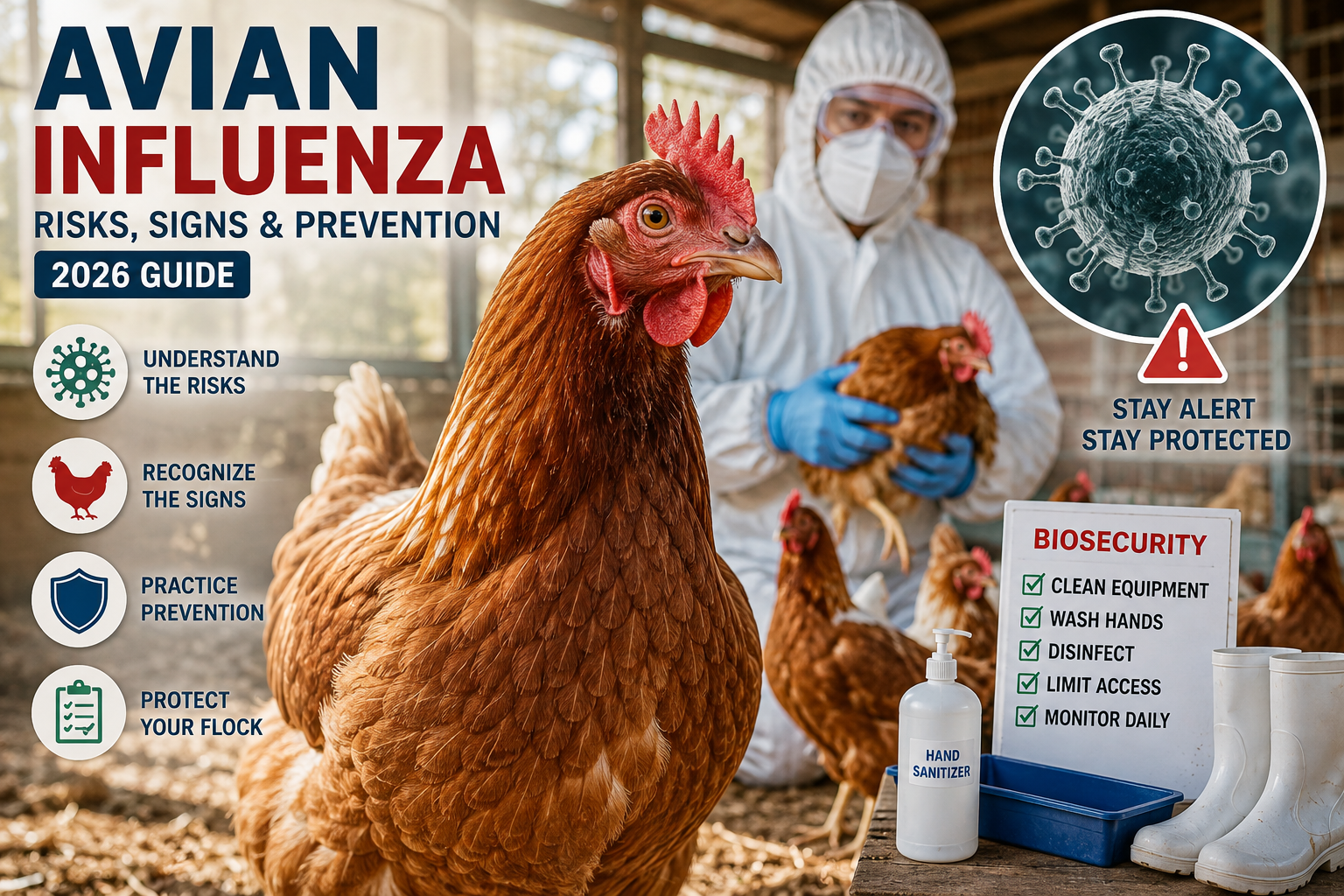
Avian 2026: Latest Update
Avian Influenza remains an important animal-health issue in 2026, affecting wild birds, poultry, and occasionally mammals and humans. The disease is caused by influenza A viruses, and some strains can spread rapidly through bird populations.
According to the World Health Organization (WHO), avian influenza viruses continue to circulate in animals, while sporadic human infections are still being reported. However, current evidence does not show sustained human-to-human transmission of H5N1.
For poultry owners, the biggest concern is protecting healthy birds from exposure. Therefore, strong poultry biosecurity remains one of the most important tools for reducing the risk of infection.
Why Avian Influenza Matters in 2026
Avian matters because highly pathogenic strains can cause severe disease and sudden deaths in poultry. In some outbreaks, entire flocks may become affected within a short period.
Wild birds can also carry highly pathogenic avian influenza without showing obvious illness. As a result, migration and contact between wild birds and domestic poultry can increase exposure risks. USDA APHIS continues to monitor wild bird detections across the United States.
The latest WHO assessment published in August 2026 continues to monitor influenza viruses at the human-animal interface.
Avian Symptoms in Chickens
Recognizing warning signs early can help poultry owners respond quickly. Avian symptoms may vary depending on the virus strain and the bird species affected.
Common Signs to Watch For
Possible signs include:
- Sudden death with little warning
- Loss of appetite or energy
- Reduced egg production
- Soft-shelled or misshapen eggs
- Coughing, sneezing, or breathing difficulty
- Nasal discharge
- Swelling around the eyes, comb, or wattles
- Purple discoloration of the comb or wattles
- Diarrhea
- Stumbling or unusual head and neck movements
These signs can also occur with other poultry diseases. Therefore, owners should avoid diagnosing a flock based only on symptoms. USDA APHIS recommends contacting a veterinarian or relevant animal-health authority when disease is suspected.
Types of Avian Influenza
There are two broad categories that poultry owners should understand.
Highly Pathogenic Avian Influenza
Highly pathogenic avian influenza, or HPAI, can cause severe illness and high mortality in domestic poultry. Some H5 viruses currently circulating in birds belong to this category.
Low Pathogenic Avian Influenza
Low pathogenic avian influenza, or LPAI, often causes mild or no symptoms. However, certain LPAI viruses can change over time and become highly pathogenic in poultry.
How Avian Influenza Spreads
Avian Influenza can spread through direct contact between infected and healthy birds. It can also move through contaminated manure, equipment, cages, clothing, footwear, hands, and other materials.
Therefore, limiting contact between domestic poultry and wild birds is essential. Keep feed and water protected from wild bird access, and clean equipment before moving it between poultry areas.
Avian Influenza Prevention Tips
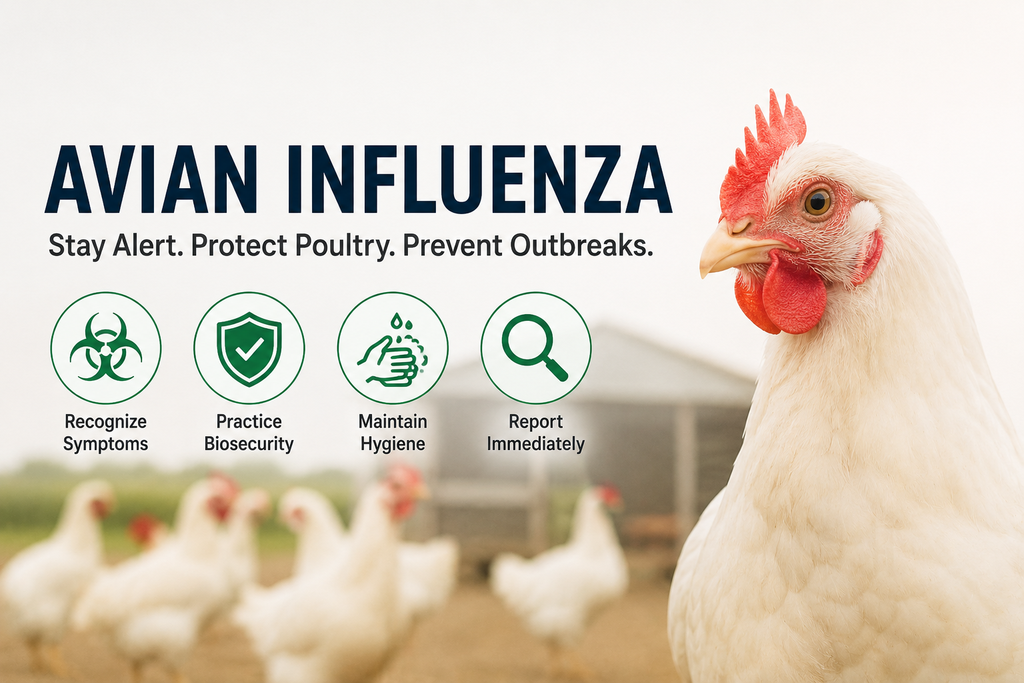
Good avian influenza prevention starts with everyday biosecurity habits.
Protect Your Flock
- Keep poultry away from wild birds whenever possible.
- Use dedicated footwear and clothing around poultry areas.
- Wash hands before and after handling birds.
- Clean and disinfect equipment regularly.
- Avoid sharing cages, tools, or other poultry equipment.
- Quarantine new birds before introducing them to an established flock.
- Monitor birds every day for unusual illness or deaths.
- Report suspected cases according to local animal-health rules.
Additionally, avoid touching sick or dead wild birds. If you discover unusual bird deaths, contact the appropriate veterinary or animal-health authority in your area.
Common Mistakes to Avoid
Many poultry owners unintentionally increase disease risk. Avoid bringing visitors into poultry areas without proper hygiene measures. Also, do not allow contaminated boots, vehicles, cages, or equipment to move freely between flocks.
Another common mistake is ignoring sudden changes in bird behavior. Early reporting can help authorities investigate potential outbreaks and reduce further spread.
Avian Influenza and Human Health
Avian Influenza viruses rarely infect humans, but exposure to infected animals or contaminated environments can create a risk. WHO states that human infections are primarily associated with close contact with infected birds, other animals, or contaminated environments. Sustained human-to-human transmission of H5N1 has not been reported.
The joint FAO, WHO, and WOAH assessment published in May 2026 described the global public-health risk from currently assessed H5 viruses as low, while occupationally or frequently exposed people may face greater risk depending on local conditions.
Conclusion: Stay Alert in 2026
Avian Influenza continues to require careful monitoring in 2026. Although the current global public-health risk remains assessed as low, the virus continues to circulate among animals, making flock protection and surveillance important.
For poultry owners, prevention starts with strong poultry biosecurity, daily observation, clean equipment, and reduced contact with wild birds. Stay informed through your local veterinary authority and trusted sources such as [WHO Avian Influenza Information] and [USDA APHIS Avian Influenza Updates]. Taking simple precautions today can help protect your flock tomorrow.
Leave a Reply