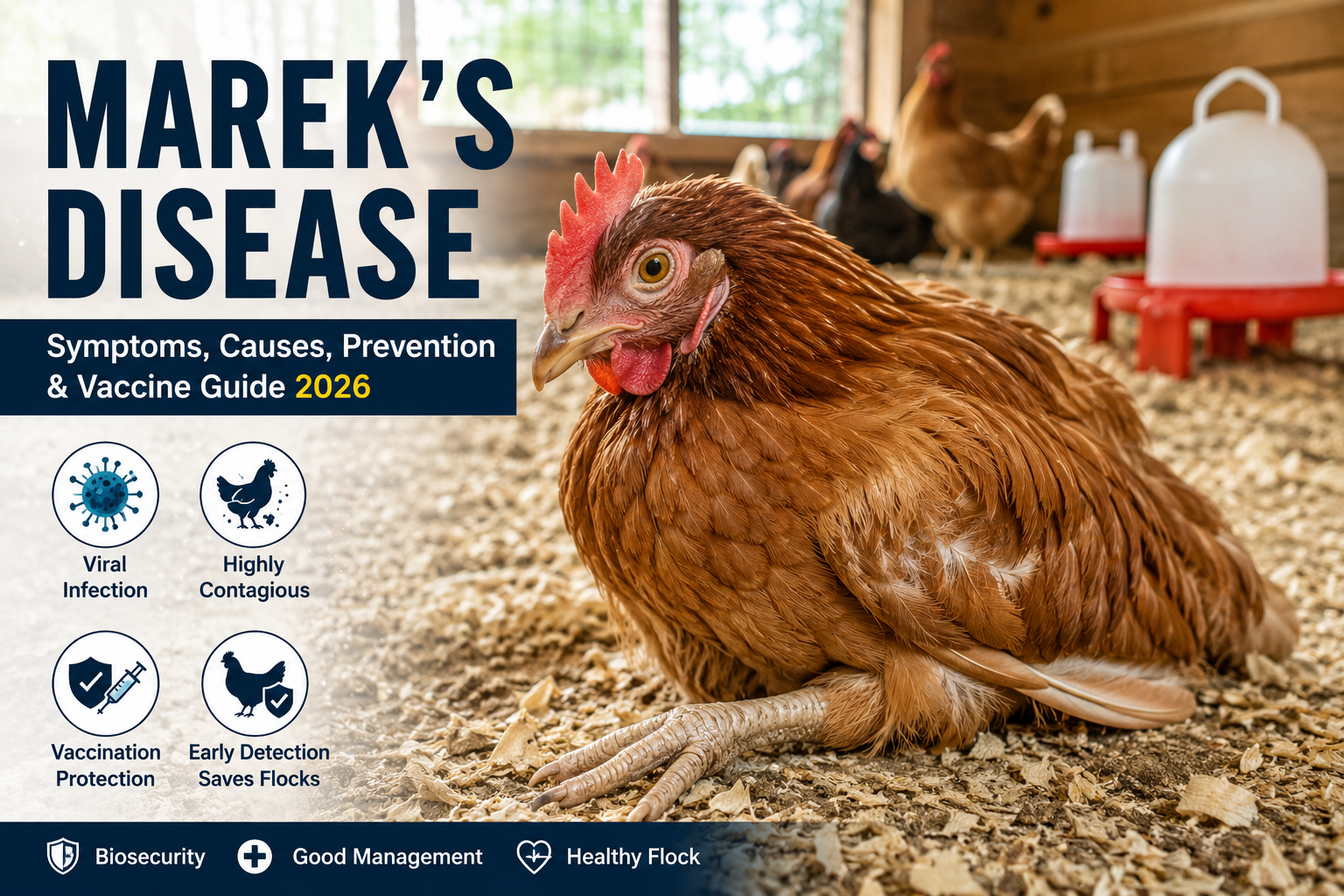
Marek’s Disease: What Chicken Owners Need to Know in 2026
Marek’s Disease remains one of the most important viral diseases affecting chickens worldwide. It can cause nerve problems, paralysis, tumors, immune suppression, and death. For backyard chicken keepers and poultry producers, understanding the disease is essential for protecting a flock.
The good news is that vaccination and strong biosecurity can greatly reduce losses. However, vaccination does not completely stop infection or virus shedding. Therefore, good flock management remains important in 2026.
Why Marek’s Disease Matters
Marek’s Disease is caused by Marek’s disease virus, a highly contagious herpesvirus of poultry. The virus spreads mainly through infected feather dander and dust. It can remain infectious in poultry-house litter and dust for long periods.
As a result, even apparently healthy birds can expose other chickens. Infected birds may carry the virus for long periods. Therefore, preventing early exposure is especially important for young chicks.
Marek’s Disease Symptoms
The signs can vary depending on the virus strain, bird age, genetics, and immune status. Common Marek’s disease symptoms include:
- Weakness or unusual tiredness
- Poor growth or weight loss
- Leg weakness or paralysis
- Difficulty walking
- One leg positioned forward while the other extends backward
- Changes in the eye, including a gray iris or irregular pupil
- Tumors affecting internal organs
- Reduced egg production
Clinical disease commonly appears in young chickens, although older birds can also become affected.
How Marek’s Disease Spreads
Marek’s Disease spreads efficiently between chickens. Infected feather follicles release virus into the environment. Dust and dander then help carry the virus throughout a coop or poultry facility.
Additionally, people, equipment, clothing, and contaminated materials can help move infectious dust between areas.
For that reason, poultry owners should limit unnecessary movement between flocks. New birds should also be managed carefully before joining an established flock.
Marek’s Disease Vaccine and Prevention
Marek’s Disease Vaccine
Vaccination is the central tool for controlling Marek’s Disease. Common vaccine types include turkey herpesvirus (HVT), SB-1, and CVI988/Rispens. Commercial vaccination is commonly performed at hatch or through in-ovo vaccination.
For backyard owners, buying chicks already vaccinated at hatch can be a practical option. Merck Veterinary Manual notes that vaccination at hatch is important because birds become susceptible early in life.
Importantly, vaccination helps prevent clinical disease but does not necessarily prevent infection or virus shedding. Therefore, vaccination should be combined with biosecurity.
Biosecurity Practices
Good poultry disease prevention can reduce exposure and help protect vulnerable birds.
Use these basic practices:
- Keep the coop clean and dry.
- Remove excessive dust and contaminated litter.
- Clean equipment regularly.
- Avoid sharing poultry equipment between flocks.
- Quarantine new birds when appropriate.
- Reduce unnecessary contact between separate groups.
- Maintain good ventilation.
- Follow the vaccine manufacturer’s instructions.
Additionally, limiting contaminated dust and dander is important because these materials can carry infectious virus.
Types and Clinical Forms of Marek’s Disease
Marek’s Disease can appear in several forms. The most noticeable form involves neurological problems.
Neurological Form
This form can cause weakness, poor coordination, leg paralysis, or difficulty reaching food and water. Nerve enlargement is a classic finding associated with the disease.
Tumor-Associated Form
The virus can cause lymphoid tumors in organs such as the liver, spleen, kidneys, heart, lungs, muscles, and reproductive organs. These tumors can severely affect a bird’s health.
Ocular Form
Eye involvement can cause changes in the iris and pupil. Affected birds may develop a grayish iris or irregular pupil margins.
How Is Marek’s Disease Diagnosed?
Symptoms alone cannot always confirm Marek’s Disease. Several other poultry conditions can cause weakness, paralysis, weight loss, or tumors.
Veterinarians may use the flock history, clinical signs, necropsy findings, histology, PCR testing, immunohistochemistry, or other laboratory methods. A professional diagnosis is especially important when several birds become sick.
Can Marek’s Disease Be Treated?
There is currently no specific treatment that eliminates the infection or cures Marek’s Disease. Prevention is therefore much more effective than trying to treat affected birds.
If a chicken shows paralysis, severe weakness, unusual eye changes, or other serious symptoms, contact a poultry veterinarian. Avoid assuming that every case of paralysis is Marek’s disease because other conditions can produce similar signs.
Common Mistakes to Avoid
Chicken owners should avoid these common mistakes:
- Buying chicks without asking about vaccination.
- Mixing new birds with the flock immediately.
- Ignoring excessive coop dust.
- Reusing dirty equipment between flocks.
- Assuming vaccination prevents all infection.
- Trying random medications without veterinary advice.
- Delaying professional diagnosis when multiple birds become sick.
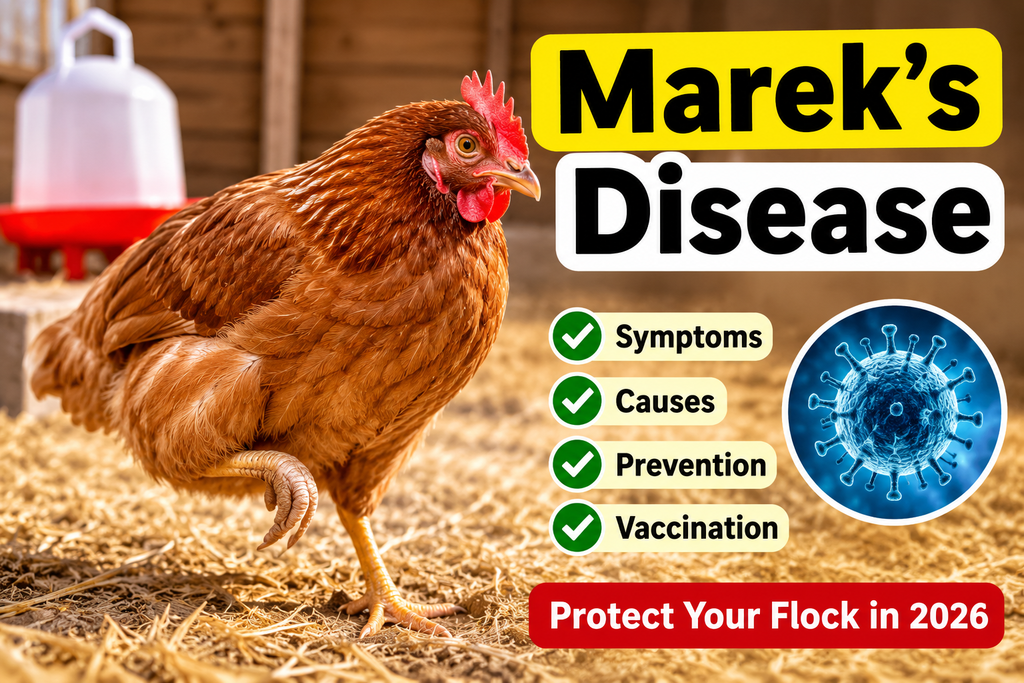
Marek’s Disease Care Tips for 2026
A practical prevention routine can make flock management easier. Keep housing clean, reduce dust, provide good nutrition, and maintain proper ventilation.
Additionally, keep accurate vaccination records. If you purchase chicks, ask the hatchery about the vaccine used and the vaccination date.
Finally, monitor young chickens closely. Early identification of weakness, paralysis, poor growth, or unusual eye changes allows you to seek veterinary advice sooner.
Conclusion
Marek’s Disease remains a serious concern for chicken owners in 2026, but effective prevention can significantly reduce the risk of severe disease. Vaccination at the appropriate age, strong biosecurity, clean housing, and careful flock management are key defenses.
If you keep chickens, review your vaccination and biosecurity practices today. When unusual symptoms appear, consult a poultry veterinarian rather than relying on guesswork.
Leave a Reply