How to Treat Mites in Chickens (2026 Complete Guide)
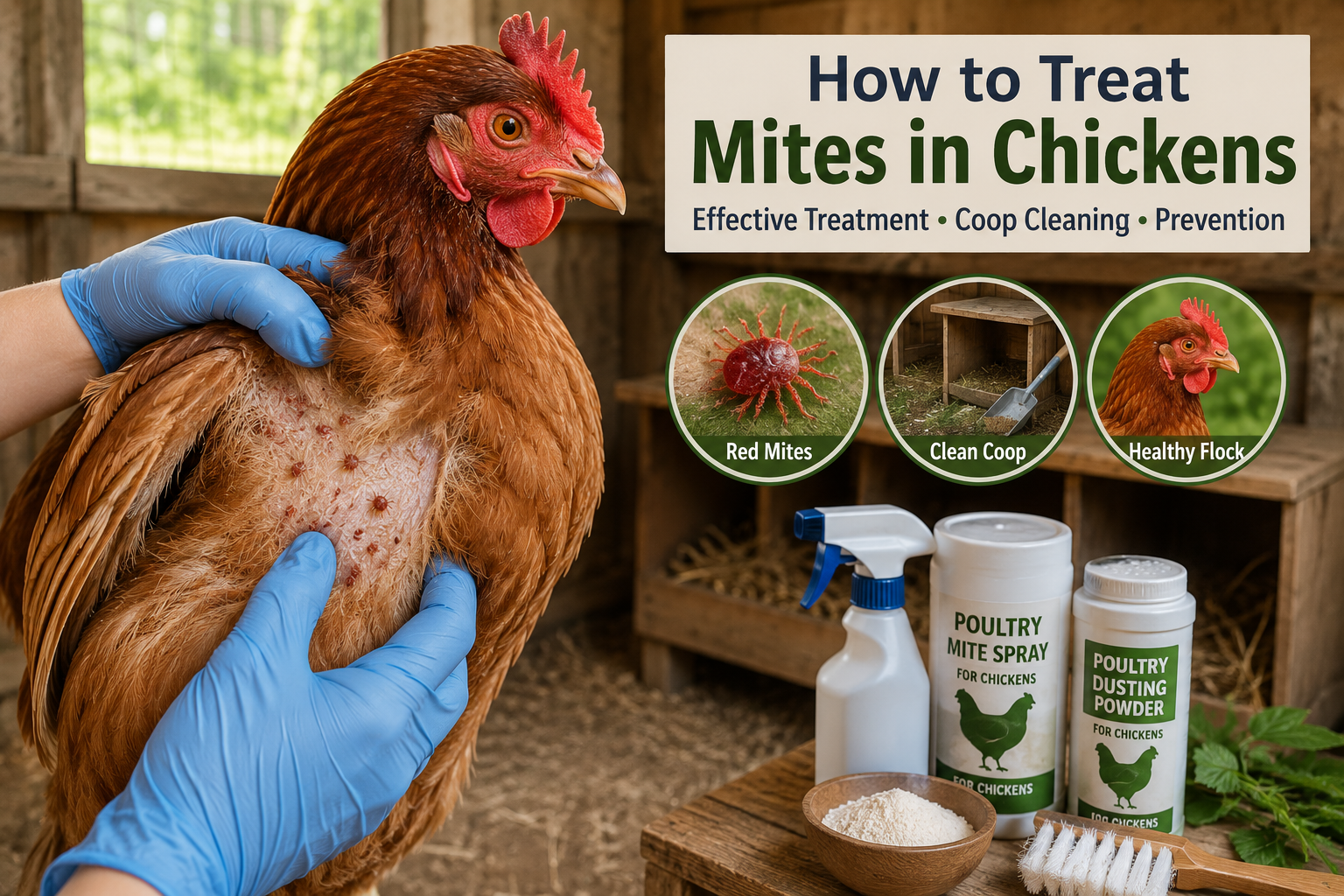
Keeping backyard chickens healthy starts with preventing parasites. How to Treat Mites in Chickens is one of the most common questions poultry owners ask because mites can quickly spread through an entire flock. Fortunately, with the right treatment plan and regular coop maintenance, you can remove mites and help your chickens recover fast. This updated 2026 guide explains the best treatment options, prevention methods, and common mistakes to avoid.
Why It Matters to Treat Chicken Mites Quickly
Mites are tiny parasites that feed on a chicken’s blood or skin. As a result, infected birds become stressed, lose feathers, and produce fewer eggs. Severe infestations may even lead to anemia or death if left untreated.
Treating mites early provides several benefits:
- Improves chicken health
- Restores egg production
- Prevents feather loss
- Reduces stress
- Stops mites from spreading throughout the flock
Additionally, healthy birds are more active and have stronger immune systems.
How to Treat Mites in Chickens Safely
Learning How to Treat Mites in Chickens involves treating both the birds and their environment. Killing mites on the chicken alone is not enough because thousands of mites hide inside the coop.
Use Poultry-Approved Mite Treatments
Choose products labeled for poultry use.
Popular options include:
- Permethrin poultry spray
- Poultry dusting powder
- Approved mite sprays
- Veterinary-recommended medications
Always follow the label instructions carefully.
Clean and Disinfect the Chicken Coop
A dirty coop allows mites to reproduce quickly.
Follow these steps:
- Remove all bedding.
- Scrub nesting boxes.
- Wash feeders and waterers.
- Spray approved disinfectant.
- Let the coop dry completely.
- Add fresh bedding.
Additionally, inspect cracks and wooden joints where red mites often hide.
Treat Every Chicken
Even birds without symptoms should receive treatment.
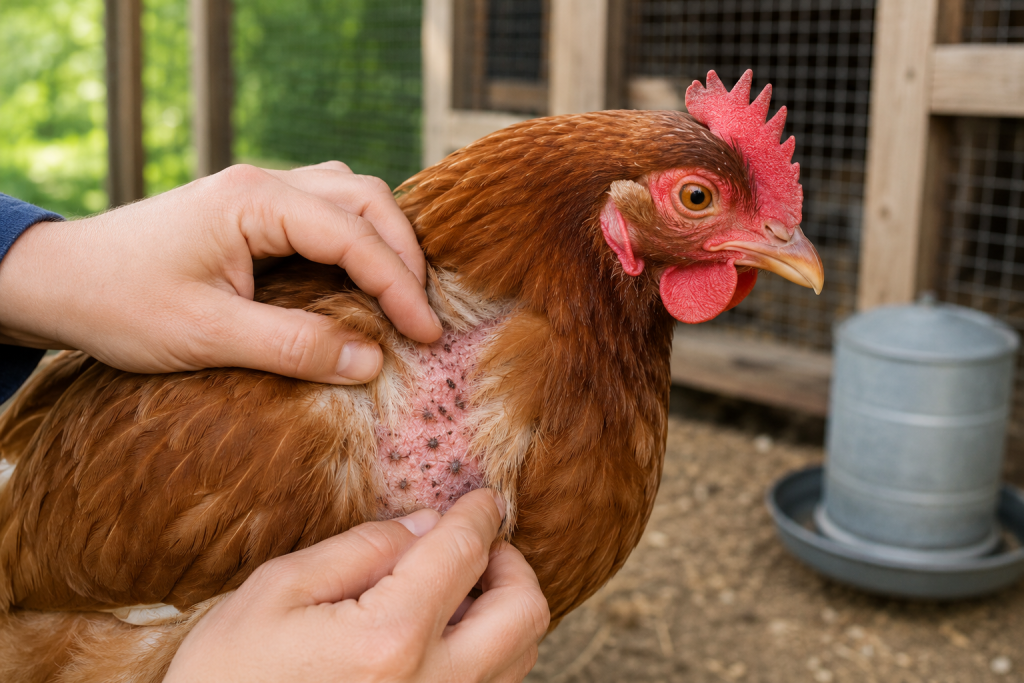
Check carefully around:
- Vent area
- Under wings
- Neck feathers
- Tail feathers
Repeat treatment according to the product instructions because mite eggs can hatch several days later.
Types of Chicken Mites
Understanding the different mite species helps you choose the right treatment.
Red Mites
Red mites hide during the day and feed on chickens at night. They commonly live inside wooden coops and multiply quickly.
Northern Fowl Mites
These mites stay on birds all day and usually gather near the vent.
Scaly Leg Mites
These mites burrow under the leg scales, causing thick, raised, and crusty legs.
Knowing the species makes How to Treat Mites in Chickens much easier and more effective.
Buying Guide for Chicken Mite Treatments
Before purchasing a treatment product, consider these important factors.
Effectiveness
Choose products proven to kill adult mites and newly hatched mites.
Safety
Only use treatments approved for chickens. Never apply products intended for other animals unless your veterinarian recommends them.
Ease of Application
Sprays work well for large flocks, while dust powders are useful for spot treatment.
Repeat Treatment
Some products require a second application after 7–10 days to eliminate newly hatched mites.
Common Mistakes to Avoid
Many chicken owners accidentally make infestations worse.
Avoid these common errors:
- Treating only infected birds
- Forgetting to clean the coop
- Ignoring nest boxes
- Skipping follow-up treatments
- Using unsafe chemicals
- Waiting too long before treatment
However, acting early greatly improves recovery.
Maintenance Tips to Prevent Future Mite Problems
Preventing mites is much easier than removing them.
Use these simple maintenance tips:
- Clean the coop every week.
- Replace bedding regularly.
- Inspect birds twice each month.
- Keep wild birds away from feeders.
- Provide clean dust-bathing areas.
- Quarantine new chickens before introducing them to the flock.
- Improve ventilation to reduce moisture.
Additionally, routine inspections help detect problems before they become severe.
Natural Ways to Support Mite Control
Many poultry keepers combine commercial treatments with natural management practices.
Helpful options include:
- Keeping coops dry and clean
- Providing dust baths with clean sand and wood ash (where appropriate)
- Replacing old nesting material frequently
- Maintaining good flock nutrition to support overall health
Natural methods alone may not eliminate heavy infestations, but they can support long-term chicken mites treatment and poultry mite prevention.
Conclusion
Knowing How to Treat Mites in Chickens helps protect your flock from discomfort, feather loss, and reduced egg production. The best results come from treating every bird, thoroughly cleaning the coop, and repeating treatment when needed. Additionally, regular inspections and good hygiene can prevent future infestations. Start using these proven 2026 practices today so your chickens stay healthy, productive, and free from mites.
Leave a Reply