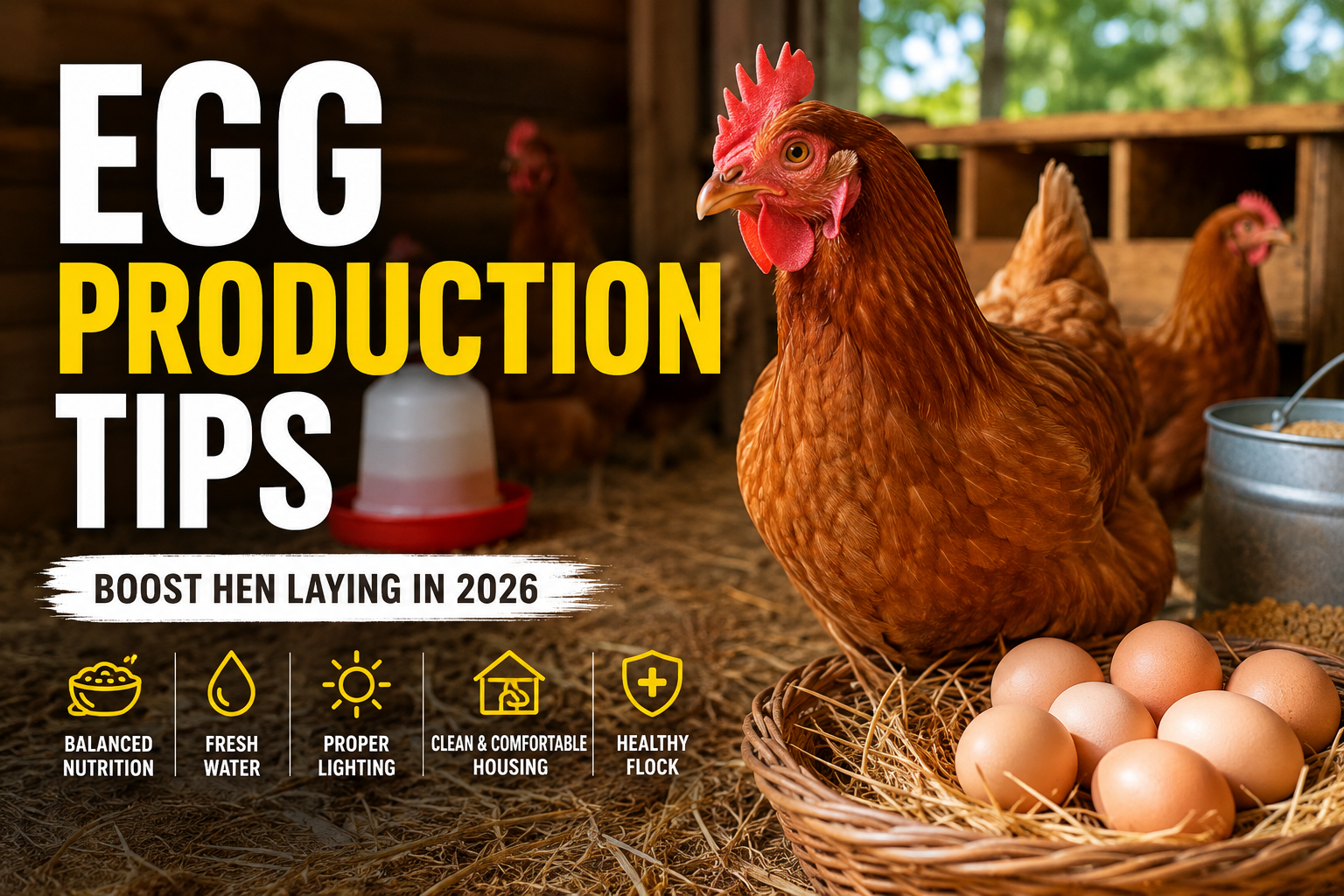
Egg Production Tips: Boost Hen Laying in 2026
Getting fewer eggs than expected can frustrate backyard chicken keepers and small-flock owners. The good news is that simple management changes can make a major difference. These Egg Production Tips focus on the basics that matter most in 2026, including nutrition, clean water, lighting, housing, and flock health.
Hens do not produce eggs at the same rate throughout their lives. Breed, age, daylight, diet, stress, temperature, and health can all affect production. Therefore, improving daily care is often the best place to start.
Why Egg Production Tips Matter
Good flock management supports both egg quantity and egg quality. Additionally, healthy hens are more likely to maintain consistent laying patterns.
According to University of Minnesota Extension, hens generally begin laying at around six months, while production is strongest during their earlier productive years. Daylight also has a major effect on laying behavior.
For that reason, effective Egg Production Tips should focus on several areas rather than one quick fix.
Key Egg Production Tips for 2026
1. Provide a Complete Layer Feed
Nutrition is one of the most important factors affecting laying performance. Use a complete feed designed specifically for laying hens rather than relying mainly on kitchen scraps or scratch grains.
A suitable layer ration should provide adequate protein, vitamins, minerals, and calcium. Penn State Extension notes that layer diets commonly contain around 16–18% protein, while additional calcium such as oyster shell can be offered separately.
Therefore, layer hen nutrition should be a daily priority.
2. Keep Fresh Water Available
Clean water is essential for digestion, health, and egg production. Moreover, hens can drink substantially more during hot weather.
Clean drinkers regularly and check them several times during extreme heat. University extension guidance emphasizes that poor water availability can quickly reduce flock productivity.
As a result, never allow drinkers to run dry.
3. Manage Daylight Carefully
Light strongly influences reproductive activity in laying hens. During shorter winter days, production can decline unless supplemental lighting is used.
For flocks aiming for year-round production, extension guidance commonly recommends around 14–16 hours of total light per day. However, do not exceed 16 hours, and make lighting changes gradually.
Use a reliable timer and provide a proper dark period for rest.
4. Reduce Heat and Environmental Stress
Hot weather can cause hens to eat less and drink more. Consequently, egg production and shell quality may suffer during heat stress.
Provide shade, good airflow, and plenty of cool, clean water. Keep the coop dry and well ventilated. These simple chicken laying tips can help hens cope better with seasonal changes.
Types of Factors That Affect Egg Production
Breed and Age
Some breeds naturally produce more eggs than others. Commercial hybrid layers can have very high annual production, while heritage breeds may lay fewer eggs.
Age also matters. Production normally declines as hens grow older and may temporarily drop during molting.
Housing and Nest Boxes
A clean, secure coop helps reduce stress and health problems. Provide comfortable nest boxes with clean, dry bedding.
A useful starting point is approximately one nest box for every four to five hens.
You can also read our internal guide on chicken coop management for additional housing advice.
Buying and Flock-Management Guide
If you are building a flock for egg production, consider these points:
- Choose a breed known for reliable laying.
- Buy healthy pullets from a reputable source.
- Select age-appropriate feed.
- Provide continuous access to clean water.
- Plan a consistent lighting schedule.
- Check hens regularly for signs of illness or injury.
Additionally, track weekly egg numbers. A simple record can help you identify gradual production changes before they become serious.
Common Egg Production Mistakes to Avoid
Avoid these common mistakes:
- Feeding too many treats instead of complete feed.
- Allowing waterers to become dirty or empty.
- Changing lighting schedules suddenly.
- Keeping hens in damp, poorly ventilated housing.
- Ignoring heat stress.
- Overcrowding the coop.
- Failing to monitor changes in egg size or shell quality.
Strong eggshells also depend on appropriate nutrition and calcium availability.
Maintenance Tips for Better Production
Daily care does not need to be complicated. First, check feed and water every morning. Next, inspect the flock for unusual behavior, injuries, or illness.
Clean dirty drinkers and remove wet bedding. Additionally, collect eggs regularly and keep nesting areas clean and dry to support egg quality and hygiene.
During summer, pay extra attention to water consumption and ventilation. During winter, monitor daylight and maintain a dry, well-ventilated coop.
Frequently Asked Questions About Egg Production Tips
1. What are the best Egg Production Tips for beginners?
The best Egg Production Tips include providing balanced layer feed, fresh water, clean housing, enough space, and proper lighting. These basics help support healthy hens and consistent laying.
2. Can Egg Production Tips help hens lay more eggs?
Yes. Following practical Egg Production Tips can help create better conditions for laying. However, breed, age, season, health, and daylight also affect egg production.
3. What feed should I use with Egg Production Tips?
A complete layer feed with suitable protein, vitamins, minerals, and calcium is important. Combining good nutrition with effective Egg Production Tips can support healthy egg production.
4. Do Egg Production Tips work during winter?
Yes. Egg Production Tips can be especially useful during winter because shorter daylight hours may reduce laying. Proper lighting, nutrition, warmth, and fresh water can help maintain a healthy routine.
5. How quickly do Egg Production Tips improve laying?
Results vary between flocks. Some changes may help quickly, while others take several weeks. Consistent care and following reliable Egg Production Tips are more effective than expecting an instant increase.
Final Thoughts
The best Egg Production Tips are based on consistent care rather than a single supplement or quick solution. Give hens balanced feed, fresh water, suitable lighting, clean housing, enough space, and proper protection from temperature extremes.
Most importantly, monitor your flock regularly and respond quickly when production changes. With the right routine, these Egg Production Tips can help backyard keepers and small-scale poultry owners support healthier hens and more consistent egg production throughout 2026.
For more practical poultry advice, explore our latest chicken care guides.
Leave a Reply