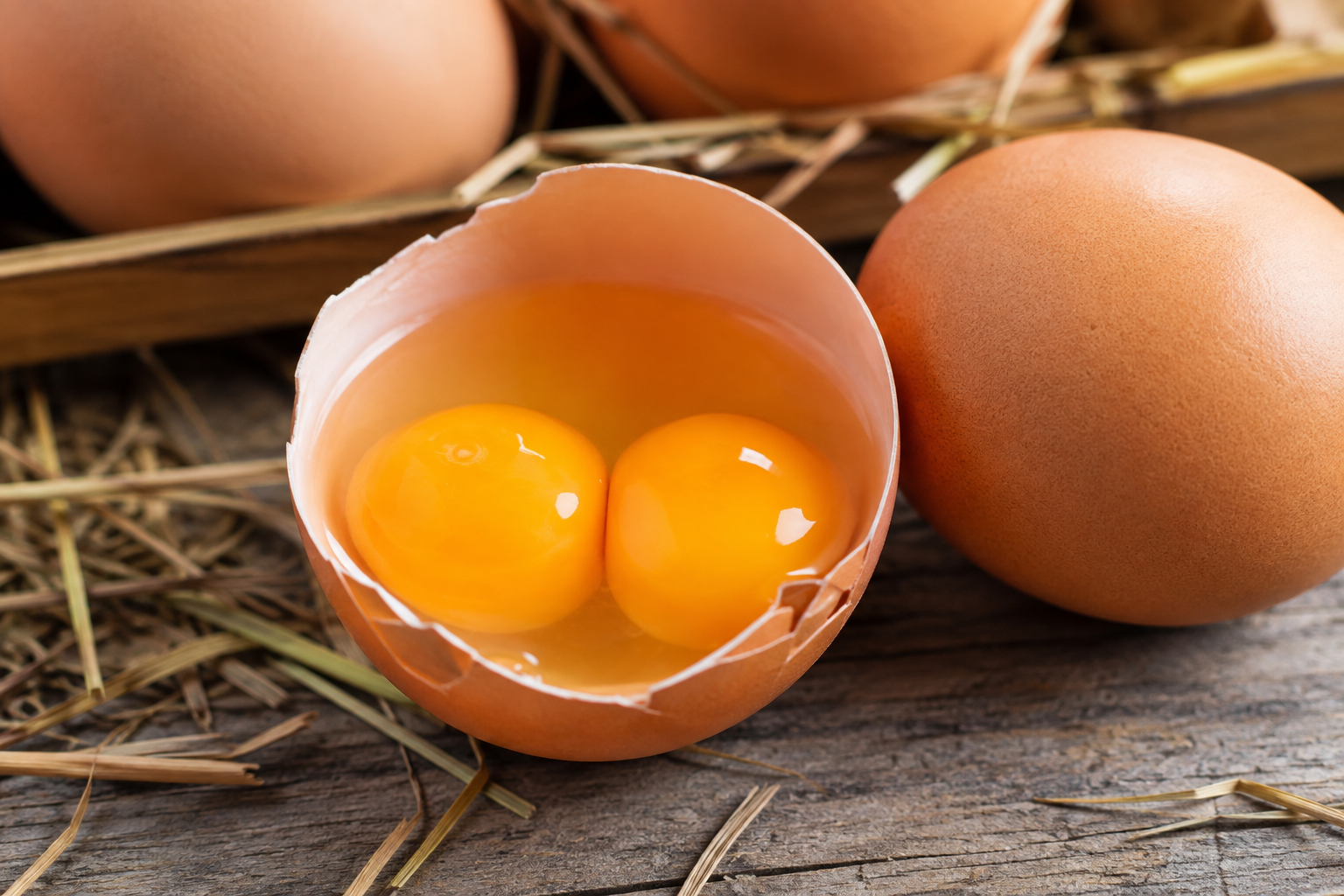
Double Yolk Eggs: What Are They?
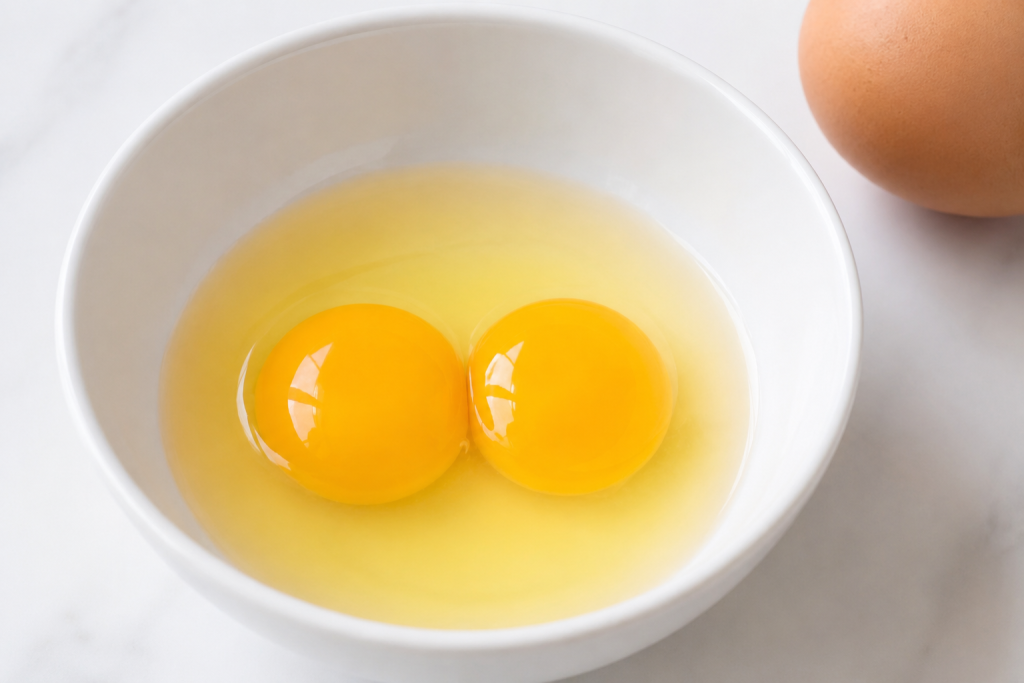
Double yolk eggs are eggs that contain two yolks inside one shell. They can surprise shoppers, backyard chicken keepers, and home cooks, especially when they appear in a regular carton. However, this unusual egg is usually a natural result of the hen’s reproductive cycle.
For many people, finding two yolks feels like a lucky discovery. In reality, there is a simple biological explanation. A hen can occasionally release two yolks close together, and both can become enclosed in the same shell.
Why Do Double Yolk Eggs Happen?
Young Hens and Changing Egg Production
Young hens that are beginning to lay can produce unusual eggs while their reproductive systems become established. Therefore, backyard owners may notice more double-yolk eggs during this early laying period.
Hens normally begin laying at around six months of age. Their production can remain strong for several years, although output changes with age and seasonal conditions.
Double Yolk Eggs and Multiple Ovulation
The main cause is multiple ovulation. Instead of releasing one yolk, the hen releases two around the same time. The oviduct can then form one shell around both yolks.
Research from USDA’s Animal and Plant Health Inspection Service explains that multiple concurrent ovulations can produce large eggs containing two yolks.
Are Double Yolk Eggs Safe to Eat?
In most cases, yes. Double yolk eggs are safe to eat when they are fresh, properly handled, stored correctly, and thoroughly cooked.
USDA agricultural researchers specifically address the safety of eggs containing two yolks. However, consumers should still follow normal egg-handling practices because the number of yolks does not remove the usual food-safety risks associated with raw or undercooked eggs.
For safer preparation:
- Keep eggs refrigerated according to local food-safety guidance.
- Avoid using cracked or visibly contaminated eggs.
- Wash hands and cooking surfaces after handling raw eggs.
- Cook egg dishes thoroughly.
Double Yolk Eggs Nutrition
Are two yolks twice as nutritious? Not exactly. Because a double-yolk egg contains more yolk than a typical single-yolk egg, it can provide more calories, fat, protein, vitamins, and minerals than one ordinary egg.
However, the exact nutritional value depends on the size of the egg and its two yolks. Therefore, people tracking calories or nutrients should consider the entire egg rather than assuming it equals two standard eggs.
For general diets, eggs can provide useful nutrients, but portion size and overall dietary balance still matter.
Types of Double Yolk Eggs
Naturally Occurring Eggs
Naturally occurring eggs with two yolks develop inside the hen without special processing. They are most commonly associated with hens experiencing multiple ovulation.
Extra-Large Double-Yolk Eggs
Some double-yolk eggs are noticeably larger than standard eggs because one shell contains two yolks. As a result, they can be useful in recipes where extra yolk is desirable.
Fertile Double-Yolk Eggs
A fertile double-yolk egg can theoretically contain two developing embryos. However, successful development is extremely difficult because two embryos must share the same limited space and resources inside one egg.
Therefore, double-yolk eggs are generally not preferred for hatching chicks.
Should You Buy Double Yolk Eggs?
If you find double yolk eggs at a shop or from backyard hens, there is usually no reason to avoid them simply because they have two yolks.
Before buying or using them, consider:
- Shell condition: Choose eggs without cracks.
- Freshness: Check the date and storage conditions.
- Size: Remember that a double-yolk egg may be larger than normal.
- Intended use: Extra yolk can work well in baking and rich dishes.
- Food safety: Handle and cook them properly.
For backyard chicken owners, consistent access to clean water, suitable feed, good housing, and proper flock management can support healthy egg production.
Common Mistakes to Avoid
Some myths make double-yolk eggs seem dangerous. However, finding two yolks does not automatically mean that the hen is sick.
Avoid these mistakes:
- Assuming every double-yolk egg contains a health problem.
- Eating eggs raw without considering food-safety risks.
- Trying to hatch every double-yolk egg.
- Changing a hen’s diet simply because she produces an occasional unusual egg.
- Confusing shell defects with double yolks.
If a flock suddenly produces many abnormal eggs, monitor the hens and review their nutrition and management. Persistent production problems may require advice from a poultry veterinarian or extension specialist.
How to Handle and Store Them
Good egg care starts before cooking. Collect backyard eggs regularly and keep nesting areas clean. Additionally, store eggs according to the food-safety practices recommended in your country.
If an egg has a cracked shell, use caution because cracks can increase contamination risks. USDA research identifies shell microcracks as an important food-safety concern.
For more chicken-care information, see our internal guide on healthy egg production. For official food-safety information, visit USDA Egg Safety.
Final Thoughts on Double Yolk Eggs
Double yolk eggs are a fascinating natural variation that occurs when a hen releases two yolks close together. They are usually safe to eat when handled and cooked properly, and their extra yolk can make them especially interesting for home cooks.
So, the next time you crack an egg and discover two golden yolks, there is no need to panic. Instead, enjoy the unusual find and continue following good egg-handling practices. For backyard keepers, occasional double yolks are generally more interesting than alarming.
Leave a Reply