Bumblefoot in Chickens: Causes, Treatment & Prevention (2026)
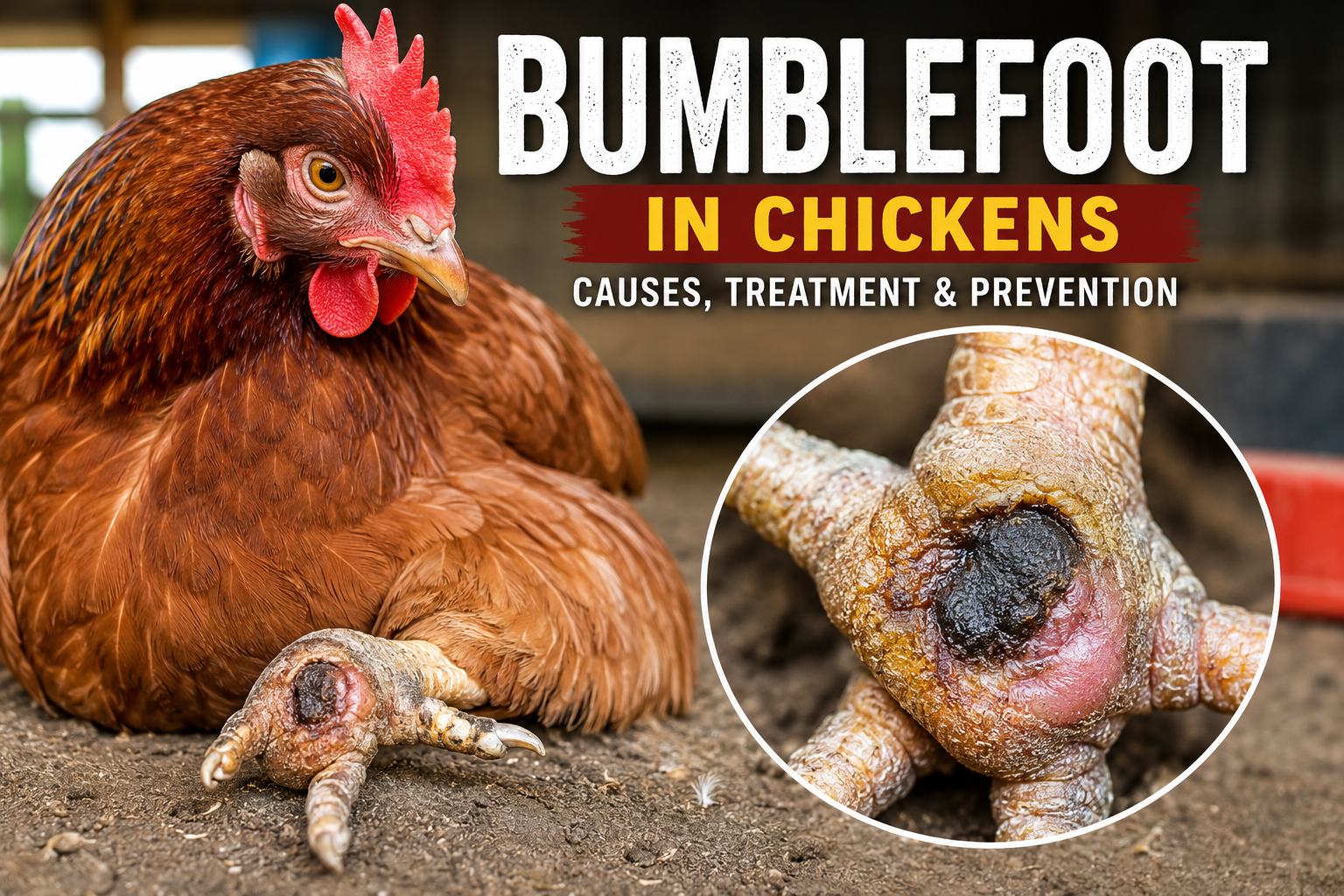
If you’ve noticed your hen limping or refusing to walk, Bumblefoot in chickens could be the cause. This common foot infection affects backyard chickens across the United States and can quickly become serious if left untreated. Fortunately, with early detection and proper care, Bumblefoot in chickens is usually treatable, allowing your flock to recover and stay healthy.
Whether you own a few backyard hens or manage a larger flock, understanding this condition helps you prevent pain, reduce infections, and improve overall flock health.
Why Bumblefoot in Chickens Matters
Ignoring Bumblefoot in chickens can lead to severe infections that spread into joints or bones. As a result, affected birds may stop eating, lose weight, or even become permanently lame.
Healthy feet are essential because chickens spend most of their day walking, scratching, and searching for food. Therefore, preventing foot injuries should always be part of your flock management routine.
Benefits of early treatment include:
- Faster healing
- Less pain for the bird
- Lower veterinary costs
- Better egg production
- Reduced risk of infection spreading
Causes of Bumblefoot in Chickens
Several factors increase the risk of Bumblefoot in chickens. Understanding these causes helps prevent future infections.
Rough or Unsafe Perches
Perches that are too high or have sharp edges can injure your chickens’ feet. Small cuts allow bacteria to enter and cause infection.
Wet or Dirty Coop Bedding
Moist litter contains harmful bacteria. Additionally, dirty bedding softens foot pads, making injuries more likely.
Obesity
Overweight chickens place more pressure on their feet. Consequently, they develop sores more easily.
Sharp Objects
Nails, rocks, wire, and splinters can puncture the foot, leading to a chicken foot infection.
Symptoms of Bumblefoot in Chickens
Early detection makes treatment much easier.
Watch for these warning signs:
- Limping
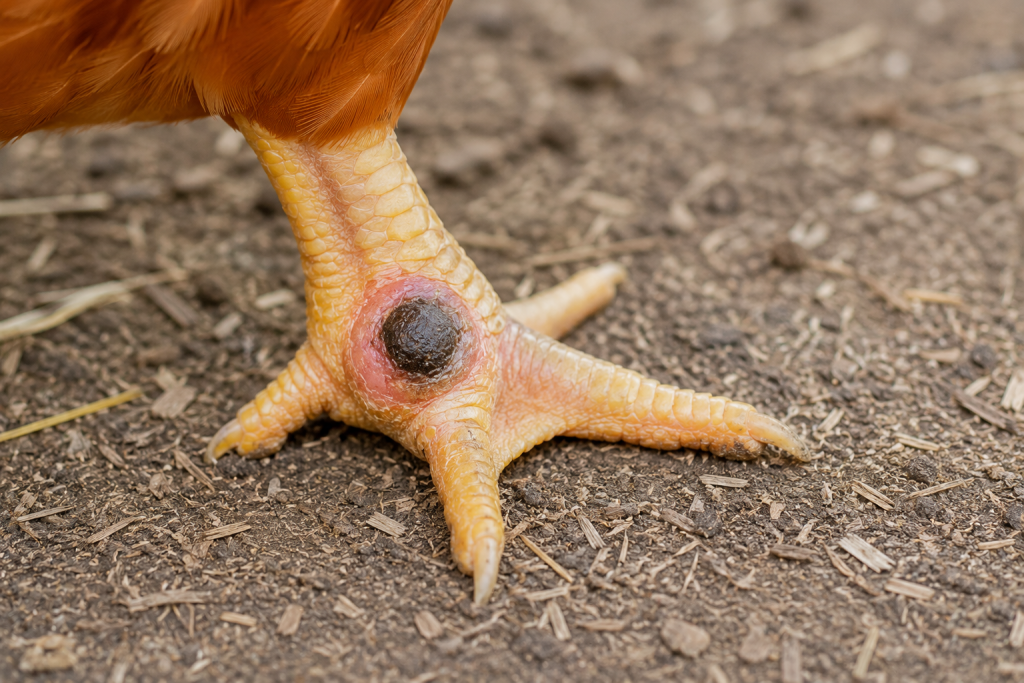
- Swollen foot pad
- Black scab on the bottom of the foot
- Redness and inflammation
- Reluctance to walk
- Loss of appetite
- Warm foot when touched
A swollen chicken foot often appears before the infection becomes severe.
Types of Bumblefoot in Chickens
Mild Bumblefoot
At this stage, the foot has slight swelling and a small scab. However, the infection has not spread deeply.
Moderate Bumblefoot
The infection forms a larger abscess with noticeable swelling. The chicken may limp regularly.
Severe Bumblefoot
In advanced cases, Bumblefoot in chickens spreads into tendons or bones. Immediate veterinary treatment becomes necessary.
How to Treat Bumblefoot in Chickens
Proper treatment greatly improves recovery.
1. Clean the Foot
Wash the foot using warm water and Epsom salt. This softens the skin and reduces swelling.
2. Remove the Infection
Carefully remove the scab only if you are experienced or under veterinary guidance.
3. Apply Antiseptic
Use a poultry-safe antiseptic to disinfect the wound.
4. Bandage the Foot
Wrap the foot with clean gauze and replace the dressing daily.
5. Monitor Recovery
Keep the chicken in a clean, dry area until healing is complete.
For severe Bumblefoot treatment for chickens, consult a poultry veterinarian who may prescribe antibiotics.
Buying & Decision Guide
Keeping the right supplies on hand makes treatment easier.
Consider purchasing:
- Poultry first aid kit
- Vet wrap bandages
- Epsom salt
- Poultry-safe antiseptic spray
- Soft coop bedding
These items help you respond quickly if Bumblefoot in chickens develops.
Common Mistakes to Avoid
Many chicken owners accidentally make recovery slower.
Avoid these mistakes:
- Ignoring early symptoms
- Keeping birds on wet bedding
- Using dirty bandages
- Waiting too long before treatment
- Allowing infected birds to jump from high perches
Additionally, never squeeze an abscess aggressively because this can worsen the injury.
Maintenance and Prevention Tips
Preventing Bumblefoot in chickens is much easier than treating it.
Follow these simple care tips:
- Clean the coop every week.
- Replace wet bedding immediately.
- Inspect feet during regular health checks.
- Provide smooth wooden perches.
- Keep birds at a healthy weight.
- Remove sharp objects from the run.
- Trim overgrown nails when necessary.
Regular inspections also help identify a chicken foot abscess before it becomes severe.
Frequently Asked Questions
Can Bumblefoot heal on its own?
Very mild cases sometimes improve, but most require cleaning and proper care.
Is Bumblefoot contagious?
No. However, multiple birds may develop it if poor coop conditions remain.
How long does recovery take?
Most mild infections heal within two to four weeks with proper treatment.
When should I call a veterinarian?
Seek professional help if swelling worsens, pus continues draining, or your chicken cannot stand.
Conclusion
Bumblefoot in chickens is one of the most common foot problems affecting backyard flocks, but it is also one of the most preventable. By keeping your coop clean, inspecting your birds regularly, and treating injuries early, you can protect your flock from painful infections. If you notice signs of Bumblefoot in chickens, act quickly and provide proper care before the condition becomes severe. Healthy feet mean healthier, happier, and more productive chickens throughout 2026.
Leave a Reply