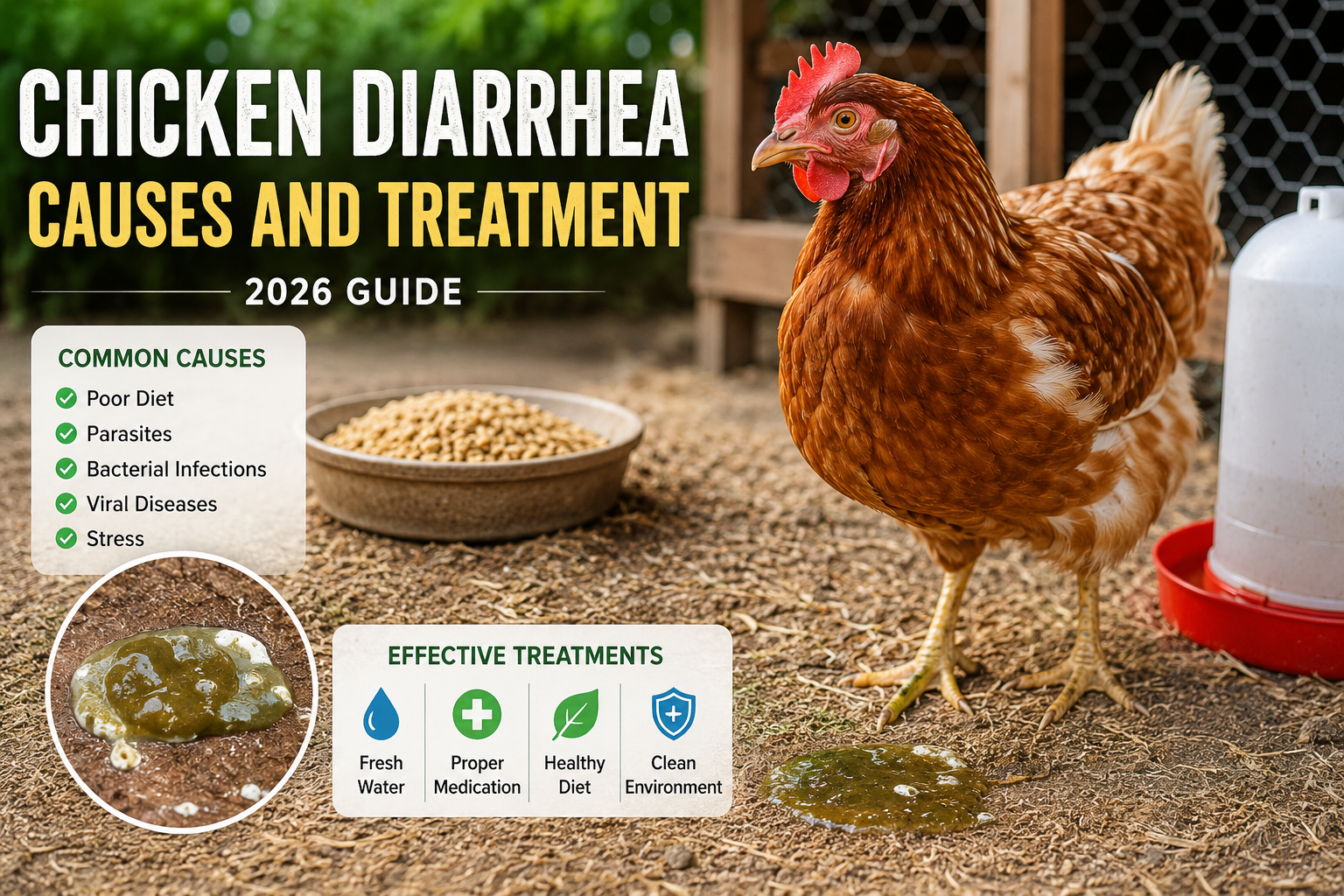
Chicken Diarrhea Causes and Treatment: A Complete 2026 Guide
If you raise backyard chickens, you’ve probably noticed unusual droppings at some point. Understanding chicken diarrhea causes and treatment is essential for every poultry keeper in 2026. However, not every runny dropping means your bird is sick, so knowing the difference matters.
Chicken Diarrhea Causes and Treatment can signal anything from mild stress to a serious infection. As a result, catching the problem early helps prevent flock-wide illness. This guide covers everything you need to know, from causes to practical treatment steps.
Why Understanding Chicken Diarrhea Matters
Healthy droppings tell you a lot about your flock’s overall condition. Additionally, diarrhea can quickly dehydrate a chicken, weakening its immune system. herefore, catching chicken diarrhea causes and treatment issues early saves you time, money, and heartbreak.
Ignoring the issue often leads to bigger problems, including reduced egg production. So, mastering chicken diarrhea causes and treatment protects your entire coop.
Common Causes of Chicken Diarrhea
Dietary Issues
Sudden diet changes, spoiled feed, or too many treats can upset a chicken’s gut. Consequently, watery droppings often appear within a day or two.
Parasites and Worms
Internal parasites like coccidia are among the most frequent chicken diarrhea causes. These parasites damage the intestinal lining, causing bloody or greenish diarrhea.
Bacterial and Viral Infections
Salmonella, E. coli, and other pathogens can trigger poultry diarrhea. Furthermore, viral infections like infectious bronchitis sometimes present with digestive symptoms too.
Heat Stress
During hot summer months, chickens drink excessive water to cool down. This often results in temporarily loose droppings, which usually isn’t cause for alarm.
Types of Diarrhea to Watch For
Recognizing what type of chicken diarrhea you’re dealing with helps guide treatment:
- Watery yellow droppings – often linked to stress or diet
- Bloody diarrhea – typically signals coccidiosis
- Green diarrhea – may indicate infection or liver issues
- Foamy diarrhea – often tied to bacterial imbalance
Treatment Options for Chicken Diarrhea
Immediate Care Steps
- Isolate the affected bird to prevent spread.
- Offer electrolyte water to prevent dehydration.
- Remove treats and stick to a plain, balanced diet.
- Clean the coop thoroughly to reduce bacteria buildup.
Medication and Veterinary Help
For coccidiosis, amprolium-based treatments work effectively. However, bacterial infections may require antibiotics prescribed by a poultry veterinarian. Always consult a vet before administering medication, since incorrect dosing can harm your flock (see our [poultry health resource guide] for dosage charts).
Decision Guide: When to Call a Vet
Not every case needs professional help, but some symptoms demand it:
- Diarrhea lasting more than 3 days
- Blood in droppings
- Lethargy or loss of appetite
- Multiple birds affected simultaneously
If any of these appear, contact a licensed poultry vet immediately.
Common Mistakes to Avoid
- Overreacting to a single watery dropping without monitoring further
- Switching feed too abruptly instead of transitioning gradually
- Skipping regular deworming schedules
- Ignoring poor coop hygiene, which encourages bacterial growth
Maintenance and Prevention Tips
Preventing chicken diarrhea causes and treatment struggles starts with good husbandry. Keep the coop dry and clean, since damp bedding breeds parasites and bacteria. Additionally, provide fresh water daily and avoid moldy or expired feed.
Regular deworming, along with probiotics in feed, supports strong digestive health. As a result, your flock stays more resilient against seasonal digestive upsets (learn more in our [chicken coop maintenance checklist]).
Conclusion
Understanding chicken diarrhea causes and treatment empowers you to act quickly and confidently. Whether it’s diet, parasites, or infection, early detection makes all the difference. By following proper hygiene, nutrition, and veterinary guidance, you can keep your flock healthy year-round. Start monitoring your chickens today, and don’t hesitate to seek help if symptoms persist.
Frequently Asked Questions
1. What causes chicken diarrhea?
Chicken diarrhea is usually caused by diet changes, parasites like coccidia, bacterial infections, or heat stress. Identifying the exact cause helps determine the right treatment.
2. How do I treat chicken diarrhea at home?
Start with electrolyte water, remove treats, and clean the coop thoroughly. However, if symptoms persist beyond three days, consult a poultry veterinarian.
3. Is chicken diarrhea contagious to other birds?
Yes, certain causes such as bacterial or parasitic infections can spread quickly. Therefore, isolating the sick bird immediately is important.
4. Can stress cause diarrhea in chickens?
Yes, heat stress, overcrowding, or sudden environmental changes can trigger temporary loose droppings. This usually resolves once the stressor is removed.
5. When should I see a vet for chicken diarrhea?
If you notice blood in droppings, lethargy, or multiple birds affected, seek veterinary help right away. Early intervention prevents flock-wide illness.
6. Are probiotics helpful for chicken diarrhea causes and treatment?
Yes, probiotics support gut health and can reduce the frequency of digestive upsets. Adding them to feed is a simple, effective prevention step.
Leave a Reply