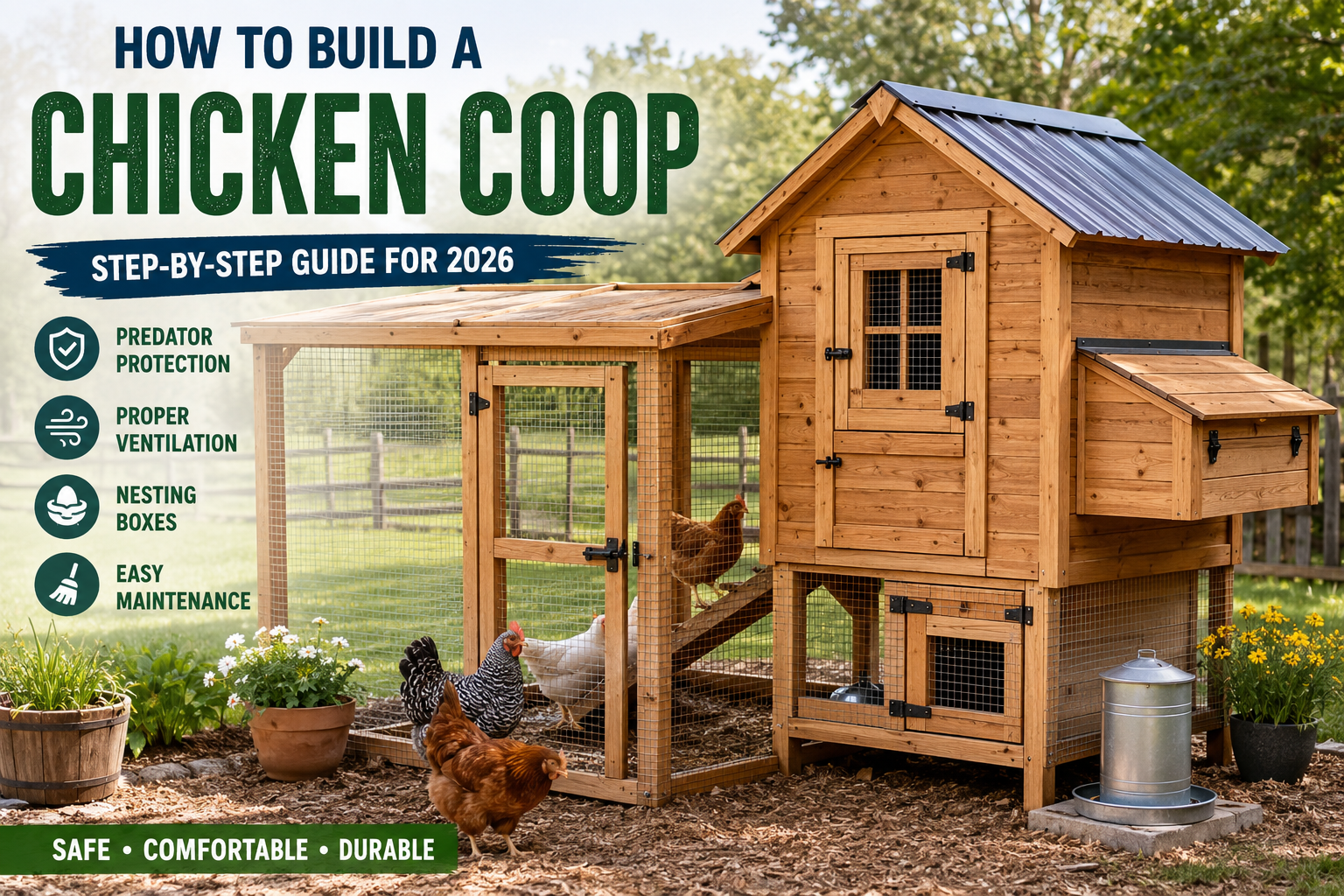
How to Build a Chicken Coop in 2026
Learning how to build a chicken coop can help you create a safe, comfortable home for backyard chickens without spending a fortune. For US chicken keepers, a well-planned coop can protect birds from heat, cold, rain, and common predators. Additionally, building your own coop lets you choose the size, layout, materials, and features that fit your flock.
Before you start, check your local zoning rules and neighborhood requirements. Then, choose a dry location with good drainage and enough sunlight.
Why Learning How to Build a Chicken Coop Matters
A good coop does more than provide shelter. It gives chickens a secure place to sleep, lay eggs, eat, and stay protected.
However, poor design can cause moisture, overcrowding, bad odors, and predator problems. Therefore, focus on these essential features:
- Strong walls and a secure roof
- Good airflow without strong drafts
- Easy access for cleaning
- Secure doors and windows
- Enough floor space for the flock
- Comfortable nesting boxes and roosting bars
How to Build a Chicken Coop: Key Features
Choose the Right Location
Location plays a major role in chicken health. Select higher ground that does not collect rainwater. Furthermore, provide some shade, especially in areas with hot summers.
Keep the coop reasonably close to your home. As a result, daily feeding, egg collection, and cleaning become easier.
Plan Space, Roosts, and Nesting Boxes
A practical chicken coop design should prevent overcrowding. Give each bird enough room to move, rest, and feed comfortably.
Add sturdy roosting bars above the floor. Also, provide nesting boxes in a quiet, darker area. A common starting point is one nesting box for every three to four hens.
Add Proper Ventilation
Chicken coop ventilation is essential because moisture and ammonia can build up inside a closed coop. Place vents high on opposite sides to encourage airflow.
However, avoid creating strong drafts directly over sleeping birds. In cold climates, balance ventilation with proper insulation and weather protection.
Types of Chicken Coops to Consider
Stationary Chicken Coop
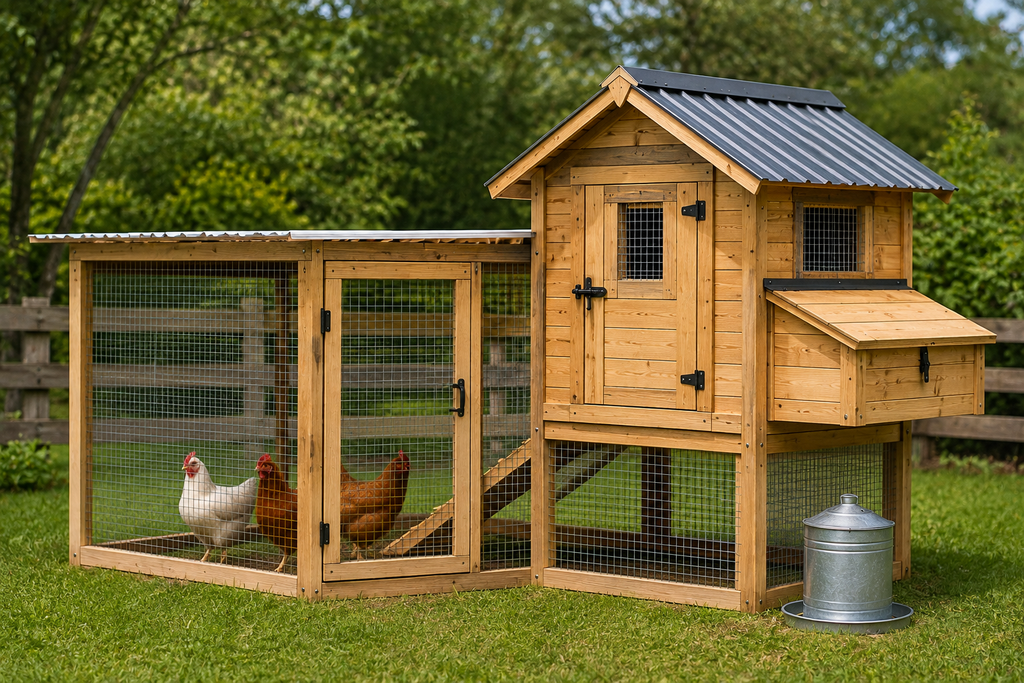
A stationary coop works well for backyard flocks. It can include a larger enclosed run, storage space, permanent nesting boxes, and stronger predator protection.
This option is especially useful when you have a fixed location and enough yard space.
Mobile Chicken Coop
A mobile or tractor-style coop can be moved around the yard. Therefore, chickens can access fresh ground while you reduce damage to one area.
However, mobile designs require lightweight construction and secure wheels or handles.
Small DIY Chicken Coop
A DIY chicken coop works well for beginners with a small flock. You can repurpose suitable materials, but make sure every surface remains safe, durable, and easy to clean.
How to Build a Chicken Coop: Step-by-Step Guide
Follow these basic steps:
- Measure your flock: Decide how many chickens the coop will house.
- Draw the layout: Mark the floor, door, vents, nesting boxes, and roosts.
- Build the frame: Use strong, weather-resistant lumber.
- Add walls and roofing: Seal major gaps while keeping ventilation openings.
- Install the floor: Choose a durable surface that can handle regular cleaning.
- Add security: Use strong hardware cloth and secure door locks.
- Install interior features: Add roosting bars, nesting boxes, feeders, and waterers.
- Inspect everything: Check for sharp edges, gaps, weak points, and water leaks.
A predator-proof chicken coop should also extend protection below ground level where practical. Hardware cloth is generally more secure than lightweight chicken wire for predator barriers.
Buying and Material Decision Guide
If you do not want to build everything from scratch, compare ready-made coops before buying. Look at construction quality rather than appearance alone.
Consider:
- Number of chickens supported
- Ventilation and window placement
- Roof and floor durability
- Predator resistance
- Cleaning access
- Nesting box design
- Run size and security
Additionally, choose materials based on your local weather. In wet areas, prioritize moisture resistance. In hot regions, prioritize shade and airflow.
Common Mistakes to Avoid
When learning how to build a chicken coop, beginners often focus too much on appearance. Instead, prioritize safety, airflow, space, and easy maintenance.
Avoid these mistakes:
- Building without checking local rules
- Making the coop too small
- Blocking ventilation
- Using weak wire for predator protection
- Leaving gaps around doors
- Placing the coop in a low, wet area
- Making cleaning difficult
- Forgetting shade during hot weather
Chicken Coop Maintenance Tips
A clean coop helps chickens stay comfortable. Remove wet bedding regularly and clean droppings from high-use areas.
Furthermore, inspect locks, wire, roofing, and walls often. Look for signs of chewing, digging, rust, or water damage. Replace damaged materials quickly.
Keep feeders and waterers clean as well. Finally, check ventilation during seasonal weather changes and adjust the setup when necessary.
Conclusion
Knowing how to build a chicken coop gives backyard chicken keepers more control over safety, comfort, cost, and design. In 2026, focus on strong construction, proper ventilation, predator protection, practical space, and simple cleaning. Start with a clear plan, choose suitable materials, and build around the needs of your flock. Ready to get started? Use this guide to plan your coop today and create a safer home for your chickens.
Leave a Reply