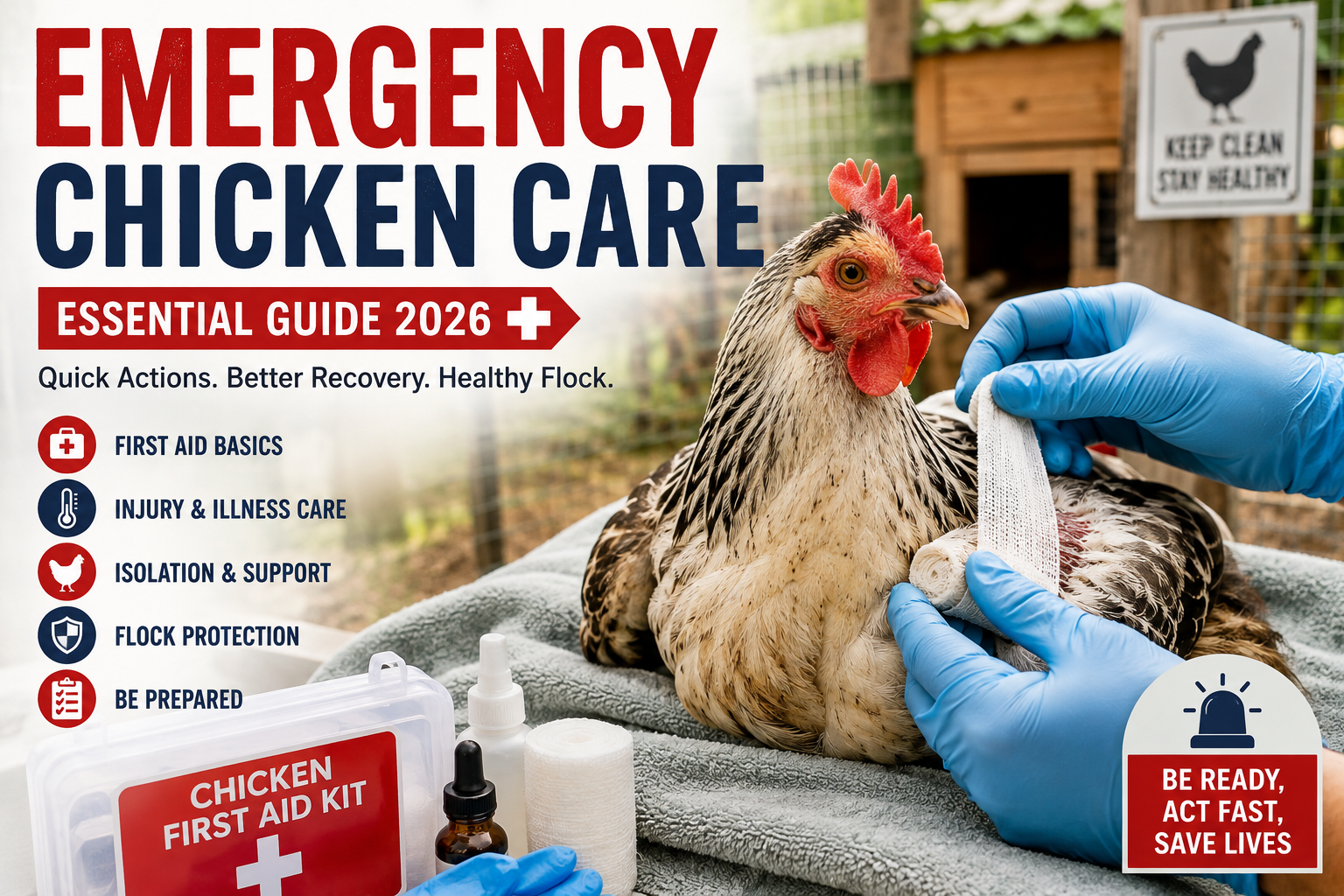
Emergency Chicken Care is especially important when a backyard bird suddenly becomes weak, injured, overheated, chilled, or shows signs of disease. In 2026, chicken keepers should act quickly while also protecting the rest of the flock. Current USDA guidance continues to stress early reporting, isolation, hygiene, and strong biosecurity when birds become sick.
Why Emergency Chicken Care Matters
Good Emergency Chicken Care can reduce stress and help prevent a single problem from affecting more birds. However, emergency care is not a replacement for veterinary diagnosis. If a chicken has severe breathing trouble, heavy bleeding, a serious wound, sudden collapse, neurological signs, or unexplained death, contact a poultry veterinarian or local animal-health authority.
Good emergency care also protects people. Wash your hands after handling birds, keep sick birds separate, and clean equipment that touches them. [Internal link: Chicken Health Checklist]
Key Emergency Chicken Care Steps for 2026
1. Move the Bird to a Safe Area
First, place the chicken in a quiet, clean, well-ventilated isolation area. Keep the bird away from flock mates, wild birds, pets, and unnecessary visitors. Additionally, use separate shoes, gloves, or tools when possible.
2. Check the Basic Signs
Look at breathing, posture, alertness, eyes, comb color, droppings, and appetite. Also check for wounds, swelling, broken feathers, or difficulty standing.
If the bird struggles to breathe, has a blue or purple comb, shows severe weakness, or multiple birds become sick, treat the situation as urgent. USDA lists sudden death, poor appetite, respiratory signs, diarrhea, swelling, and reduced egg production among warning signs linked with serious poultry diseases.
3. Provide Appropriate Support
Keep the chicken calm and protect it from extreme heat or cold. Offer clean drinking water within easy reach. However, do not force water or food into a weak bird because aspiration can occur.
For an injury, gentle pressure with clean gauze can help control minor bleeding while you seek professional advice. Avoid household chemicals, human medicines, or unapproved treatments unless a veterinarian tells you to use them.
Types of Chicken Emergencies
Injuries and Bleeding
Small cuts may need gentle cleaning and observation. Major bleeding, deep wounds, suspected fractures, or attacks from predators require prompt veterinary assessment.
Heat or Cold Stress
During hot weather, provide shade, airflow, and cool clean water. During cold conditions, keep an injured or weak bird dry and protected from drafts. Avoid sudden temperature changes.
Suspected Infectious Disease
If several birds show illness, do not assume it is a simple infection. Isolate affected birds and contact a veterinarian or animal-health authority. In the United States, USDA APHIS currently advises owners to report sick or dying birds and maintain biosecurity.
Emergency Chicken Care Buying Guide
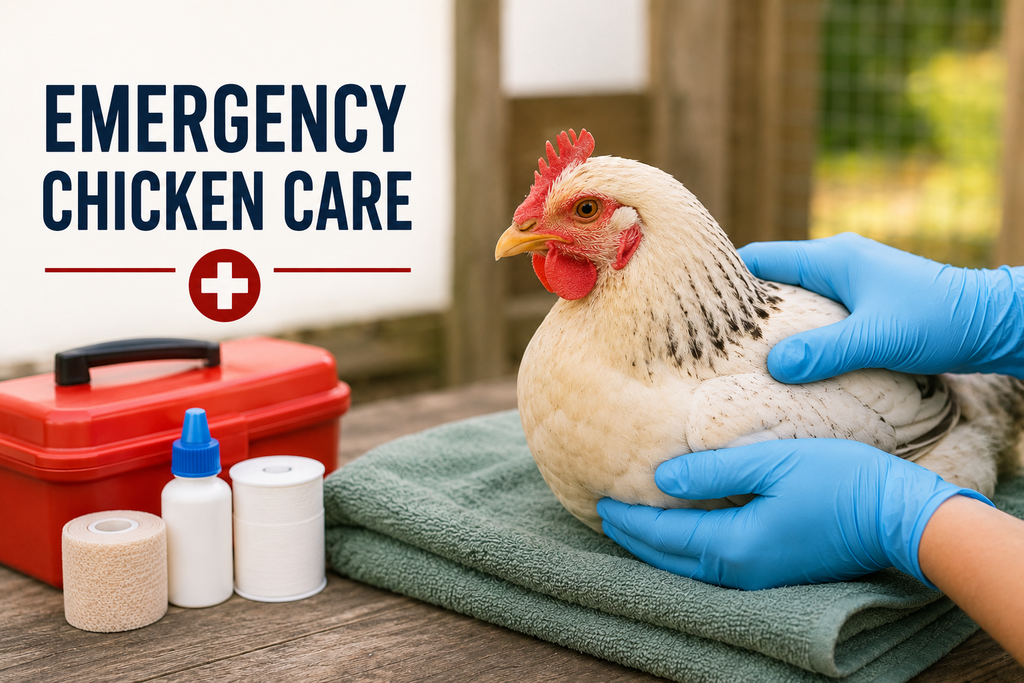
A practical Emergency Chicken Care plan starts before a crisis. Every flock owner should prepare a small emergency kit before problems happen. Useful supplies include:
- Clean gauze and disposable gloves
- Saline for gentle wound rinsing
- Clean towels or a small carrier
- A separate isolation crate
- Digital thermometer
- Poultry-safe cleaning supplies
- Written contact details for a veterinarian and local animal-health office
Choose simple, cleanable supplies. Additionally, store the kit somewhere dry and easy to reach.
Common Mistakes to Avoid
During Emergency Chicken Care, avoid putting a sick chicken straight back into the flock after it looks better. Some diseases can spread before obvious signs appear. Also, never spray disinfectants directly onto live birds; USDA poultry guidance warns that disinfectants are intended for appropriate surfaces and should be used according to their labels.
Do not move birds between flocks when disease is suspected. Likewise, avoid sharing dirty crates, footwear, feeders, or tools.
Maintenance and Prevention Tips
Prevention makes Emergency Chicken Care easier and safer. Check birds at least once each day and record changes in appetite, behavior, egg production, and droppings. Keep feeders and waterers clean, store feed securely, and reduce contact with wild birds and rodents.
Furthermore, Emergency Chicken Care also means knowing when home support is not enough. Review your local disease-reporting rules. Requirements differ by country, so keep current contact details for a poultry veterinarian, agricultural authority, or extension service.
Final Thoughts
A calm, prepared response can make a major difference when a chicken suddenly needs help. Use Emergency Chicken Care steps to isolate the bird, assess obvious problems, provide safe support, and seek professional help when warning signs are serious. In 2026, strong biosecurity and early reporting remain essential parts of responsible flock care.
Leave a Reply