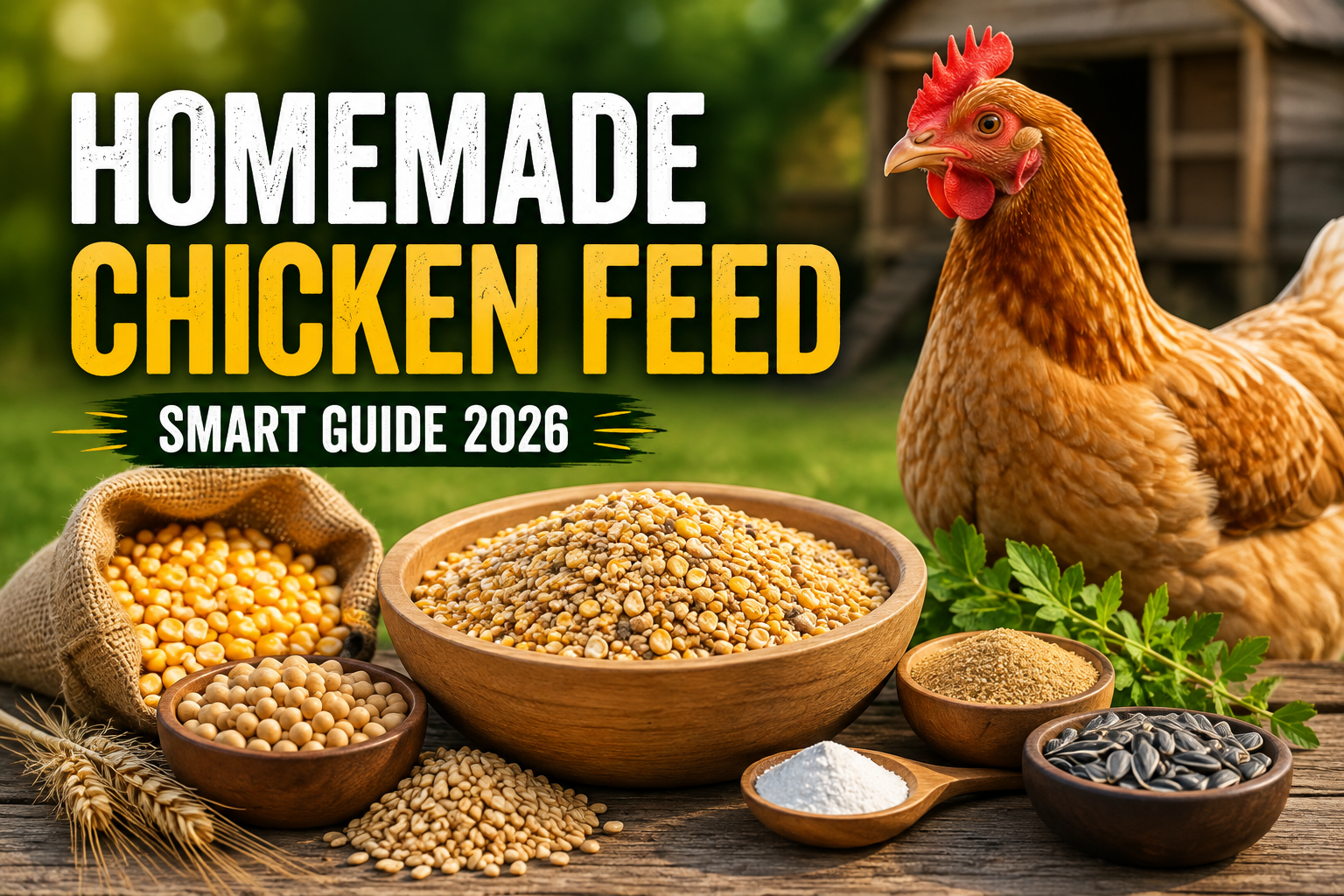
Homemade Chicken Feed: Smart Guide for 2026
Keeping backyard chickens healthy starts with good nutrition. Homemade Chicken Feed can give poultry owners more control over ingredients and feeding choices. However, a homemade mix must still provide enough protein, energy, vitamins, and minerals.
For US backyard chicken keepers in 2026, rising interest in self-sufficient poultry care has made DIY feeding more popular. Additionally, making your own feed can help you understand exactly what your flock eats.
Why Homemade Chicken Feed Matters
Commercial poultry feed offers balanced nutrition, but some owners prefer preparing their own mixes. Homemade Chicken Feed allows you to select grains, seeds, and other suitable ingredients.
However, chickens need more than grains. A healthy diet should provide protein, calcium, energy, vitamins, and minerals. As a result, simply mixing several kitchen ingredients may not create a complete diet.
Some potential benefits include:
- Better control over ingredients
- Flexible feeding options
- Use of locally available grains
- Reduced dependence on one commercial product
- Greater understanding of chicken nutrition
Additionally, always consider your flock’s age and purpose before changing its diet.
Key Factors for Homemade Chicken Feed
Protein Requirements
Protein supports growth, feather production, muscle development, and egg production. Therefore, protein should remain an important part of any Homemade Chicken Feed plan.
Suitable protein sources can include carefully selected legumes, peas, seeds, and other poultry-safe ingredients. However, the exact amount depends on whether you are feeding chicks, growers, layers, or mature birds.
Energy From Grains
Grains provide much of the energy chickens need each day. Corn, wheat, oats, and other grains can form part of a homemade mix.
However, grains should not make up the entire diet. A balanced homemade chicken feed recipe should include several nutritional components.
Calcium and Minerals
Laying hens need sufficient calcium to produce strong eggshells. Therefore, calcium sources are especially important for productive layers.
Additionally, chickens need other minerals and vitamins. A poultry nutrition supplement may help fill nutritional gaps when used according to its label.
Types of Homemade Chicken Feed
Chick Feed
Young chicks have different nutritional needs from adult chickens. Their diet requires appropriate protein and nutrients for rapid growth.
Therefore, homemade mixtures should not replace properly formulated chick starter feed unless you understand the nutritional requirements.
Grower Feed
Growing chickens need a diet that supports steady development. As a result, their feed should provide suitable protein without excessive calories.
Layer Feed
Adult laying hens need nutrients that support regular egg production. Calcium becomes particularly important during this stage.
A balanced Homemade Chicken Feed mixture for layers should therefore focus on protein, energy, calcium, vitamins, and minerals.
How to Choose Ingredients
Before creating Homemade Chicken Feed, check every ingredient for safety and nutritional value.
A simple checklist can help:
- Choose fresh, clean ingredients.
- Avoid moldy or spoiled grains.
- Consider protein requirements.
- Include an appropriate calcium source for layers.
- Provide clean drinking water.
- Store ingredients in a dry, pest-free place.
Additionally, introduce dietary changes gradually. Sudden changes can upset digestion and reduce normal feeding behavior.
Common Mistakes to Avoid
One common mistake is relying too heavily on corn or other single grains. Although grains provide energy, they do not supply every nutrient chickens require.
Another mistake involves adding unsafe food scraps. Chickens can eat many foods, but not everything from the kitchen belongs in their diet.
Avoid:
- Moldy food
- Spoiled ingredients
- Very salty foods
- Unknown plants
- Excessive treats
- Unbalanced grain-only diets
Furthermore, do not assume that a homemade mix is complete simply because chickens eat it eagerly.
Storage and Maintenance Tips
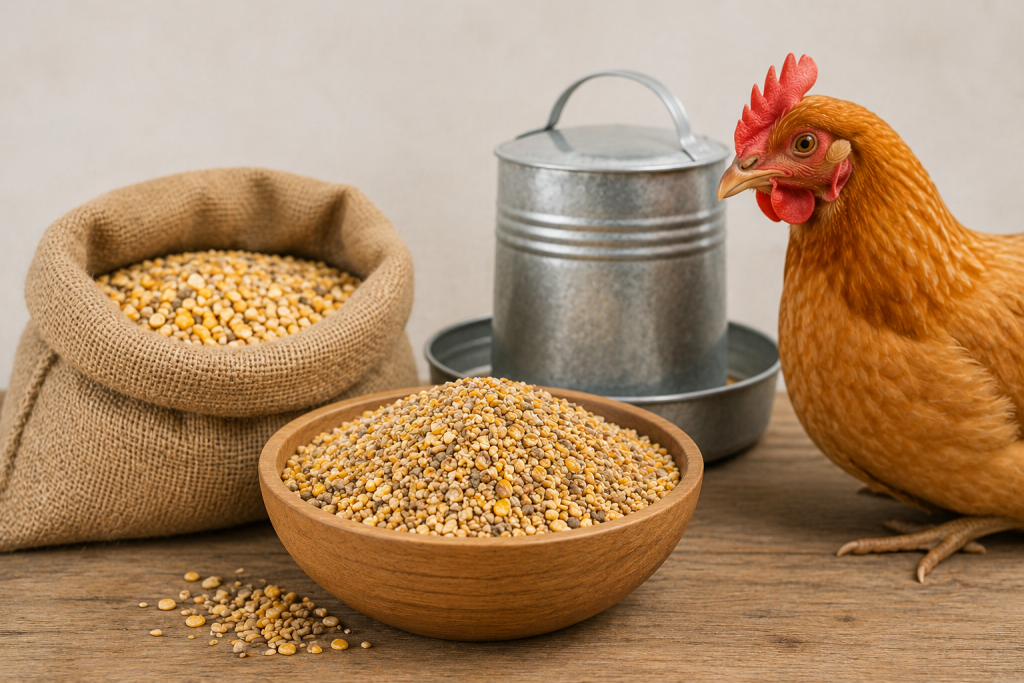
Proper storage is essential for Homemade Chicken Feed. Moisture can encourage mold, while pests can contaminate stored ingredients.
Use airtight or secure containers and keep them somewhere cool and dry. Additionally, check stored feed regularly for unusual smells, insects, moisture, or visible mold.
Fresh water should also remain available throughout the day. Clean feeders and drinkers regularly to reduce contamination.
Is Homemade Chicken Feed Right for You?
Homemade Chicken Feed can work as part of a thoughtful poultry-feeding plan. However, creating a nutritionally complete diet requires more than combining grains and seeds.
If you are new to poultry nutrition, start with a complete commercial feed and use homemade ingredients only as appropriate supplements. For specific nutritional needs, consult a poultry nutrition expert or veterinarian.
Conclusion
A carefully planned Homemade Chicken Feed strategy can give chicken keepers greater control over ingredients and feeding routines in 2026. However, nutrition should always come first.
Choose safe ingredients, maintain proper protein and mineral levels, and store feed correctly. Additionally, monitor your flock for changes in weight, feathers, eggs, behavior, and overall health. With careful planning, you can build a safer and more informed feeding routine for your chickens.
Leave a Reply