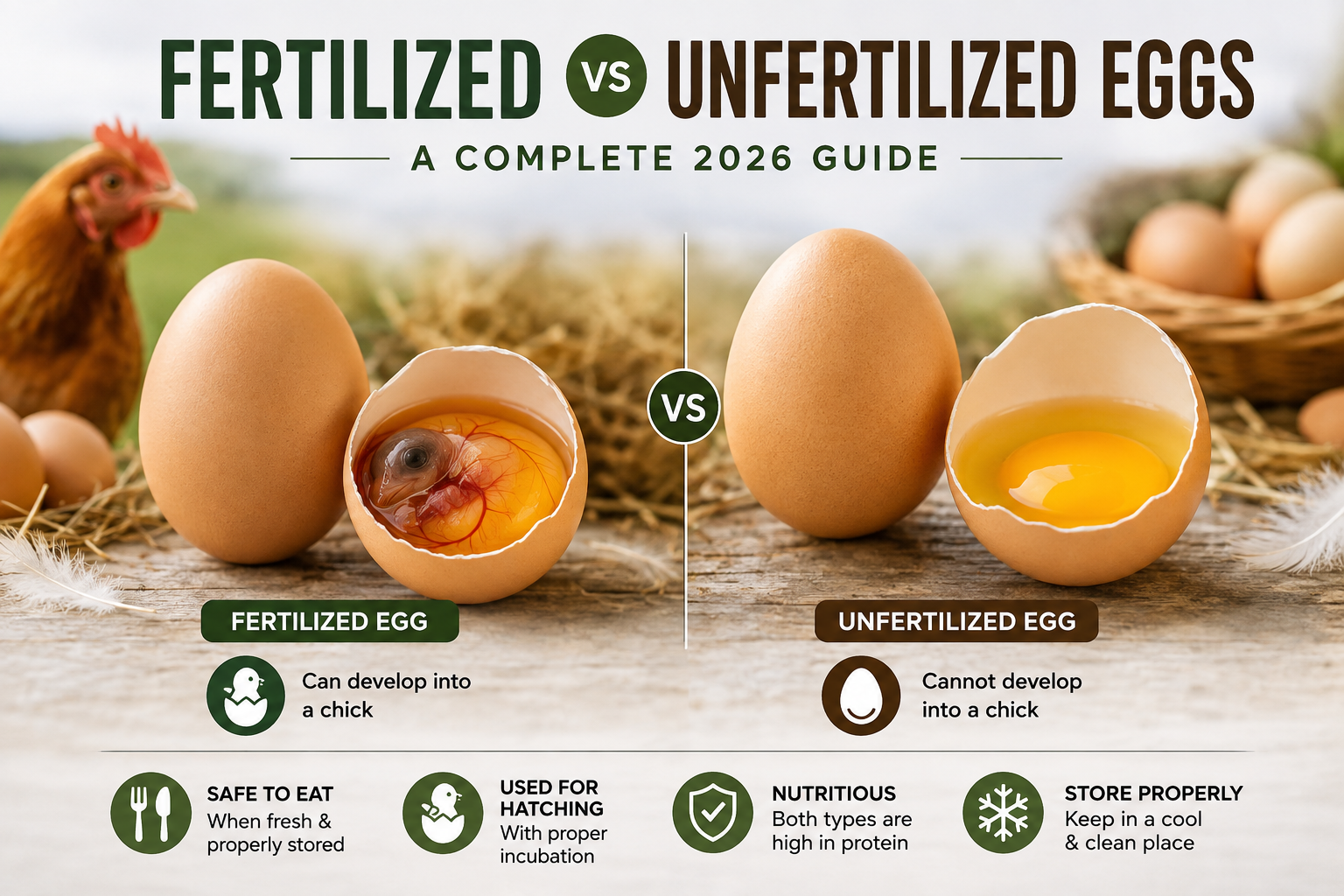
Understanding Fertilized vs Unfertilized Eggs can help backyard chicken keepers, farmers, and everyday consumers make better choices. The main difference is simple: a fertilized egg can develop into a chick under the right conditions, while an unfertilized egg cannot.
However, the difference does not automatically make one egg better than the other. In fact, both types can be nutritious and safe to eat when handled and stored properly. Additionally, the egg’s purpose matters. If you want fresh breakfast eggs, fertility may not matter. If you want to hatch chicks, it matters greatly.
Why Fertilized vs Unfertilized Eggs Matters
The biggest factor is whether a hen has access to a rooster. A hen can lay eggs without a rooster. Those eggs are normally unfertilized.
When a rooster mates with a hen, fertilization can occur before the egg develops its shell. As a result, some eggs from a flock with a rooster may be fertilized.
For backyard keepers, understanding Fertilized vs Unfertilized Eggs is especially useful when collecting eggs for eating or fertilized eggs for hatching.
Fertilized vs Unfertilized Eggs: Key Differences
Fertilized Chicken Eggs
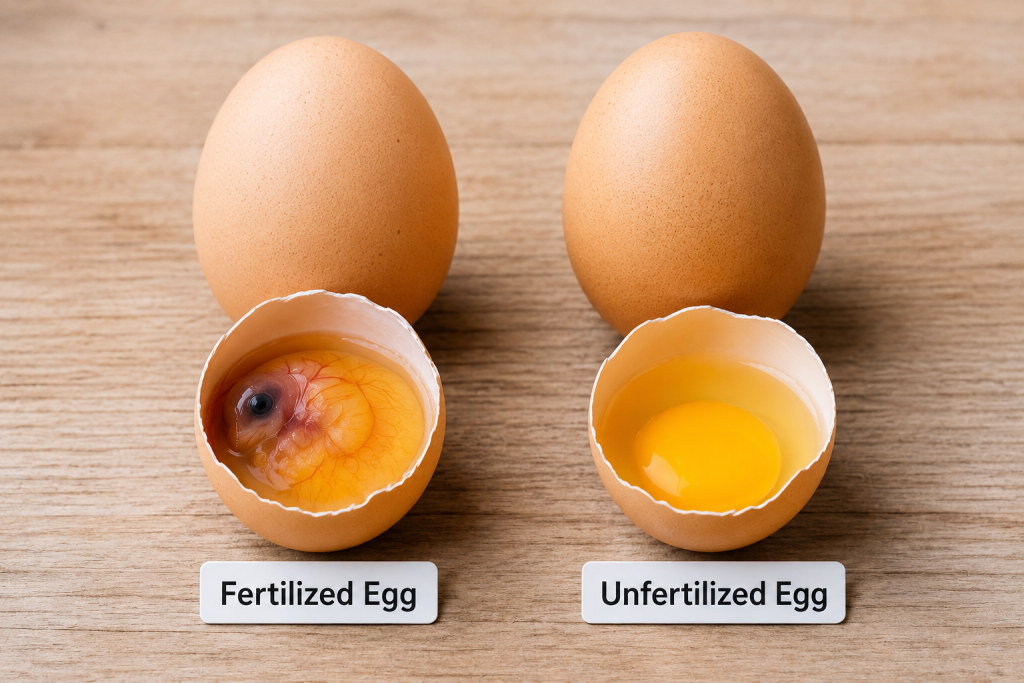
A fertilized egg contains the genetic material needed to potentially develop into a chick. However, fertilization alone does not mean a chick will start growing immediately.
The egg needs suitable incubation conditions, including appropriate temperature, humidity, and regular turning. Without incubation, the embryo will not continue normal development.
Unfertilized Chicken Eggs
An unfertilized egg does not contain a developing embryo. Therefore, it cannot hatch into a chick.
Most commercial table eggs are unfertilized because egg-laying hens are generally kept without roosters. These eggs remain a common food source worldwide.
How to Tell If an Egg Is Fertilized
One common question is how to tell if an egg is fertilized. Before incubation, it can be difficult to confirm fertility simply by looking at an intact egg.
After incubation begins, a process called candling can provide useful clues. Candling involves shining a bright light through the shell in a dark environment.
After several days of proper incubation, a developing fertilized egg may show:
- Visible blood vessels
- A developing embryo
- Darker areas as growth continues
- Movement during later stages
An unfertilized egg will not show normal embryo development.
Can Fertilized Eggs Be Eaten?
Yes, fertilized eggs can be eaten when they have been collected fresh, handled safely, and have not undergone significant embryo development.
The taste and nutritional value are generally similar to ordinary eggs. However, an egg that has been kept warm for incubation may begin developing. Therefore, eggs intended for eating should be collected regularly and stored correctly.
Always follow local food-safety guidance, especially when selling or serving eggs.
Types and Uses of Chicken Eggs
Eggs for Eating
For everyday cooking, either type can work. Scrambled eggs, omelets, baking, and boiled eggs can all use fresh eggs.
Eggs for Hatching
For fertilized eggs for hatching, fertility is essential. You also need healthy breeding birds, proper storage before incubation, and a reliable incubator or broody hen.
Therefore, choosing eggs from a healthy flock is more important than simply choosing the largest eggs.
Buying and Decision Guide
When comparing Fertilized vs Unfertilized Eggs, consider your goal:
- For eating: Choose fresh, properly stored eggs.
- For hatching: Choose fresh fertilized eggs from healthy breeding stock.
- For breeding: Consider the health, age, and genetics of the parent flock.
- For incubation: Check that eggs have clean, intact shells and suitable storage conditions.
Additionally, avoid cracked or heavily soiled eggs when selecting eggs for incubation or consumption.
Common Mistakes to Avoid
People often make several mistakes when dealing with fertile eggs.
- Assuming every backyard egg is fertilized
- Believing fertilized eggs always contain a visible chick
- Storing hatching eggs incorrectly
- Keeping eggs too warm before incubation
- Using cracked eggs for incubation
- Assuming fertility automatically means better nutrition
Most importantly, remember that fertility and freshness are different things.
Egg Care and Storage Tips
Proper storage helps maintain egg quality. Keep eggs in a clean environment and follow recommended food-safety practices for your region.
For hatching eggs, avoid washing them unnecessarily because the shell’s natural protective coating can be affected. Instead, select clean eggs from a clean nesting area.
Additionally, store hatching eggs under suitable conditions before incubation and avoid unnecessary temperature changes.
Conclusion
The difference between Fertilized vs Unfertilized Eggs mainly comes down to reproduction. Fertilized eggs have the potential to develop into chicks under proper incubation, while unfertilized eggs cannot hatch.
For eating, both can be suitable when fresh and handled safely. For breeding and incubation, however, fertilization is essential. If you keep chickens, understanding Fertilized vs Unfertilized Eggs will help you collect, store, and use your eggs more effectively.
Leave a Reply