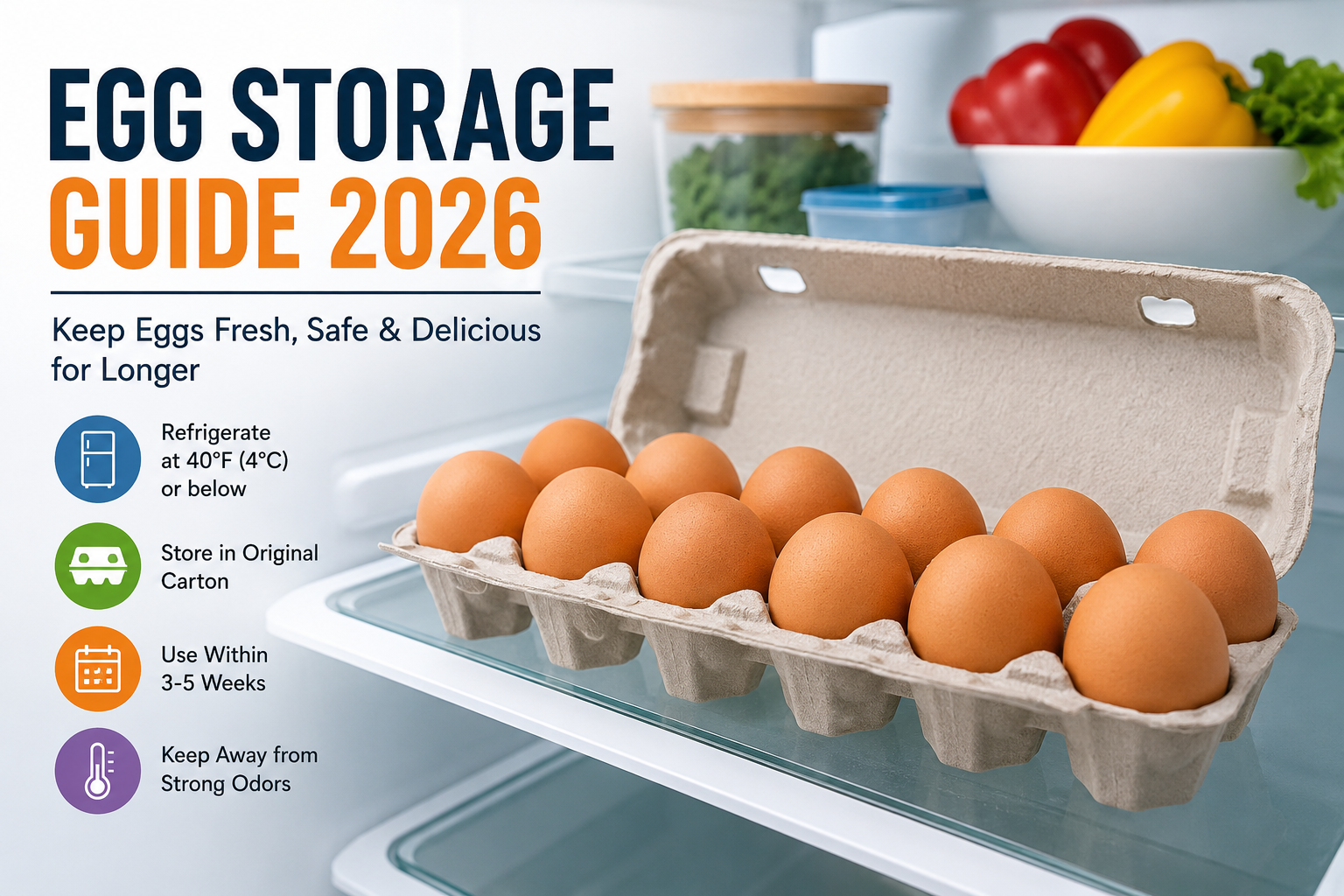
An Egg Storage Guide can help households keep eggs fresh, reduce food waste, and handle them more safely. Whether you buy eggs weekly or keep a larger supply, proper storage matters.
In 2026, food-safety guidance still emphasizes keeping refrigerated eggs cold and handling them carefully. For U.S. readers, USDA guidance says fresh eggs can generally stay refrigerated for 3 to 5 weeks when stored properly at 40°F (4°C) or below.
However, storage practices can differ around the world. Therefore, always follow the instructions on your local egg packaging and food-safety authority.
Why Egg Storage Matters
Good storage protects both freshness and food safety. Additionally, it helps eggs maintain their texture and quality for cooking.
Proper storage can help you:
- Keep eggs fresh for longer
- Reduce unnecessary food waste
- Protect eggs from temperature changes
- Lower the risk of bacterial growth
- Organize eggs by purchase date
As a result, a few simple habits can make a major difference.
Egg Storage Guide: Key Factors to Consider
Keep Eggs Refrigerated
For refrigerated eggs, maintain your refrigerator at 40°F (4°C) or below. FDA guidance recommends storing eggs promptly in a clean refrigerator and using the original carton.
Additionally, avoid storing eggs in the refrigerator door. The temperature can change more often there. Instead, keep the carton on an interior shelf where the temperature stays more stable.
Use the Original Carton
The carton provides useful information, including dates and product details. It also helps protect eggs from absorbing strong odors from other foods.
Therefore, keep eggs in their original packaging until you are ready to use them.
Check Eggs Before Buying
Good safe egg storage begins at the grocery store. FDA recommends buying eggs from refrigerated cases and checking that the shells are clean and free from cracks.
Avoid cracked eggs because damaged shells can increase the opportunity for contamination.
Egg Storage Guide: Different Egg Types
Fresh Shell Eggs
Fresh eggs should remain refrigerated. USDA states that refrigerated shell eggs generally keep for 3 to 5 weeks from the day they are placed in the refrigerator.
For best quality, however, FDA recommends using eggs within about three weeks.
Hard-Cooked Eggs
Hard-cooked eggs require different handling. Store them in the refrigerator and use them within one week after cooking.
Labeling the container with the cooking date can make this easier.
Frozen Eggs
Do not freeze eggs in their shells. Instead, crack them first and beat the yolks and whites together before freezing. FDA says frozen eggs can be used within one year for best quality.
For more detailed food-safety information, see the FDA egg safety guidance and USDA egg storage guidance.
Buying and Storage Decision Guide
When buying eggs, follow these simple steps:
- Choose eggs from a refrigerated section.
- Check the carton and dates.
- Avoid cracked or dirty shells.
- Refrigerate eggs soon after shopping.
- Keep them in their original carton.
- Follow local storage instructions.
Additionally, keep older eggs toward the front of your refrigerator. Put newer cartons behind them. This simple first-in, first-out approach helps prevent forgotten eggs.
Common Egg Storage Mistakes to Avoid
Even careful cooks can make storage mistakes. Avoid these common problems:
- Leaving refrigerated eggs on the counter for long periods
- Storing eggs in the refrigerator door
- Freezing eggs inside their shells
- Ignoring cracked shells
- Keeping cooked eggs too long
- Allowing the refrigerator to become too warm
USDA advises not keeping eggs out of refrigeration for more than two hours.
Furthermore, cooked egg dishes should be refrigerated promptly and used within the recommended time.
Egg Storage Guide: Maintenance and Care Tips
A reliable Egg Storage Guide should include regular refrigerator care. First, check your refrigerator temperature with an appliance thermometer. The FDA recommends keeping it at 40°F or below.
Next, clean spills quickly and avoid overcrowding the refrigerator. Cold air needs space to circulate properly.
Finally, organize eggs so that you can easily see older cartons. This makes everyday egg refrigerator storage simpler and can reduce waste.
What About Power Outages?
Power failures require extra care. Keep the refrigerator door closed as much as possible. FDA says a closed refrigerator can generally keep food cold for about four hours.
If perishable foods, including eggs, have been above 40°F for two hours or more, they should be discarded according to FDA emergency food-safety guidance.
Frequently Asked Questions
1. How long do fresh eggs last in the refrigerator?
Fresh eggs can generally stay refrigerated for about 3 to 5 weeks when stored correctly at 40°F (4°C) or below. However, always check the carton date and follow food-safety guidance in your country.
2. What is the best way to store eggs?
The Egg Storage Guide recommends keeping eggs refrigerated in their original carton. Place them on an interior refrigerator shelf rather than in the door, where temperatures can change more often.
3. Can you freeze eggs?
Yes, but you should not freeze eggs in their shells. Crack them first, beat the yolks and whites together, and place them in a suitable freezer container. The Egg Storage Guide approach can help maintain better quality during long-term storage.
4. How long do hard-boiled eggs last?
Hard-boiled eggs should be refrigerated and used within one week. Store them in a covered container and label the container with the cooking date when possible.
5. Should eggs be stored in the refrigerator door?
No. The Egg Storage Guide recommends keeping eggs on an interior shelf because the temperature is usually more stable there. Keeping eggs in their original carton also helps protect them from odors and damage.
6. How can you tell if an egg is unsafe?
Avoid eggs with cracked shells, unusual odors, or obvious signs of spoilage. Additionally, eggs that have been kept at unsafe temperatures for too long should be discarded.
7. Can eggs be left at room temperature?
Refrigerated eggs should not remain at room temperature for extended periods. Following the Egg Storage Guide means returning refrigerated eggs to the refrigerator promptly after use and following local food-safety rules.
8. What temperature should eggs be stored at?
For refrigerated eggs, keep the refrigerator at 40°F (4°C) or below. A refrigerator thermometer can help you monitor the temperature accurately.
9. Does the original egg carton matter?
Yes. The carton protects eggs from damage and helps reduce exposure to odors. It also keeps important date and product information available. The Egg Storage Guide recommends keeping eggs in their original carton whenever possible.
10. What is the easiest way to reduce egg waste?
Use older eggs first, keep the refrigerator organized, and check storage dates regularly. A simple Egg Storage Guide routine can help households avoid forgetting older cartons.
Conclusion
Following an Egg Storage Guide can help you keep eggs fresh, organized, and safer to eat throughout 2026. Keep refrigerated eggs cold, use the original carton, monitor storage times, and handle cooked eggs carefully.
Leave a Reply