Egg Quality Problems: Causes, Types, and Solutions in 2026
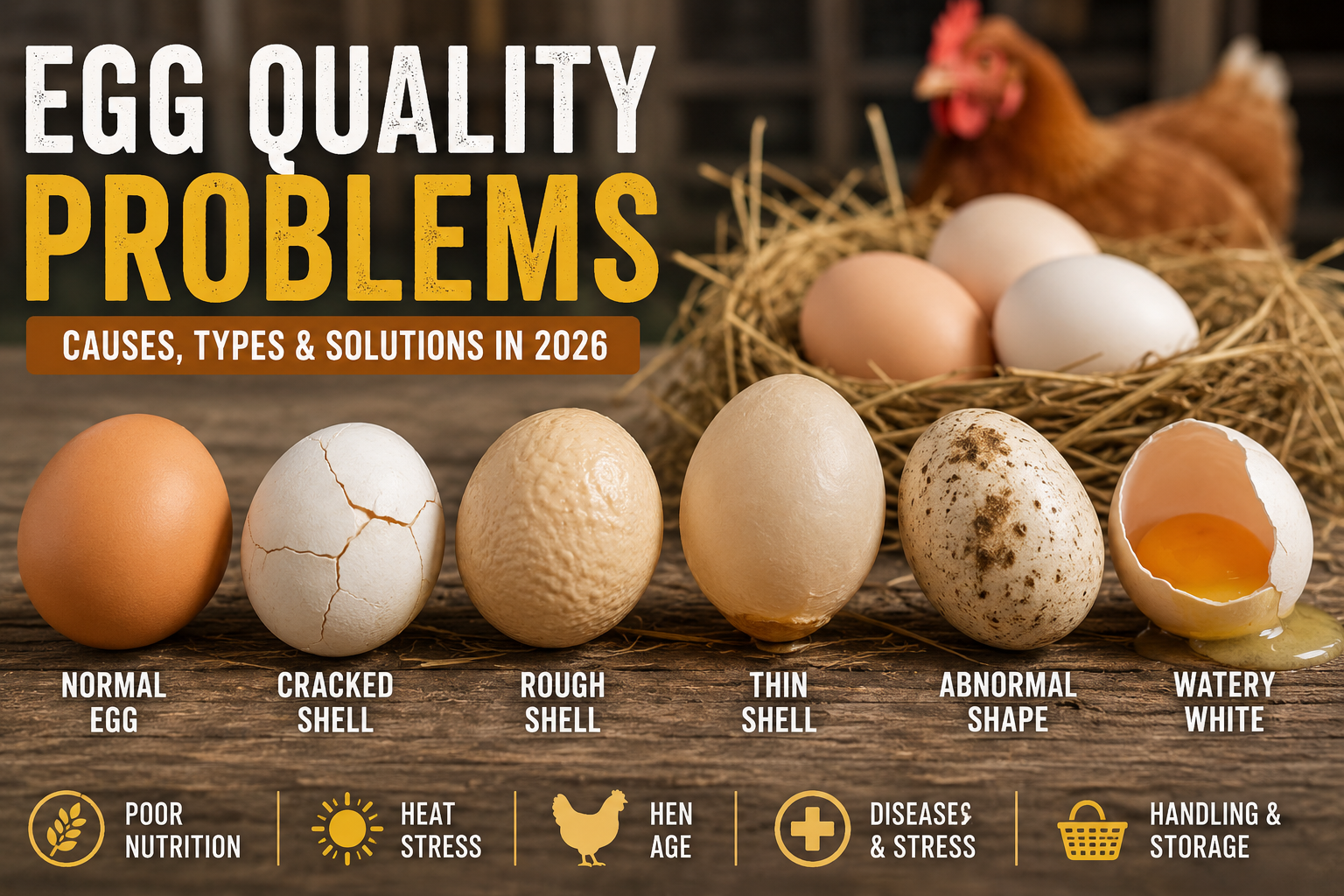
Egg Quality Problems can affect backyard chickens, small farms, and commercial egg production. Weak shells, cracks, unusual egg shapes, watery whites, and blood spots can all signal a quality issue. Therefore, understanding the causes can help poultry keepers protect their hens and reduce egg waste.
In 2026, proper flock care remains important because factors such as heat stress, nutrition, hen age, disease, handling, and storage can influence egg quality. USDA guidance also recognizes shell condition, egg white, yolk, and air-cell characteristics as important parts of egg grading.
Why Egg Quality Problems Matter
Good-quality eggs are easier to store, transport, sell, and use. However, poor shell quality can increase breakage and may also make eggs more vulnerable to contamination.
The shell provides an important protective barrier around the egg. As a result, cracks and microcracks deserve attention because damaged shells can provide easier entry points for microorganisms.
For backyard chicken owners, better egg quality can also mean:
- Less food waste
- Fewer broken eggs
- Better flock performance
- Improved customer satisfaction
- Easier egg collection and storage
Main Causes of Egg Quality Problems
1. Nutrition and Mineral Balance
Calcium plays an important role in eggshell formation. However, calcium alone does not solve every problem. Hens need a properly balanced layer diet, along with suitable phosphorus, vitamin D, protein, and other nutrients.
Therefore, provide a complete feed designed for laying hens rather than relying mainly on household scraps.
2. Heat Stress
High temperatures can contribute to Egg Quality Problems. During hot weather, chickens drink much more water, while heat stress can affect mineral balance and eggshell formation.
Additionally, provide clean, cool water throughout the day. Shade, ventilation, and reduced heat exposure can also help hens cope with summer conditions.
3. Hen Age
A hen’s age can influence shell strength and interior quality. Older laying hens may produce more eggs with thinner or weaker shells.
Therefore, monitor shell quality as hens move through their laying cycle instead of assuming every change comes from poor feed.
4. Stress and Disease
Stress from overcrowding, sudden environmental changes, poor ventilation, or illness can affect laying performance and egg quality. Some poultry diseases can also reduce shell quality.
If several hens suddenly produce abnormal eggs, investigate the flock rather than treating the problem as an isolated egg defect.
Types of Egg Quality Problems
Weak or Thin Eggshells
Thin shells are among the most common Egg Quality Problems. They may crack easily during collection or transport.
Check feed quality, water availability, heat levels, and flock health. If the problem continues, consult a poultry veterinarian or qualified extension professional.
Cracked or Broken Eggs
Cracks can result from weak shells, rough handling, overcrowded nesting areas, or transport damage. Furthermore, USDA research notes that shell integrity is important because damaged shells can increase the opportunity for microorganisms to enter the egg.
Watery Egg Whites
As eggs age, interior quality naturally declines. The USDA explains that egg quality becomes less stable over time, although proper handling can slow the decline.
Therefore, collect eggs regularly and store them correctly.
Unusual Shapes and Shell Defects
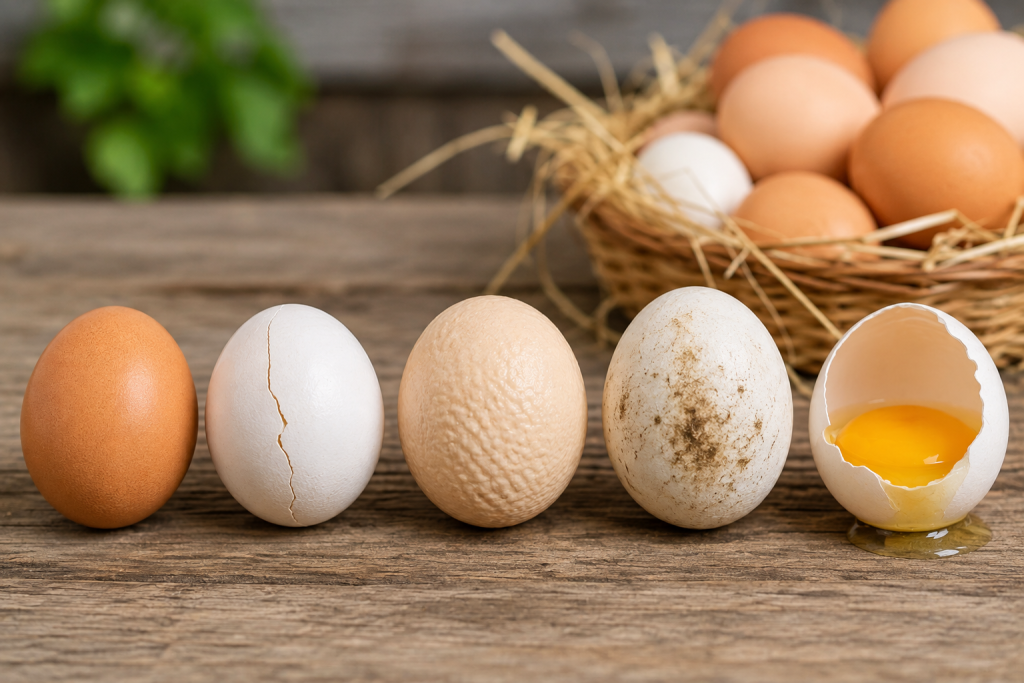
Wrinkled, misshapen, rough, or ridged shells can occur for several reasons. Stress, age, nutrition, and flock health may all contribute.
One unusual egg does not always indicate a serious problem. However, repeated defects deserve closer attention.
How to Reduce Egg Quality Problems
Use this simple checklist:
- Feed a complete layer ration.
- Provide constant access to clean water.
- Reduce heat stress during hot weather.
- Keep nesting areas clean and comfortable.
- Collect eggs regularly.
- Handle eggs carefully to prevent cracks.
- Monitor hens for illness or unusual behavior.
- Record repeated shell or interior defects.
- Review feed and flock management when problems increase.
Common Mistakes to Avoid
One common mistake is giving hens excessive supplements without checking their complete diet. More calcium is not automatically better, and nutritional imbalances can create other problems.
Another mistake is ignoring heat. During hot periods, hens can dramatically increase water intake, making reliable water access especially important.
Finally, do not confuse poor quality with spoilage. For example, a floating egg may have a larger air cell because it has aged, but USDA notes that a floating egg can still be safe; consumers should crack it separately and check for an unusual odor or appearance.
Egg Care and Storage Tips
After collection, handle eggs gently and keep them protected from contamination. For consumers in the United States, USDA recommends proper refrigeration and safe cooking practices. Egg dishes should reach 160°F (71.1°C).
Additionally, avoid keeping refrigerated eggs or egg dishes at room temperature for extended periods. Good storage helps preserve both quality and safety.
Conclusion
Egg Quality Problems are often linked to several factors rather than one single cause. Nutrition, heat stress, hen age, flock health, handling, and storage can all play a role.
Therefore, start with the basics: balanced layer feed, clean water, good ventilation, comfortable nesting areas, careful handling, and regular flock observation. If Egg Quality Problems continue or appear alongside signs of illness, seek professional poultry advice.
Leave a Reply