Climate-Resilient Chicken Breeds for 2026
Weather is becoming a bigger factor for backyard chicken keepers and small farms worldwide. In 2026, choosing Climate-Resilient Chicken Breeds for 2026 can help flock owners prepare for hotter summers, colder winters, and sudden weather changes.
For US poultry keepers, this matters because heat stress can reduce egg production, egg weight, and shell quality. USDA research also shows that genetics can influence how individual chickens respond to heat stress.
2026 update: Breed selection is only one part of climate resilience. Good ventilation, shade, clean water, proper nutrition, and suitable housing remain essential.
Why Climate-Resilient Chicken Breeds for 2026 Matter
Climate-Resilient Chicken Breeds for 2026 offer useful traits for changing weather conditions. However, no chicken breed can survive extreme conditions without proper care.
Heat-tolerant chicken breeds often have larger combs, wattles, exposed legs, and lighter feathering. These features can help birds release body heat. Mediterranean breeds generally perform better in hot regions, while many American breeds are better suited to colder conditions.
Additionally, choosing adaptable birds can reduce management problems and support more consistent production.
Key benefits include:
- Better tolerance of seasonal weather changes
- Potentially improved flock welfare
- Greater suitability for outdoor systems
- Useful adaptation to regional climates
- Better long-term planning for small farms
Key Features to Look For
Climate-Resilient Chicken Breeds for 2026: Heat Traits
When comparing Climate-Resilient Chicken Breeds for 2026, look for birds with physical features that support cooling.
Large combs and wattles can provide more surface area for heat loss. Furthermore, lighter-bodied chickens may produce less metabolic heat than very heavy birds.
USDA research confirms that heat stress can affect both welfare and production, making genetic selection an important part of future poultry management.
Cold-Hardy Features
Cold-hardy chicken breeds usually benefit from dense feathering, adequate body size, and comb types that reduce frostbite risk.
However, even cold-tolerant birds need dry bedding, protection from wind, and good ventilation. Moisture and poor airflow can create serious winter problems.
Best Types to Consider in 2026
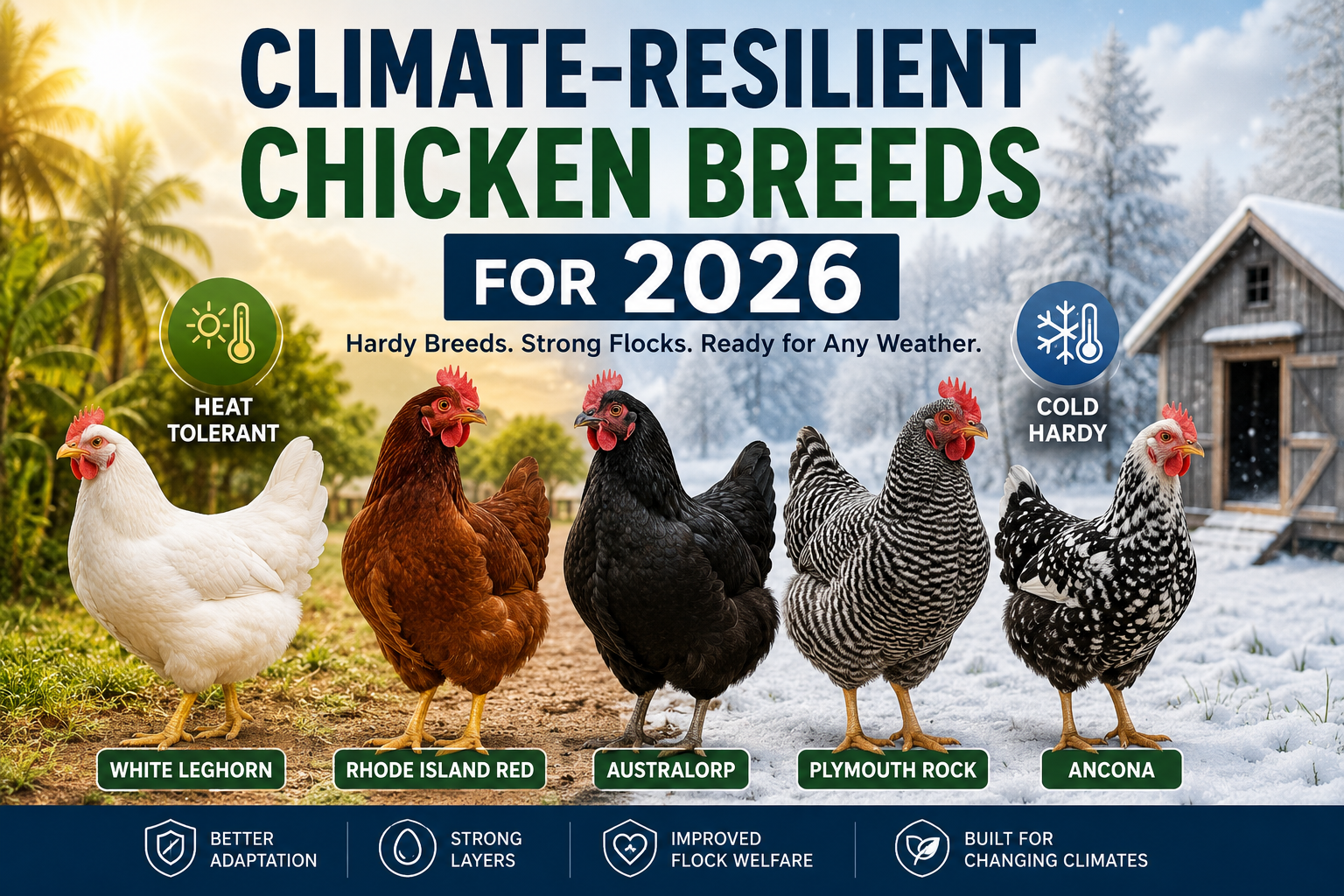
White Leghorn
White Leghorns are active, efficient layers with Mediterranean origins. Their relatively light body and large comb make them a popular option for warmer environments.
University extension guidance lists Leghorns among highly productive laying breeds.
Rhode Island Red
Rhode Island Reds are hardy dual-purpose birds and can work well for varied backyard conditions. They are also known for strong laying performance and durability.
Australorp
Australorps offer excellent egg production and a calm temperament. They can be a practical choice for keepers who want both productivity and a relatively adaptable flock.
Plymouth Rock
Plymouth Rocks are another versatile choice. They combine useful egg production with meat value and are recognized among breeds with traits associated with better heat tolerance.
Ancona
Anconas are active Mediterranean birds that may suit warm climates. Their smaller body type and active nature make them worth considering for hot-weather flocks.
Buying Guide for Climate-Resilient Chicken Breeds for 2026
Before buying Climate-Resilient Chicken Breeds for 2026, consider your local conditions rather than choosing a breed based only on popularity.
- Check your climate: Identify your normal summer and winter extremes.
- Choose your purpose: Decide whether you want eggs, meat, breeding stock, or dual-purpose birds.
- Study the strain: Individual genetic lines can respond differently to heat stress.
- Check local availability: Choose healthy chicks from reputable breeders or hatcheries.
- Plan the housing: Breed selection cannot replace good ventilation and weather protection.
Common Mistakes to Avoid
Even Climate-Resilient Chicken Breeds for 2026 can struggle when owners make basic management mistakes.
Avoid these problems:
- Providing too little drinking water
- Keeping the coop poorly ventilated
- Overcrowding birds
- Removing shade during heat waves
- Ignoring signs of heat stress
- Choosing a breed without considering local weather
- Assuming a hardy breed needs no special care
Heat stress can cause chickens to drink and rest more while reducing normal production.
Care Tips for a Climate-Smart Flock
Good chicken heat stress management is essential during hot weather. Provide continuous access to clean water and create shaded areas around the coop.
Additionally, improve airflow without creating dangerous drafts. During winter, keep bedding dry and provide protection from strong winds.
For commercial or larger-scale operations, researchers are also exploring cooling technologies and nutritional strategies to reduce heat-related stress.
Conclusion
The best Climate-Resilient Chicken Breeds for 2026 depend on your location, production goals, and management system. Leghorns and Anconas can be strong choices for warmer regions, while breeds such as Plymouth Rock and Rhode Island Red offer broader versatility.
Leave a Reply