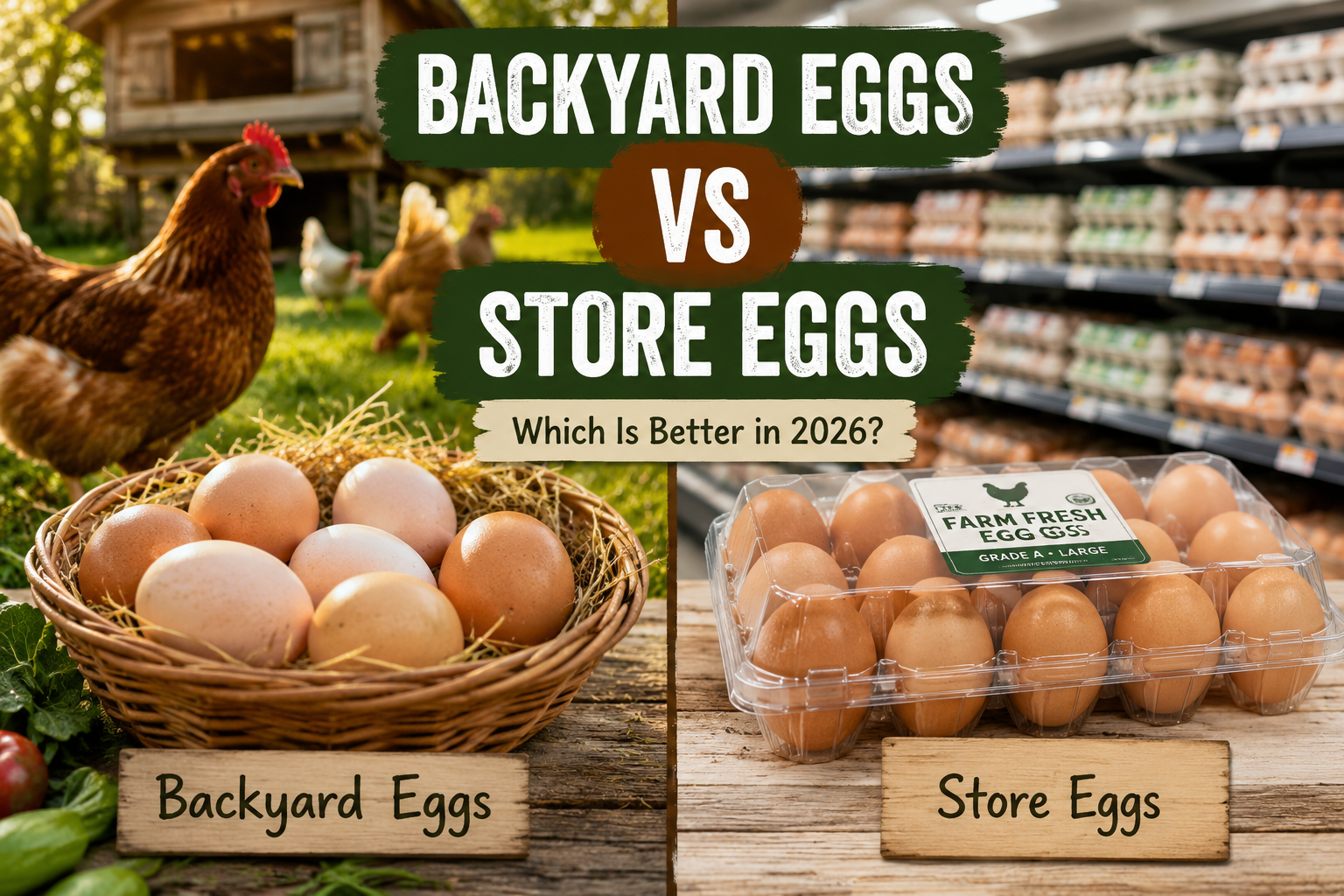
Backyard Eggs vs Store Eggs: Which Is Better in 2026?
When comparing Backyard Eggs vs Store Eggs, many people wonder which option offers better freshness, nutrition, safety, and value. In 2026, backyard chicken keeping remains popular, while store-bought eggs continue to offer convenience and consistent availability.
However, the best choice depends on your flock management, budget, local rules, and personal preferences. Let’s compare both options so you can make a smart decision.
Why Backyard Eggs vs Store Eggs Matters
The debate over Backyard Eggs vs Store Eggs is not simply about taste. Several factors can affect the quality and value of eggs, including how chickens are raised, what they eat, and how eggs are handled after collection.
Freshness and Taste
Freshly collected backyard chicken eggs can reach your kitchen soon after laying. As a result, many backyard keepers notice a firm white and rich yolk.
Store eggs, however, travel through collection, grading, packaging, and distribution systems. Their freshness can vary depending on handling and storage.
Nutrition
Both backyard and commercial eggs can provide protein, fats, vitamins, and minerals. However, the nutritional profile can vary based on the hen’s diet and other production factors.
For example, hens with access to a varied diet may produce eggs with differences in certain nutrients. Still, you should not assume every backyard egg is automatically more nutritious than every store-bought egg.
Backyard Eggs vs Store Eggs: Key Differences
Understanding the main differences makes the Backyard Eggs vs Store Eggs decision much easier.
1. Chicken Diet
A hen’s diet affects egg production and can influence some nutritional characteristics. Backyard chickens may eat commercial feed alongside approved treats, insects, greens, or forage.
Store-bought eggs come from farms that follow specific feeding programs. Therefore, the nutrition and production system can vary between brands.
2. Egg Safety
Food safety should always come first. Backyard eggs require careful collection, cleaning, storage, and handling.
Additionally, commercial eggs typically pass through regulated processing systems. However, consumers still need to refrigerate and cook eggs properly.
3. Cost
Backyard eggs may seem cheaper because you collect them yourself. Yet, chickens require:
- Quality feed
- Safe housing
- Bedding
- Nesting boxes
- Veterinary care when needed
- Protection from predators
Therefore, farm fresh eggs are not always cheaper when you calculate the complete cost of keeping hens.
Types of Eggs to Consider
There are several categories you may encounter when comparing Backyard Eggs vs Store Eggs.
Backyard Chicken Eggs
These come from hens kept at home or on small properties. You control much of the birds’ environment and feeding routine.
As a result, backyard eggs can be appealing to people who enjoy raising chickens and collecting eggs themselves.
Store-Bought Eggs
Store eggs are widely available in supermarkets and grocery stores. They may carry labels such as free-range, organic, pasture-raised, or cage-free, depending on the market and production system.
However, these labels can have different legal meanings in different countries.
Buying and Choosing Guide
If you are deciding between Backyard Eggs vs Store Eggs, consider these questions:
- Do you have enough space for chickens?
Backyard hens need secure housing and outdoor or appropriate indoor space. - Can you provide daily care?
Chickens need fresh water, balanced feed, clean housing, and regular observation. - Do you want convenience?
Store-bought eggs are easier if you do not want daily poultry care. - What matters most to you?
Freshness, cost, convenience, animal care, and personal food preferences can all influence your choice.
Common Mistakes to Avoid
When choosing Backyard Eggs vs Store Eggs, avoid these common mistakes:
- Assuming backyard eggs are automatically safer.
- Ignoring proper refrigeration.
- Feeding chickens an unbalanced diet.
- Failing to clean nesting areas regularly.
- Judging egg quality only by shell color.
- Assuming expensive store eggs are always nutritionally superior.
Additionally, check your local food safety guidance for recommendations on collecting, cleaning, storing, and cooking backyard eggs.
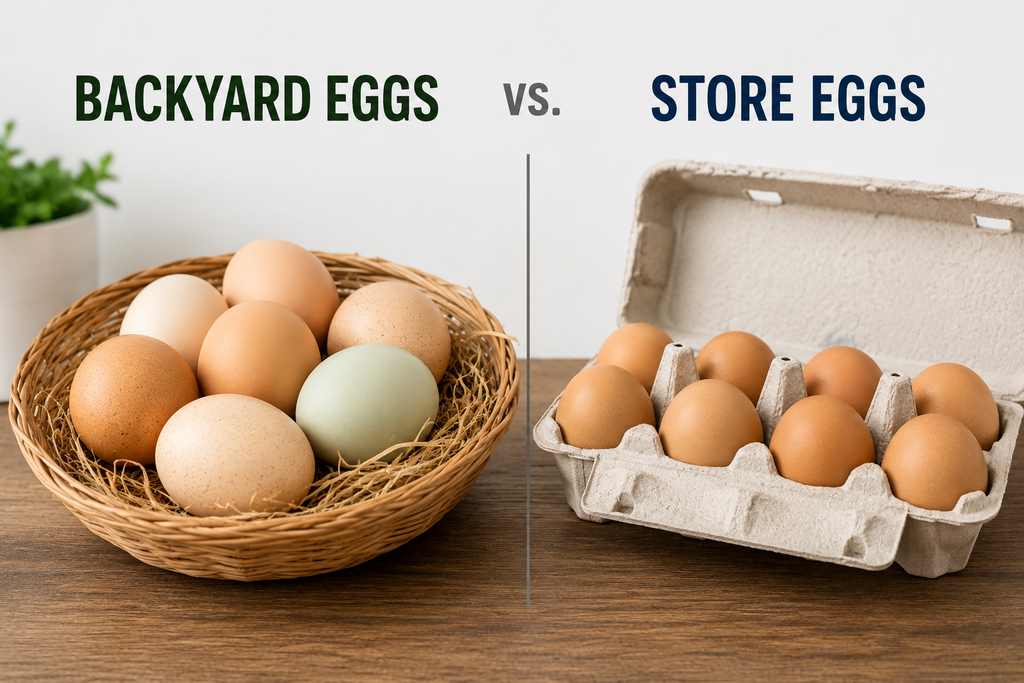
How to Care for Backyard Eggs
If you choose backyard eggs, good handling is essential.
Collect eggs regularly and keep nesting boxes clean. Discard cracked or heavily soiled eggs when appropriate, and refrigerate eggs according to your local food-safety guidance.
Furthermore, wash your hands after handling eggs or contacting poultry. Cook eggs thoroughly when required, especially when serving young children, older adults, or people at higher risk from foodborne illness.
Backyard Eggs vs Store Eggs: Final Verdict
There is no universal winner in the Backyard Eggs vs Store Eggs debate. Backyard eggs can offer freshness, enjoyment, and greater control over how hens are raised. Store eggs, however, provide convenience, predictable supply, and established commercial handling systems.
Ultimately, choose the option that fits your lifestyle and food-safety needs. If you keep chickens, focus on healthy hens and proper egg handling. If convenience matters most, quality store-bought eggs can be an excellent everyday choice.
Leave a Reply