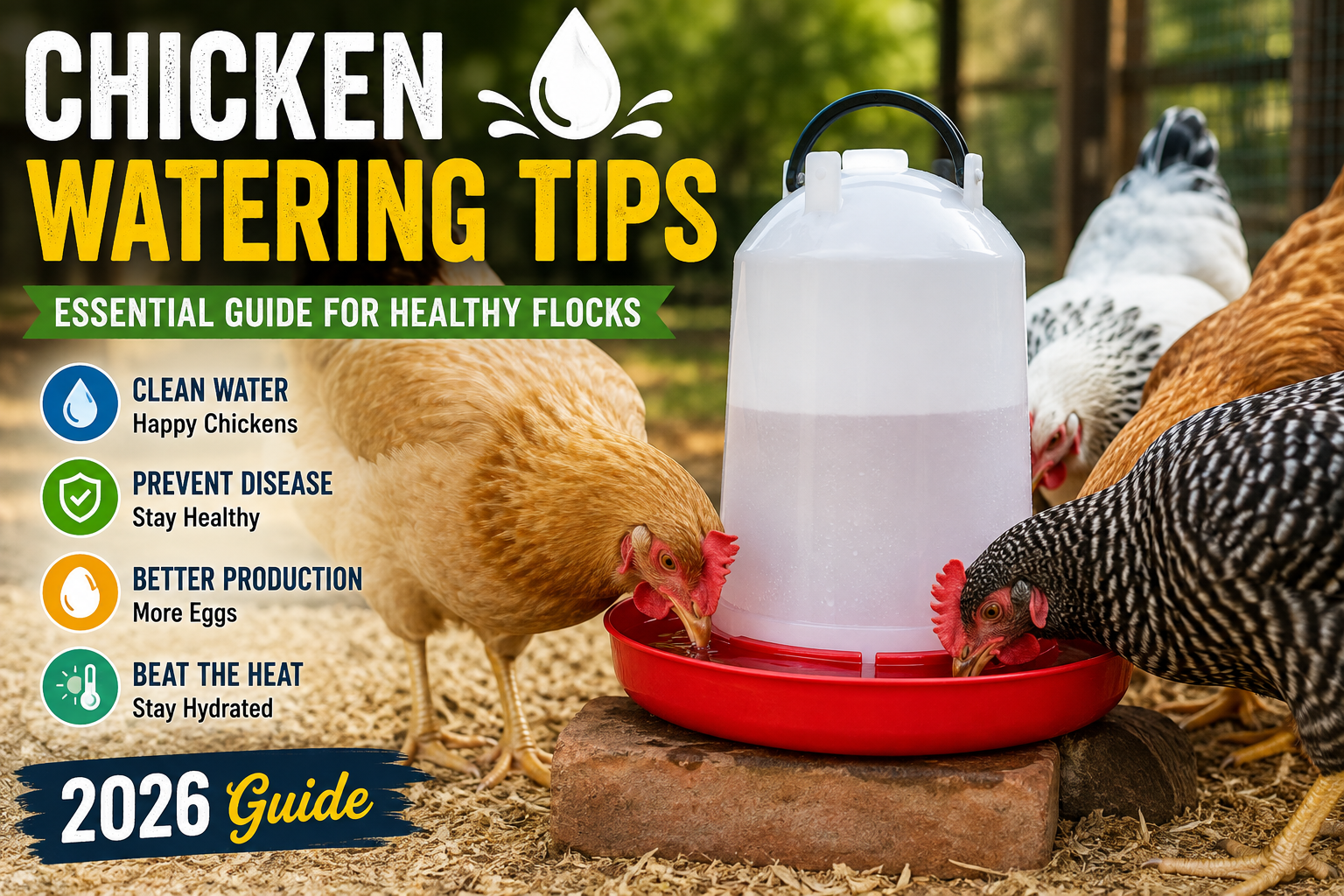
Chicken Watering Tips: Keep Your Flock Healthy in 2026
Keeping chickens healthy starts with fresh water every day. These Chicken Watering Tips can help backyard keepers and commercial poultry farmers prevent disease, improve egg production, and support flock health. Whether you own a few hens or manage hundreds of birds, clean water remains one of the most important parts of daily chicken care.
Additionally, proper watering reduces stress during hot weather and supports healthy digestion. As a result, your flock stays active, productive, and comfortable throughout the year.
Why Chicken Watering Tips Matter
Every chicken needs constant access to clean drinking water. Without enough water, birds quickly become dehydrated, especially during summer.
Following proper Chicken Watering Tips offers several benefits:
- Supports healthy egg production
- Prevents dehydration
- Improves digestion
- Reduces disease risk
- Encourages better feed intake
- Keeps birds active and stress-free
Chicken Watering Tips for Daily Flock Care
Provide Fresh Water Every Day
Fresh water should always be available. Replace dirty water immediately because bacteria grow quickly in warm conditions.
Additionally, wash water containers before refilling them.
Choose the Right Waterer
Selecting the right equipment makes watering easier.
Popular options include:
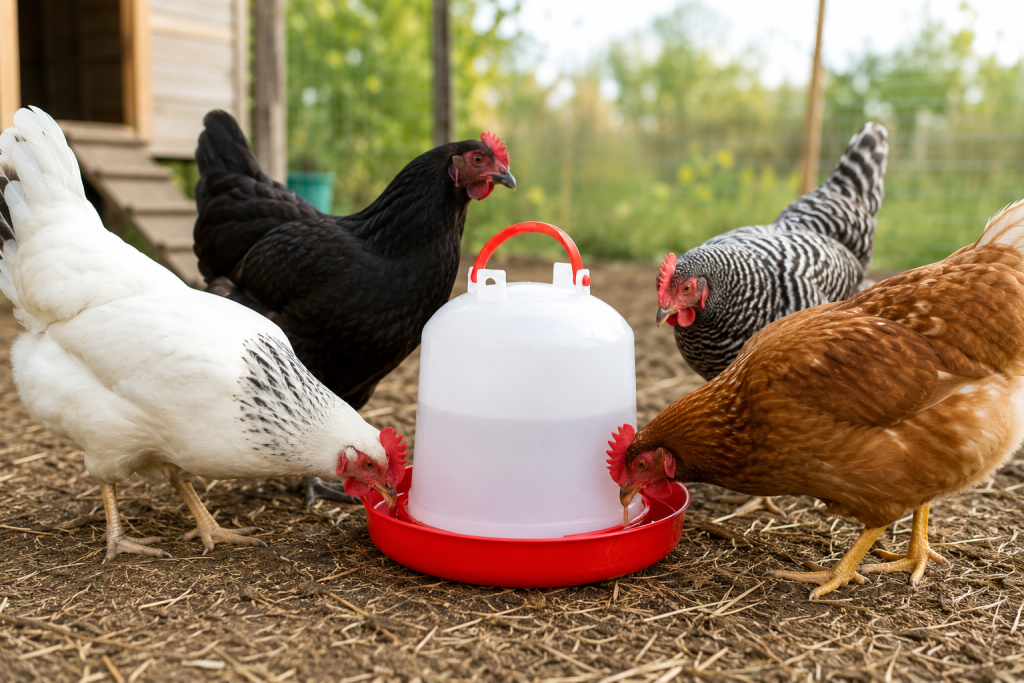
- Gravity waterers
- Automatic chicken water systems
- Nipple drinkers
- Bell drinkers
A good best chicken waterer reduces waste and keeps water cleaner.
Keep Water Cool During Summer
Hot weather increases water consumption.
To help your flock:
- Place waterers in shaded areas.
- Refill with cool water twice daily.
- Add extra water stations for larger flocks.
- Check water levels every few hours during heat waves.
As a result, birds remain hydrated even on extremely hot days.
Types of Chicken Watering Systems
Gravity Waterers
These are affordable and simple to maintain. They work well for small backyard flocks.
Automatic Water Systems
Automatic systems refill themselves using a water line. They save time and ensure continuous water access.
They are excellent for larger poultry farms practicing efficient poultry water management.
Nipple Waterers
Nipple drinkers keep water clean because birds cannot scratch dirt into the container.
Additionally, they reduce water waste inside the coop.
Buying Guide for Chicken Watering Equipment
Before purchasing a watering system, consider these important factors.
Capacity
Choose a size that matches your flock. Larger groups need larger reservoirs.
Easy Cleaning
Waterers should come apart easily for regular washing.
Weather Resistance
Look for durable plastic or stainless steel that handles both hot summers and freezing winters.
Leak Prevention
Quality waterers minimize spills and reduce muddy areas around the coop.
Ease of Installation
If choosing a chicken water system, select one that fits your coop layout and maintenance routine.
Common Mistakes to Avoid
Many poultry owners unknowingly create water problems.
Avoid these common mistakes:
- Allowing algae to grow
- Forgetting daily water checks
- Using cracked containers
- Placing water in direct sunlight
- Providing too few water stations
- Ignoring frozen water during winter
However, correcting these mistakes greatly improves flock health.
Maintenance and Care Tips
Proper maintenance keeps drinking water safe.
Clean Water Containers Frequently
Wash waterers at least two or three times each week.
For larger farms, daily cleaning is even better.
Prevent Algae Growth
Keep water containers in shaded locations.
Additionally, scrub green buildup before it spreads.
Prepare for Winter
Frozen water prevents chickens from drinking.
Use heated poultry waterers where temperatures fall below freezing.
Monitor Water Consumption
Healthy chickens drink regularly.
Sudden drops in water intake may signal illness. Therefore, observe your flock every day and investigate unusual behavior early.
Extra Hydration Tips
Good backyard chicken hydration involves more than simply filling a water bucket.
For the best results:
- Keep multiple watering stations.
- Raise waterers slightly above ground level.
- Remove droppings immediately.
- Inspect water lines weekly.
- Replace damaged equipment quickly.
These simple habits reduce contamination and keep birds comfortable throughout every season.
Frequently Asked Questions
How much water does a chicken drink daily?
An adult chicken usually drinks between 250 and 500 ml daily. During hot weather, consumption can double.
Can chickens drink cold water?
Yes. Cool, clean water helps chickens stay comfortable during summer. However, avoid frozen water during winter.
How often should chicken waterers be cleaned?
Clean them several times each week. Daily cleaning is ideal for larger flocks.
Conclusion
Healthy chickens begin with clean drinking water. Following these Chicken Watering Tips helps prevent dehydration, supports egg production, and improves overall flock health. Additionally, regular cleaning, proper equipment, and daily monitoring make watering simple and effective. Start applying these Chicken Watering Tips today, and your chickens will stay healthier and more productive throughout 2026.
Leave a Reply