Best Protein Sources in 2026: Complete Guide to Healthy Nutrition
Finding the Best Protein Sources is one of the smartest ways to improve your health in 2026. Whether you want to build muscle, lose weight, or simply eat better, choosing quality protein makes a big difference. Additionally, protein supports your muscles, bones, skin, and immune system. This guide explains how to choose the right foods for every lifestyle.
Why the Best Protein Sources Matter
The Best Protein Sources provide your body with essential amino acids that help repair tissues and build muscle. Moreover, they keep you full longer, making healthy eating easier.
Some major benefits include:
- Supports muscle growth and recovery
- Helps maintain healthy body weight
- Boosts metabolism
- Improves bone health
- Keeps you satisfied between meals
- Supports healthy skin and hair
As a result, adding protein to every meal can improve overall wellness.
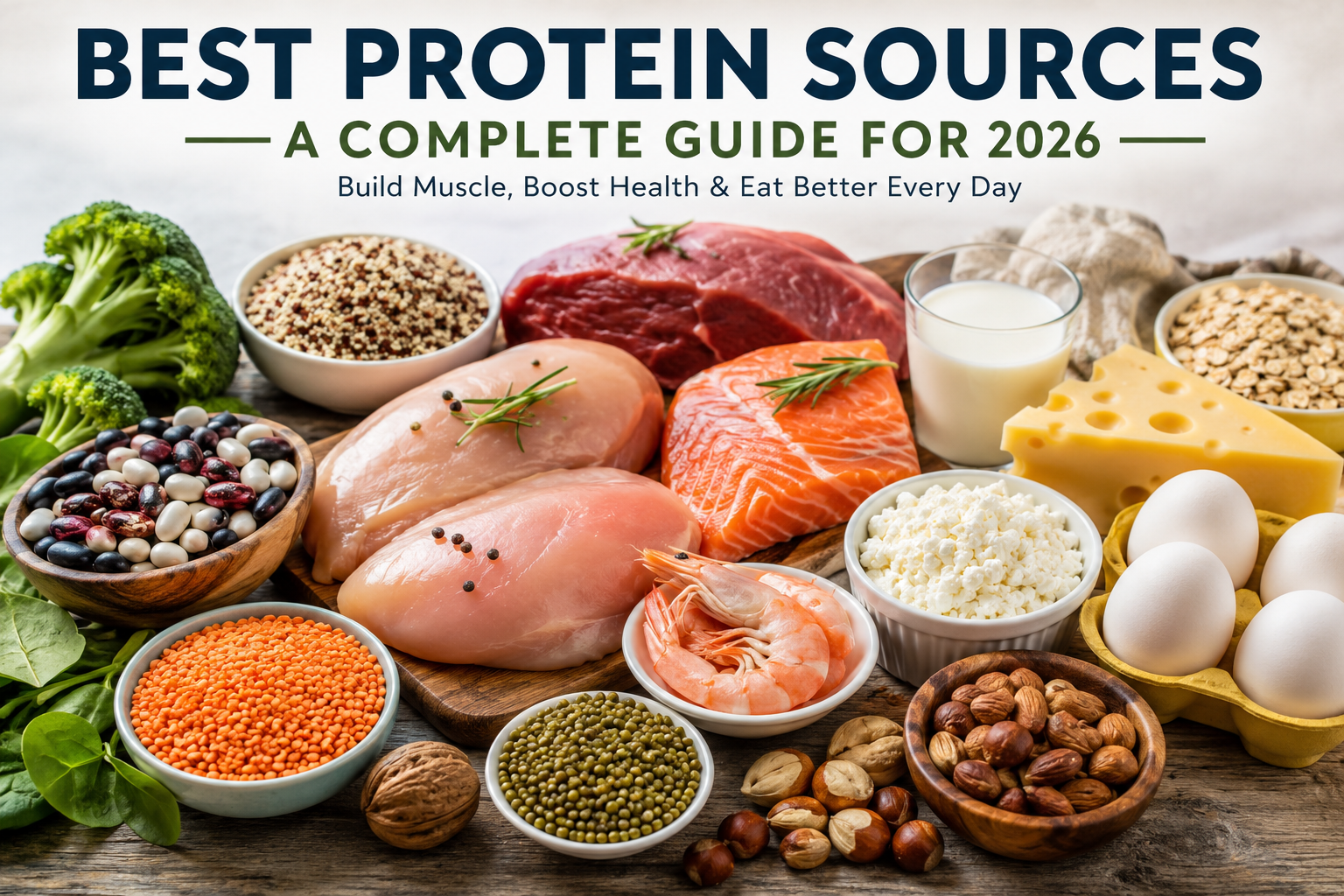
Best Protein Sources to Include in Your Diet
Animal-Based Protein Sources
Animal proteins contain all essential amino acids.
Excellent choices include:
- Chicken breast
- Turkey
- Eggs
- Fish
- Salmon
- Tuna
- Greek yogurt
- Cottage cheese
- Lean beef
These are also considered some of the best high protein foods for athletes and active adults.
Plant-Based Protein Sources
Plant proteins continue to grow in popularity during 2026.
Popular options include:
- Lentils
- Chickpeas
- Black beans
- Quinoa
- Tofu
- Tempeh
- Edamame
- Chia seeds
- Pumpkin seeds
- Almonds
Many people combine these foods to create a complete plant-based protein meal.
Dairy Protein Options
Dairy products provide protein together with calcium.
Good choices include:
- Milk
- Cottage cheese
- Greek yogurt
- Low-fat cheese
Additionally, Greek yogurt is an excellent breakfast choice because it offers protein and probiotics.
Features to Consider When Choosing the Best Protein Sources
Protein Quality
Look for foods with complete amino acids whenever possible. However, combining different plant foods also creates complete protein.
Fat Content
Choose lean protein whenever possible.
Examples include:
- Skinless chicken
- White fish
- Turkey breast
- Low-fat dairy
These are considered excellent lean protein sources.
Nutritional Value
The best foods offer more than protein.
Look for nutrients such as:
- Iron
- Zinc
- Vitamin B12
- Calcium
- Omega-3 fatty acids
- Fiber
As a result, whole foods usually outperform highly processed protein products.
Types of Best Protein Sources
Whole Foods
Whole foods remain the healthiest option.
Examples include:
- Eggs
- Fish
- Chicken
- Beans
- Lentils
- Nuts
They contain vitamins and minerals alongside protein.
Protein Supplements
Protein powders can help busy people reach daily protein goals.
Popular choices include:
- Whey protein
- Casein protein
- Pea protein
- Soy protein
However, supplements should complement a balanced diet rather than replace meals.
Buying Guide for the Best Protein Sources
When shopping, keep these tips in mind:
- Read nutrition labels carefully.
- Choose foods with minimal processing.
- Compare protein per serving.
- Avoid products with excessive sugar.
- Buy fresh foods whenever possible.
- Select products that fit your dietary needs.
Common Mistakes to Avoid
Many people make simple mistakes when increasing protein intake.
Avoid these habits:
- Eating too much processed meat
- Ignoring portion sizes
- Forgetting plant proteins
- Relying only on supplements
- Drinking too little water
- Skipping vegetables
Instead, create balanced meals that include protein, healthy fats, and whole grains.
Tips for Storing and Maintaining Protein Foods
Fresh protein foods require proper storage.
Follow these guidelines:
- Refrigerate meat immediately.
- Freeze extra portions.
- Store nuts in airtight containers.
- Keep dairy products cold.
- Rotate older foods first.
- Follow expiration dates.
Additionally, proper storage helps preserve nutrition and food safety.
Sample Daily Protein Meal Plan
Here is a simple example:
Breakfast
- Greek yogurt
- Berries
- Chia seeds
Lunch
- Grilled chicken breast
- Brown rice
- Vegetables
Snack
- Mixed nuts
- Cottage cheese
Dinner
- Baked salmon
- Sweet potato
- Steamed broccoli
This balanced approach provides protein throughout the day.
Frequently Asked Questions
1. Which foods contain the highest amount of protein?
Foods like chicken breast, eggs, salmon, Greek yogurt, lentils, tofu, and lean beef are among the richest natural protein options.
2. How much protein should an adult eat every day?
Most adults need about 0.8 grams of protein per kilogram of body weight. However, athletes and active individuals often require more.
3. Are plant-based options as effective as animal protein?
Yes. A balanced mix of beans, lentils, quinoa, soy products, nuts, and seeds can provide all essential amino acids.
4. Can eating more protein help with weight loss?
Yes. Protein helps you feel full longer, reduces hunger, and supports muscle maintenance during weight loss.
5. Is it safe to consume protein every day?
Yes. Daily protein intake is essential for healthy muscles, bones, skin, and overall body function when consumed in recommended amounts.
6. What is the healthiest protein choice for muscle growth?
Lean meats, fish, eggs, dairy products, and soy-based foods are excellent choices for supporting muscle recovery and growth.
7. Are protein supplements necessary?
Not always. Most people can meet their daily needs through whole foods, while supplements are useful for convenience or increased nutritional demands.
8. Which high-protein foods are suitable for vegetarians?
Vegetarians can enjoy tofu, tempeh, lentils, chickpeas, quinoa, Greek yogurt, cottage cheese, and various nuts and seeds.
9. Does cooking reduce the protein content of food?
Cooking may slightly affect protein structure, but it generally does not significantly reduce the total protein available.
10. What should I look for when choosing protein-rich foods?
Choose minimally processed foods that are low in added sugar and unhealthy fats while providing vitamins, minerals, and other essential nutrients.
Conclusion
Choosing the Best Protein Sources helps support muscle growth, healthy weight, and long-term wellness. Additionally, combining animal and plant proteins creates a balanced eating plan suitable for nearly everyone. As nutrition trends continue to evolve in 2026, whole foods remain the smartest choice. Start adding the Best Protein Sources to your daily meals today and enjoy healthier living for years to come.
Leave a Reply