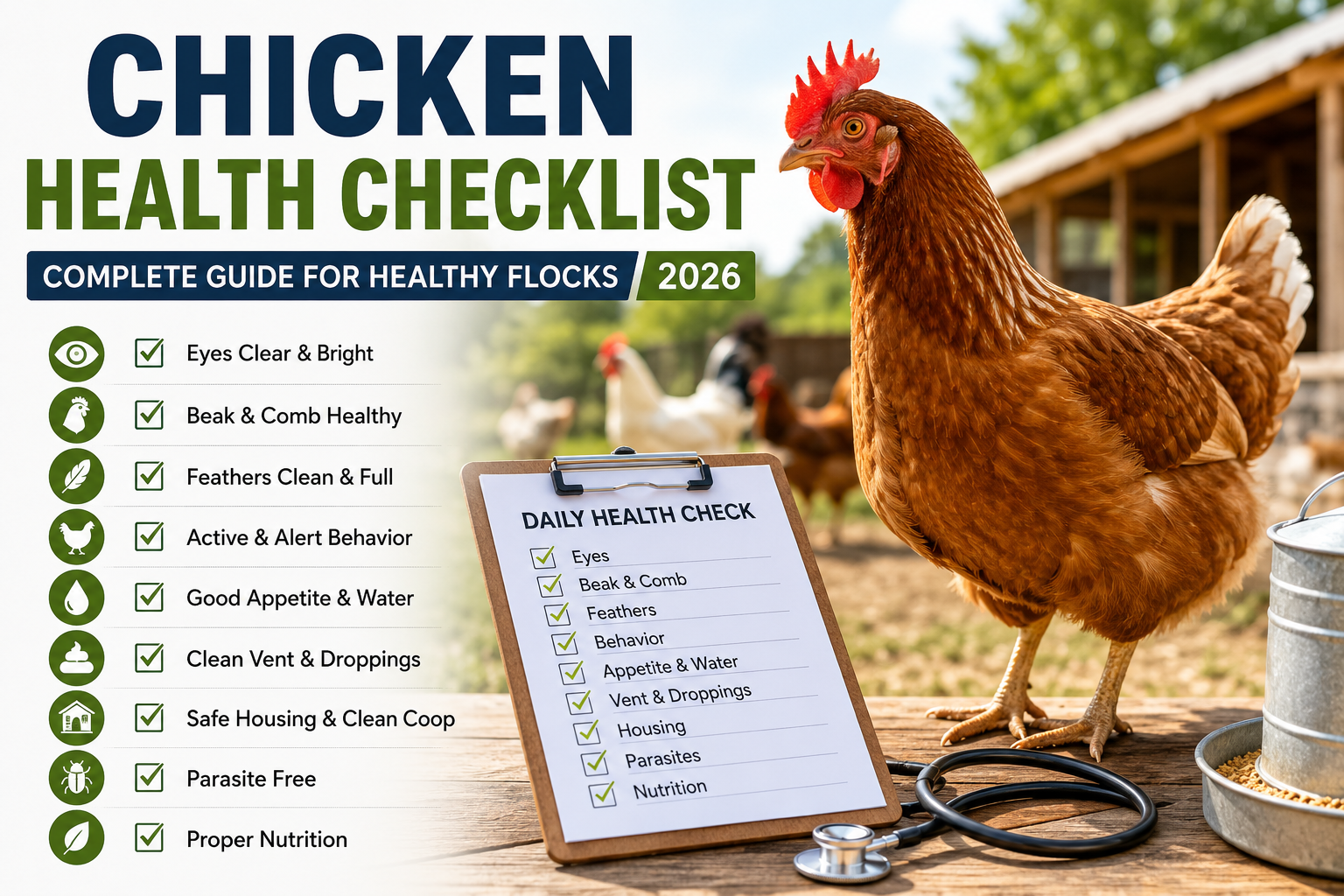
Chicken Health Checklist: Complete Guide for Healthy Flocks (2026)
Keeping chickens healthy has never been more important. Whether you own a few backyard hens or manage a larger flock, following a Chicken Health Checklist helps prevent disease, improves egg production, and reduces costly treatments. In 2026, poultry owners are paying closer attention to preventive care because healthy birds produce better results and live longer.
Additionally, regular health inspections allow you to spot problems early before they spread throughout your flock. This guide explains everything you need to know to keep your chickens in excellent condition.
Why a Chicken Health Checklist Matters
A well-planned Chicken Health Checklist protects both your chickens and your investment. Healthy birds grow faster, lay more eggs, and experience fewer illnesses.
Benefits include:
- Better egg quality
- Stronger immune systems
- Lower veterinary costs
- Reduced disease outbreaks
- Longer lifespan
Furthermore, consistent monitoring helps detect health problems before they become serious.
Chicken Health Checklist: Essential Daily Inspections
Check Eyes and Beak
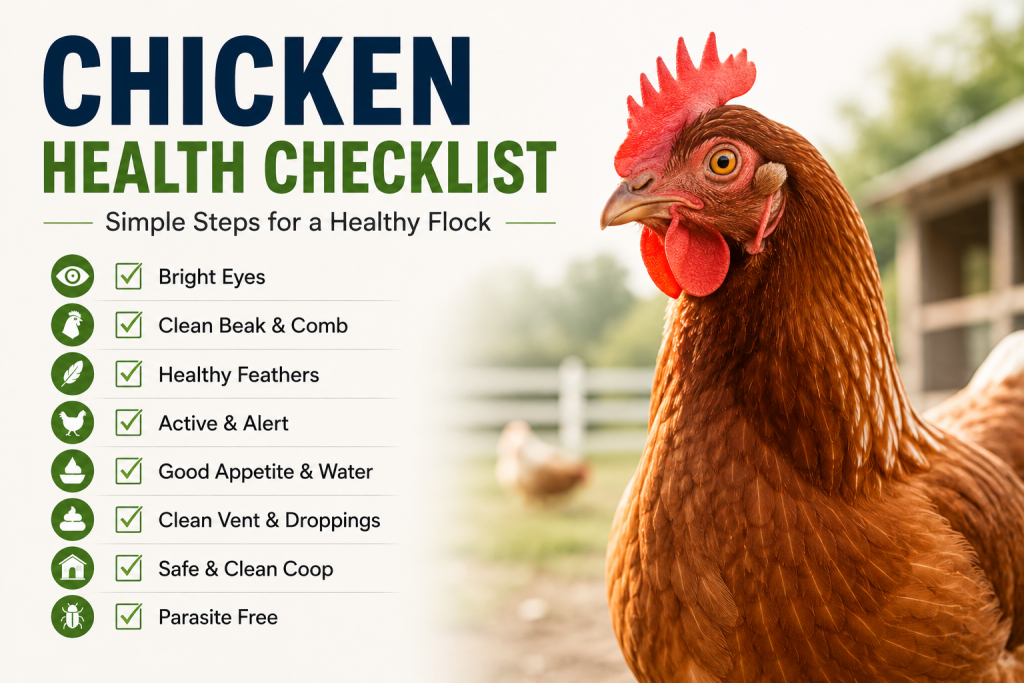
Healthy chickens have bright, clear eyes without discharge. Their beaks should appear smooth and free from cracks.
However, cloudy eyes, swelling, or unusual discharge may indicate infection.
Inspect Feathers and Skin
Feathers should look clean, shiny, and complete.
Look for:
- Bald patches
- Mites
- Lice
- Skin wounds
Healthy plumage usually indicates good nutrition and overall wellness.
Monitor Appetite
Observe how each chicken eats and drinks.
Warning signs include:
- Refusing food
- Drinking excessively
- Sudden weight loss
Additionally, separate birds that stop eating until you determine the cause.
Observe Movement
Healthy chickens remain active and alert.
Watch for:
- Limping
- Weakness
- Difficulty standing
- Swollen legs
Early action often prevents more serious health problems.
Chicken Health Checklist for Proper Nutrition
Balanced Feed
Quality poultry feed provides essential nutrients.
Your chickens need:
- Protein
- Calcium
- Vitamins
- Minerals
- Fresh grains
A balanced diet supports healthy feathers, strong bones, and excellent egg production.
Fresh Water
Clean water should always be available.
Replace water daily because dirty water spreads bacteria and disease.
Healthy Treats
Offer treats in moderation.
Good options include:
- Leafy greens
- Pumpkin
- Watermelon
- Mealworms
- Fresh herbs
Avoid processed foods, chocolate, and salty snacks.
Types of Chicken Health Checks
Daily Health Inspection
Daily checks take only a few minutes.
Focus on:
- Eating habits
- Drinking
- Activity level
- Droppings
Weekly Physical Examination
Once a week, inspect every bird closely.
Check:
- Weight
- Feet
- Feathers
- Vent area
- Comb color
Seasonal Health Review
Each season brings different challenges.
Summer:
- Heat stress
- Dehydration
Winter:
- Frostbite
- Poor ventilation
Spring and Fall:
- Parasites
- Molting
Following this Chicken Health Checklist year-round keeps your flock healthier.
Buying Guide for Healthy Chickens
If you’re purchasing new birds, always inspect them carefully.
Choose chickens that have:
- Bright eyes
- Clean feathers
- Active behavior
- Smooth breathing
- Strong legs
Avoid birds showing signs of coughing, sneezing, or diarrhea.
Additionally, quarantine new chickens for at least two weeks before introducing them to your existing flock.
Common Mistakes to Avoid
Many owners unintentionally create health problems.
Avoid these mistakes:
- Overcrowding the coop
- Ignoring dirty water containers
- Feeding poor-quality food
- Skipping parasite control
- Failing to quarantine new birds
- Poor coop ventilation
As a result, preventing these mistakes greatly reduces disease risks.
Maintenance Tips for Long-Term Chicken Health
Good maintenance supports every Chicken Health Checklist.
Keep the Coop Clean
Clean bedding every week.
Remove wet litter immediately because bacteria multiply quickly in damp conditions.
Improve Ventilation
Fresh airflow reduces ammonia buildup.
However, avoid direct drafts during cold weather.
Control Parasites
Inspect birds regularly for mites and lice.
Use approved poultry treatments whenever necessary.
Maintain Vaccination Records
If vaccinations are recommended in your area, keep accurate records.
Additionally, schedule routine health checks with a qualified poultry veterinarian when needed.
Final Thoughts
A consistent Chicken Health Checklist remains one of the easiest ways to protect your flock in 2026. Daily observation, balanced nutrition, clean housing, and regular inspections work together to prevent many common poultry problems. Furthermore, small health issues become much easier to manage when detected early.
Start using this Chicken Health Checklist today and make it part of your routine. Your chickens will stay healthier, produce better eggs, and reward your care with a stronger, happier flock.
Leave a Reply