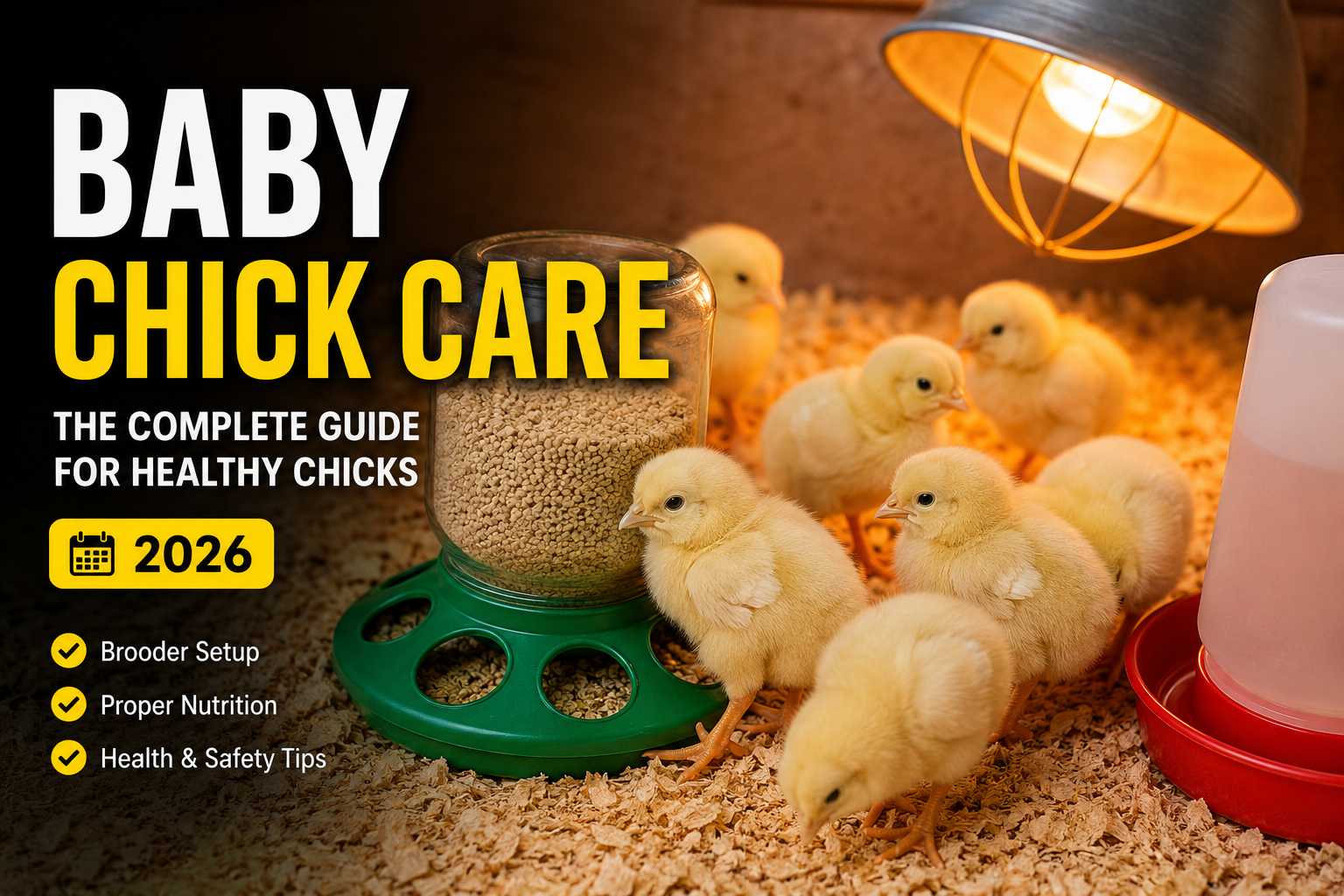
Baby Chick Care: The Complete 2026 Guide for Raising Healthy Chicks
Whether you are starting a backyard flock or growing a small poultry farm, Baby Chick Care is the first step toward raising strong, healthy chickens. A few simple habits during the first eight weeks can improve survival rates and help chicks grow faster. Additionally, modern poultry experts recommend proper heat, nutrition, and clean housing to reduce health problems from day one.
If you are new to poultry keeping, this guide explains everything you need to know in easy steps.
Why Baby Chick Care Matters
Good Baby Chick Care helps chicks develop a strong immune system, healthy feathers, and proper body weight. Additionally, healthy chicks become productive laying hens or meat birds later in life.
Some major benefits include:
- Better growth rates
- Lower chick mortality
- Strong immune systems
- Reduced disease risk
- Better egg production in adulthood
- Lower veterinary costs
As a result, investing time during the first few weeks pays off throughout the chicken’s life.
Baby Chick Care Essentials
1. Set Up the Perfect Brooder
A brooder replaces the warmth and protection of a mother hen.
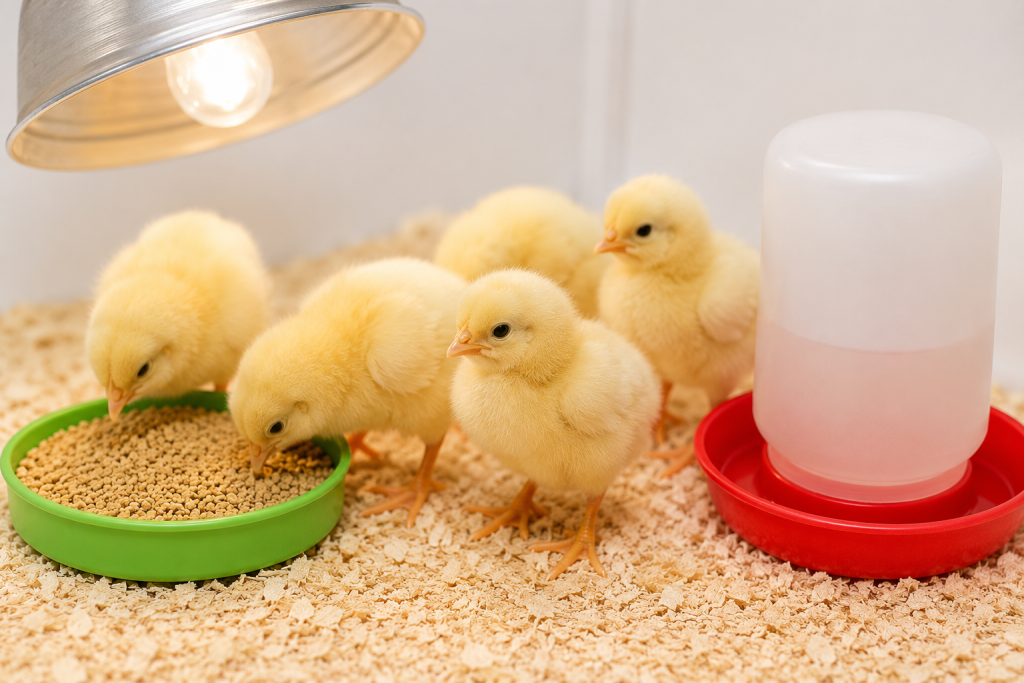
Your brooder should include:
- Non-slip bedding
- Heat source
- Fresh water
- Starter feed
- Proper ventilation
- Predator protection
The baby chick brooder setup should stay dry because moisture encourages bacteria and mold.
2. Maintain the Correct Temperature
Temperature is one of the most important parts of Baby Chick Care.
Recommended Brooder Temperatures
| Chick Age | Temperature |
|---|---|
| Week 1 | 95°F (35°C) |
| Week 2 | 90°F (32°C) |
| Week 3 | 85°F (29°C) |
| Week 4 | 80°F (27°C) |
| Week 5 | 75°F (24°C) |
| Week 6+ | Reduce until outdoor temperature matches |
Watch your chicks carefully.
Signs they are cold:
- Loud chirping
- Huddling together
Signs they are too hot:
- Panting
- Staying far from the heat lamp
3. Provide Quality Nutrition
Proper feeding baby chicks begins immediately after they arrive.
Choose a quality chick starter feed containing:
- 18–20% protein
- Essential vitamins
- Minerals
- Amino acids
Additionally, always provide clean drinking water.
Avoid feeding:
- Chocolate
- Salty foods
- Moldy grains
- Raw potatoes
- Sugary snacks
Types of Baby Chick Care Systems
Indoor Brooder Care
Indoor brooders provide better temperature control and protection from weather.
Advantages include:
- Easy monitoring
- Better disease control
- Stable temperatures
Outdoor Brooder Care
Some experienced poultry keepers use secure outdoor brooders.
Benefits include:
- More fresh air
- Natural sunlight
- Better space for movement
However, outdoor brooders require extra predator protection.
Hen-Raised Chicks
If a broody hen raises the chicks naturally, she provides warmth and teaches feeding behavior.
Even then, owners should monitor food, water, and overall health.
Buying Guide for New Chick Owners
Choosing healthy chicks makes Baby Chick Care much easier.
Before buying, check for:
- Bright eyes
- Clean vent area
- Active movement
- Smooth feathers
- Strong legs
- No breathing problems
Additionally, buy chicks from trusted hatcheries or reputable local breeders.
Common Baby Chick Care Mistakes to Avoid
Many beginners accidentally create problems that affect chick health.
Avoid these common mistakes:
Overheating
Too much heat stresses chicks and reduces appetite.
Dirty Water
Replace water every day because bacteria grow quickly.
Wet Bedding
Wet litter encourages harmful germs and parasites.
Crowded Brooders
Overcrowding increases stress and disease spread.
Poor Feed Quality
Always buy fresh chick starter feed from reliable suppliers.
Baby Chick Care Maintenance Tips
Following a simple daily routine keeps chicks healthy.
Daily Checklist
- Check water twice daily
- Refill fresh feed
- Remove wet bedding
- Observe chick behavior
- Check brooder temperature
- Remove weak or sick chicks for observation
Weekly Checklist
- Deep-clean the brooder
- Disinfect feeders
- Wash water containers
- Add fresh bedding
Additionally, inspect chicks for injuries or unusual behavior every week.
Signs of Healthy Baby Chicks
Healthy chicks usually show these behaviors:
- Active and alert
- Bright eyes
- Smooth feathers
- Strong appetite
- Clean legs and feet
- Regular chirping without distress
If a chick appears weak, isolated, or refuses food, seek advice quickly.
Frequently Asked Questions
How long do baby chicks need a heat lamp?
Most chicks need supplemental heat for about six weeks. However, colder climates may require a longer heating period.
Can baby chicks eat vegetables?
Yes. However, wait until they are a few weeks old, and introduce vegetables in small amounts alongside starter feed.
How often should I clean the brooder?
Remove wet bedding every day and perform a full cleaning at least once each week.
When can chicks move outside?
Most chicks can move outdoors after they are fully feathered and nighttime temperatures remain warm.
Conclusion
Successful Baby Chick Care begins with proper housing, balanced nutrition, clean water, and careful daily observation. Additionally, maintaining the correct brooder temperature and keeping the living area clean greatly reduces health risks. By following these proven practices, beginners and experienced poultry keepers alike can raise healthy, productive birds throughout 2026 and beyond.
Ready to build a thriving flock? Start applying these Baby Chick Care tips today, and explore our other poultry guides to continue improving your chicken-raising skills.
Leave a Reply