Candling Eggs: 2026 Guide to Egg Candling
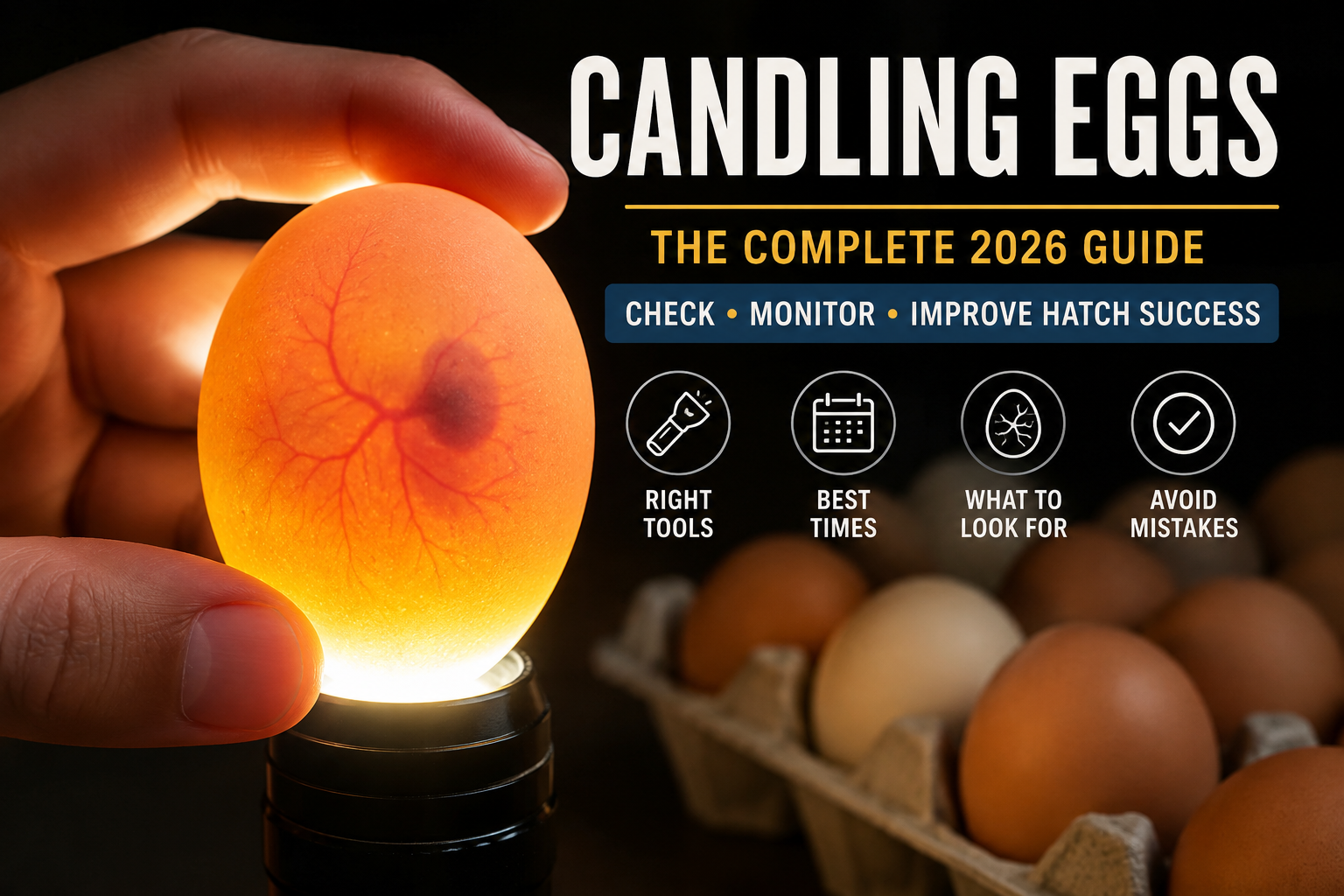
If you are raising chickens, hatching chicks, or teaching children about poultry, Candling Eggs is one of the simplest ways to see what is happening inside an egg. In 2026, backyard poultry keepers and small farms can use a bright LED flashlight or dedicated egg candler to monitor fertile eggs without opening the shell.
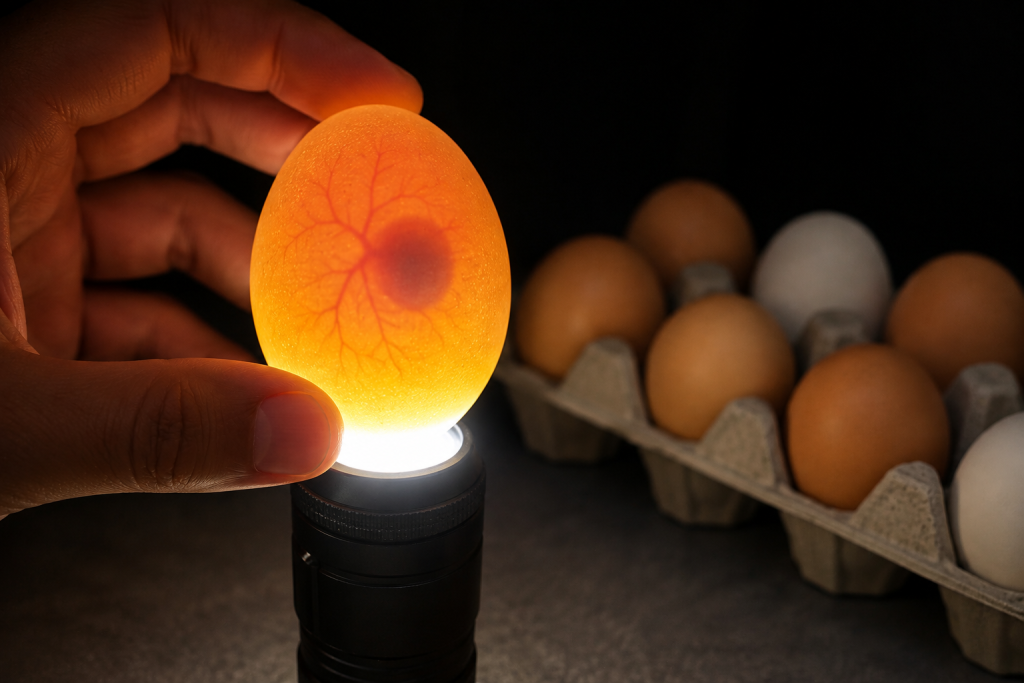
The process uses light to reveal the air cell, yolk, blood vessels, and developing embryo. Additionally, regular checks can help you understand whether an embryo is developing normally.
Why Candling Eggs Matters
Candling Eggs provides a non-invasive way to observe chicken embryo development. You can see changes inside the shell as incubation progresses.
For example, Penn State Extension explains that candling can reveal the air sac, developing embryo, and movement of a live embryo. A dead embryo may stop moving, while a blood ring can indicate that development has stopped.
Additionally, candling can help with egg quality. Extension guidance notes that holding an egg before a bright light can reveal cracks, spots, and other internal defects.
How to Candle Eggs Safely
Choose the Right Egg Candler
You do not need expensive equipment. A strong LED flashlight can work well in a dark room. However, a purpose-built egg candler can provide a more focused beam and make details easier to see.
Before starting:
- Wash and dry your hands.
- Darken the room.
- Handle eggs gently.
- Keep the candling session brief.
- Return incubating eggs promptly.
For classroom or home projects, a small LED flashlight is a practical option. Penn State 4-H also lists an LED flashlight as suitable equipment for candling.
How to Candle Eggs
To learn how to candle eggs, follow these simple steps:
- Turn off bright room lights.
- Hold the egg over the light source.
- Place the larger end toward the light.
- Look for the air cell and internal shadows.
- Slowly rotate the egg if needed.
- Record what you see.
- Return the egg to the incubator.
Do not shake the egg. Also, avoid keeping the egg away from proper incubation conditions longer than necessary.
What You Can See During Candling
Candling Eggs becomes more useful as incubation progresses. Early in development, an egg may show only a small dark area or developing blood vessels. Later, the embryo becomes larger and movement may become visible.
A normal fertile egg can show:
- Developing blood vessels
- A growing dark embryo
- An expanding embryo
- Movement
- A changing air cell
However, not every egg will develop successfully. Seeing an embryo does not guarantee that the chick will hatch.
Chicken eggs generally require about 21 days for full development under suitable incubation conditions.
Candling Eggs: Best Times to Check
There is no need to candle constantly. Frequent handling can disturb the incubation process.
A practical schedule includes:
- Early incubation: Check for early development.
- Mid-incubation: Look for stronger blood vessels and embryo growth.
- Late incubation: Confirm development before the hatching stage.
Penn State’s classroom embryology program recommends candling eggs approximately three to five times during the incubation period.
As a result, a few careful observations can provide plenty of useful information.
Types of Eggs You May See
Clear Eggs
A clear egg may show the yolk but no developing blood vessels or embryo. This can indicate an infertile egg, although timing and lighting also matter.
Developing Eggs
A developing egg can show blood vessels, a dark embryo, and sometimes movement. These signs generally indicate ongoing development.
Eggs With Stopped Development
A non-moving embryo or visible blood ring can indicate that development has stopped. However, avoid making a decision from one quick observation alone.
Buying and Decision Guide
When choosing equipment for Candling Eggs, focus on practical features rather than price alone.
Look for:
- Bright LED illumination
- A narrow, focused beam
- Comfortable handling
- Low heat output
- Suitable size for your eggs
- Easy cleaning
Additionally, a dark room can make even a simple flashlight much more effective.
Common Candling Mistakes to Avoid
Avoid these common problems:
- Candling in a bright room
- Handling eggs roughly
- Spending too long outside the incubator
- Assuming every clear egg is infertile too early
- Confusing a blood spot with embryo development
- Ignoring incubation temperature and humidity
- Opening eggs without understanding development stages
Remember, Candling Eggs is an observation method, not a replacement for proper incubation management.
Maintenance and Care Tips
Clean equipment regularly, but do not introduce moisture or contaminants into the incubator. Also, wash your hands before and after handling eggs.
Proper incubator management remains essential. Penn State Extension recommends monitoring temperature, adding water when needed, and turning eggs according to the incubation system being used.
Furthermore, keep records of your observations. Write down the date, egg number, and what you see. This makes it easier to compare development and identify unusual changes.
Frequency Ask Question
Q1. When should you check an egg during incubation?
A few checks during incubation are usually enough. Early, middle, and later stages can help you observe embryo growth.
Q2. What does a healthy developing egg look like?
You may see blood vessels, a growing dark area, and movement as development progresses.
Q3. How can you tell if an egg has stopped developing?
A lack of expected development or a visible blood ring may indicate that development has stopped. However, timing matters.
Q4. Can you use a flashlight to check eggs?
Yes. A bright LED flashlight can work well in a dark room, although a dedicated candler can provide better visibility.
Q5. How long should an egg stay outside the incubator?
Keep the inspection brief and return the egg to the correct incubation conditions as soon as possible.
Conclusion
Candling Eggs gives poultry keepers, hobbyists, farmers, and students a fascinating view inside the shell. With a bright light, a dark room, gentle handling, and good incubation practices, you can monitor fertile egg development without opening the egg.
Additionally, careful observation helps you learn more about embryo growth and the hatching process. Start with a simple LED light, follow safe handling practices, and keep clear records. For more detailed guidance, use trusted poultry extension resources before making important incubation decisions.
Leave a Reply