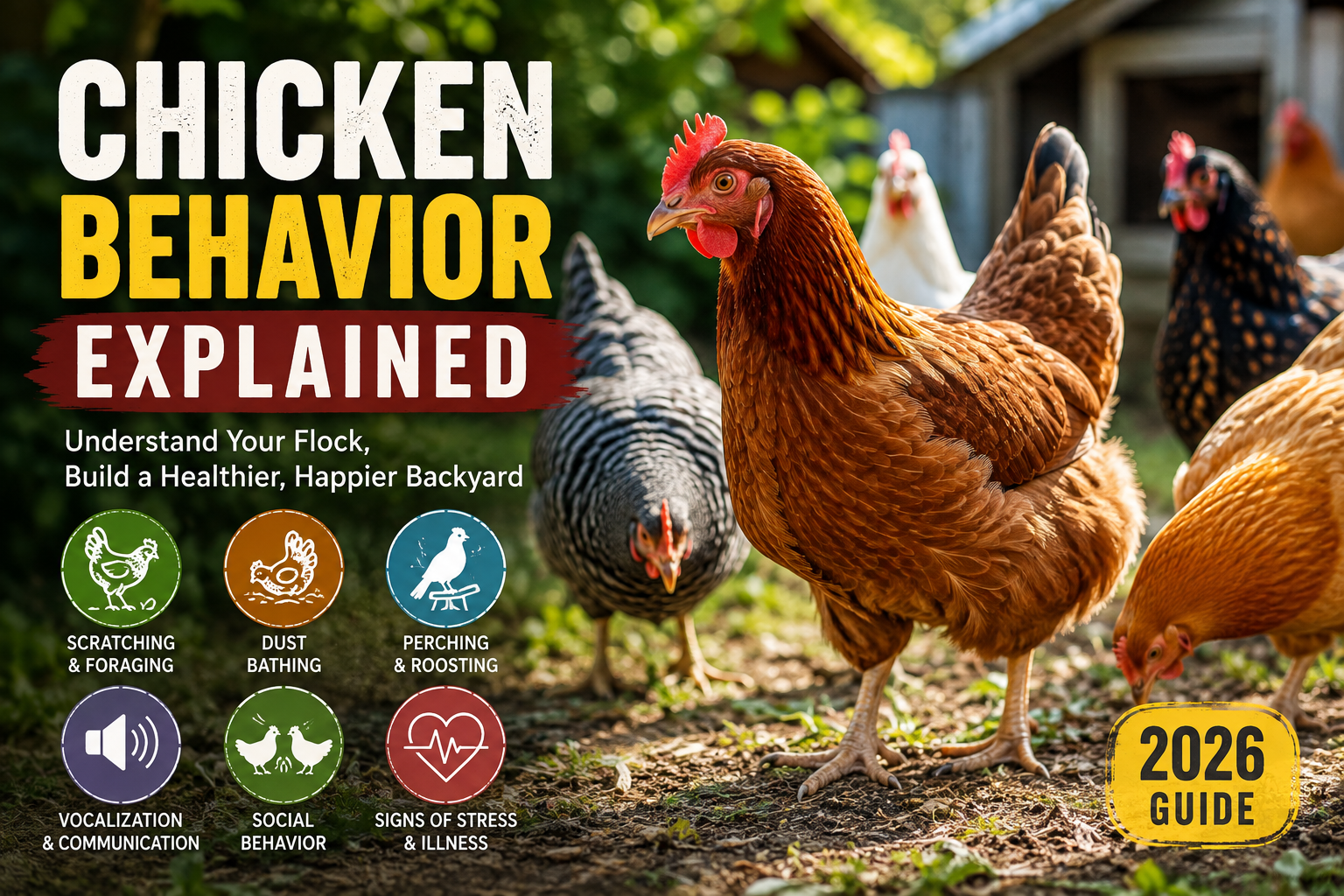
Chicken Behavior Explained: 2026 Guide
If you keep chickens, their daily actions can seem strange at first. However, Chicken Behavior Explained can help owners understand what birds are communicating through movement, sounds, pecking, and flock interactions.
In 2026, understanding normal behavior is especially useful for backyard keepers and small-flock owners. Chickens naturally forage, perch, dust bathe, nest, and form social rankings. These behaviors can also provide important clues about their health and welfare.
Why Chicken Behavior Explained Matters
Learning normal chicken behavior helps you notice problems early. A healthy chicken usually stays active, searches for food, scratches the ground, interacts with flockmates, and rests normally.
However, sudden changes deserve attention. A bird that stops eating, drinks less, isolates itself, looks unusually sleepy, or stops moving normally may be sick or stressed. Chickens often hide illness because they are prey animals, so behavior changes can be an early warning sign.
Benefits of Understanding Chicken Behavior
- Identify stress earlier.
- Understand flock relationships.
- Reduce unnecessary fighting.
- Improve housing and enrichment.
- Recognize possible illness.
- Support natural chicken body language.
Chicken Behavior Explained: Key Natural Behaviors
Scratching and Foraging
Scratching is one of the most important natural behaviors. Chickens use their feet and beaks to search through soil, bedding, grass, and other materials for food.
Additionally, chickens may forage even when feed is freely available. This means enrichment areas can help satisfy a strong natural behavior.
Dust Bathing
Dust bathing is not simply playing in dirt. Chickens roll, scratch, and shake dry material through their feathers. This helps maintain feather condition and also supports social interaction within the flock.
Perching and Roosting
Chickens naturally seek elevated places to rest, particularly at night. Perching can provide security and allow birds to move away from aggressive flockmates.
Therefore, suitable perches are an important part of good chicken housing.
Types of Chicken Behavior
Social Behavior and the Pecking Order
Chickens are social animals. A flock usually develops a hierarchy known as the pecking order.
Some pecking can be normal when birds establish their rank. Usually, this settles relatively quickly. However, repeated attacks that cause wounds, feather loss, or severe stress indicate a problem.
Communication and Vocalization
Chickens communicate through different sounds. Hens may cluck softly while feeding or moving around. Alarm calls can become louder when a bird detects a threat.
Roosters commonly crow, while chickens may also make different sounds during feeding, nesting, mating, or stressful situations.
Nesting Behavior
Hens preparing to lay eggs may search for a nesting location, inspect several areas, and settle before laying. Some hens may remain in the nest after laying.
Providing comfortable nesting areas can therefore support normal behavior and reduce problems such as broken eggs.
How to Read Chicken Body Language
Watch your flock every day. Compare each bird with its usual behavior rather than judging one action alone.
Look for:
- Active movement: Healthy birds normally walk, scratch, forage, and interact.
- Normal posture: A relaxed bird should not remain unusually hunched or withdrawn.
- Feeding behavior: Sudden loss of appetite can signal a problem.
- Social interaction: Isolation may indicate stress, injury, or illness.
- Feather condition: Excessive feather pecking can indicate management or welfare problems.
Common Chicken Behavior Problems
Aggression becomes concerning when it causes injuries or continues throughout the flock. Recent Penn State guidance updated in June 2026 notes that stress and poor management can contribute to cannibalism, which may spread rapidly after an open wound appears.
Common contributing factors can include:
- Crowding
- Excessive lighting
- Nutritional problems
- Lack of enrichment
- Limited foraging opportunities
- Poor flock management
Providing foraging opportunities, suitable perches, and loose substrate can help reduce harmful pecking behavior.
Chicken Care Tips for Better Behavior
Good management can encourage natural behavior and reduce stress.
Provide the Right Environment
Make sure chickens have access to:
- Clean drinking water
- Appropriate feed
- Dry bedding
- Safe outdoor space
- Shade and shelter
- Dust-bathing material
- Suitable perches
- Opportunities to forage
Additionally, keep feeders and waterers clean and maintain good coop sanitation. University of Minnesota Extension recommends regular cleaning and monitoring birds for changes from their normal behavior.
Monitor the Flock Daily
Spend a few minutes watching your chickens every day. Learn each bird’s normal eating, movement, vocalization, and social habits.
As a result, unusual behavior becomes much easier to identify.
Common Mistakes to Avoid
Do not assume every peck means aggression. Some pecking is part of normal social behavior.
Also, avoid ignoring sudden behavioral changes. A quiet or isolated chicken may need closer observation. Furthermore, do not overcrowd the flock or remove important enrichment opportunities.
Never treat serious wounds or suspected disease casually. Separate injured birds when appropriate and contact a poultry veterinarian for professional advice.
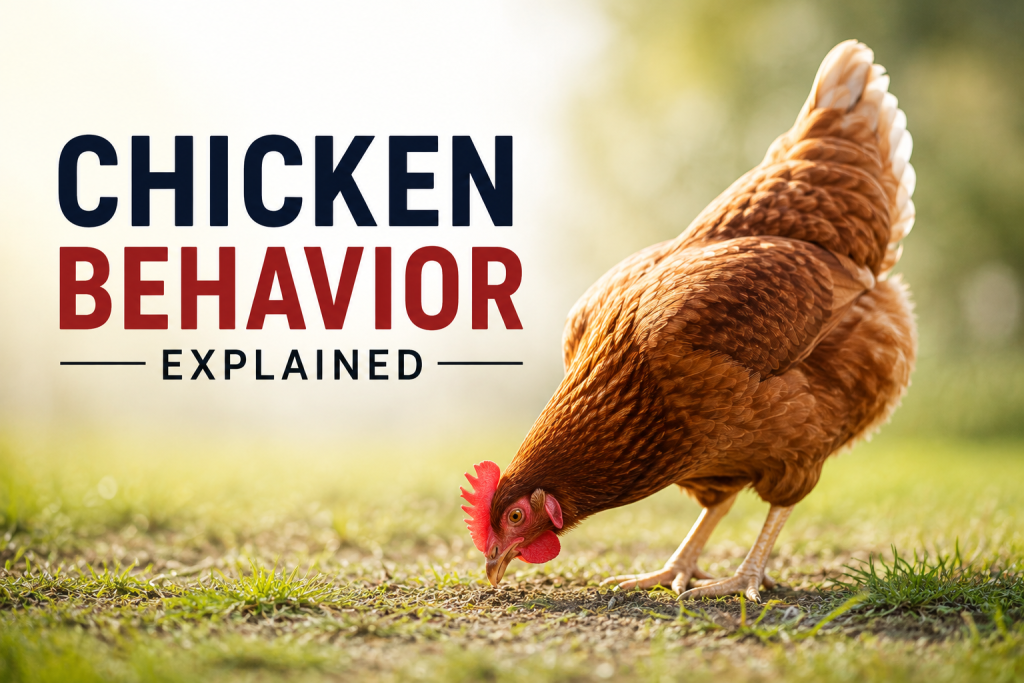
Chicken Behavior Explained: What Healthy Birds Look Like
Healthy chickens are generally active and curious. They scratch, forage, dust bathe, perch, eat, drink, communicate, and interact with flockmates.
However, every chicken has its own personality. The most useful approach is to establish each bird’s normal routine and then watch for meaningful changes. Chicken Behavior Explained is ultimately about understanding those patterns instead of judging one action in isolation.
Frequently Asked Questions
1. What does Chicken Behavior Explained tell us about normal chicken habits?
Chicken Behavior Explained helps owners understand common behaviors such as scratching, foraging, dust bathing, roosting, nesting, and flock interaction. These activities are usually normal parts of a healthy chicken’s daily routine.
2. How does Chicken Behavior Explained help identify stress?
Chicken Behavior Explained can help you notice unusual changes in eating, movement, vocalization, posture, or social behavior. If a normally active chicken suddenly becomes quiet or isolated, it may need closer observation.
3. Can Chicken Behavior Explained help with aggressive chickens?
Yes, Chicken Behavior Explained can help owners understand the difference between normal pecking-order behavior and harmful aggression. Repeated attacks, injuries, feather loss, or severe bullying may indicate a flock-management problem.
4. Why is Chicken Behavior Explained important for backyard chicken owners?
Chicken Behavior Explained gives backyard chicken owners a better understanding of their flock’s needs. By watching normal behavior every day, owners can identify potential stress, illness, or environmental problems earlier.
Conclusion
Understanding Chicken Behavior Explained can make chicken keeping safer, easier, and more rewarding in 2026. From scratching and dust bathing to vocalization and the pecking order, these behaviors reveal what chickens need and how they feel.
Start watching your flock for a few minutes each day. By learning normal behavior, you can spot stress, injury, or illness sooner while creating an environment that supports natural chicken behavior.
Leave a Reply