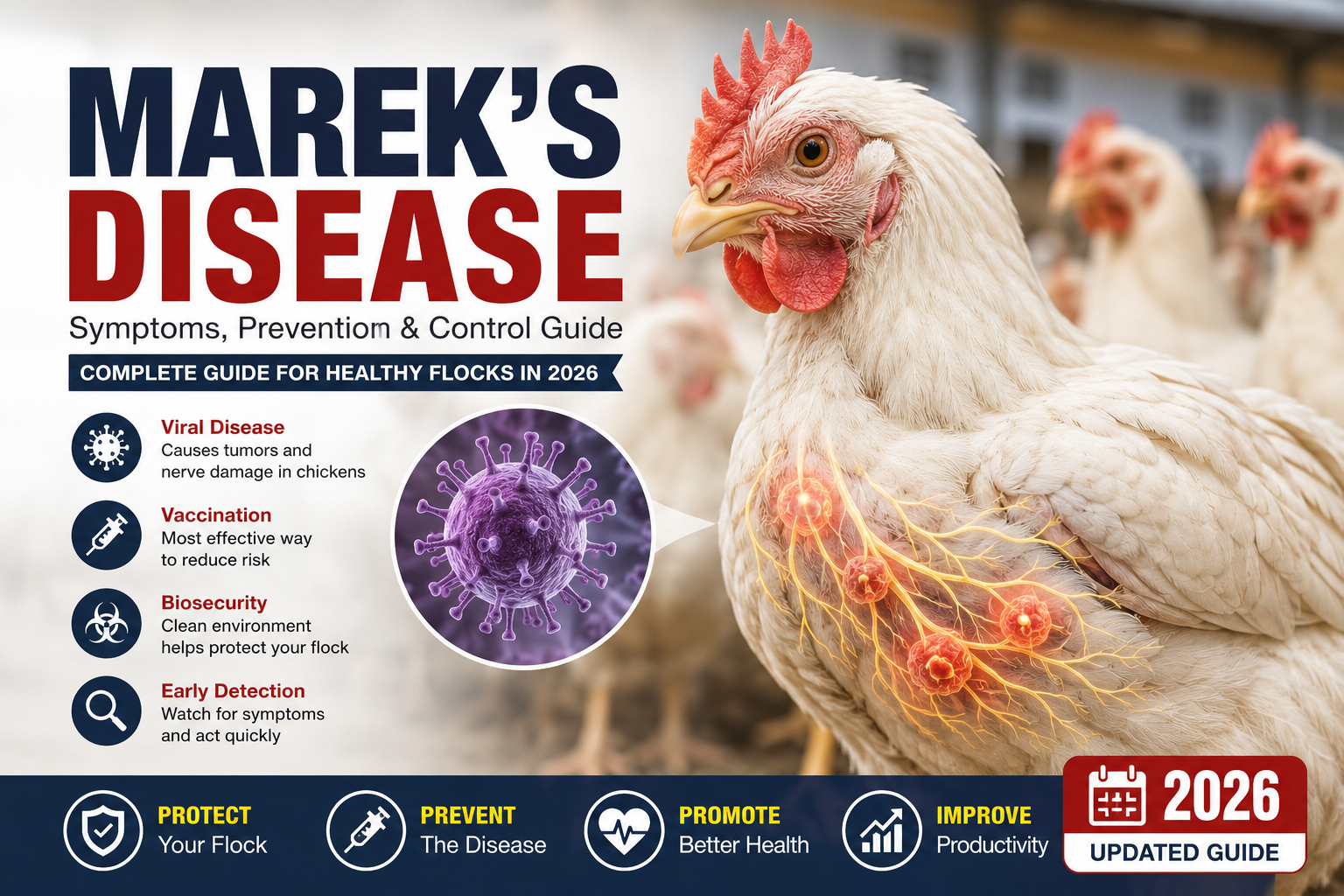
Marek’s Disease: Essential 2026 Poultry Guide
Marek’s Disease remains an important concern for chicken owners, backyard keepers, and commercial poultry producers worldwide in 2026. This highly contagious viral disease can affect nerves, organs, and the immune system of chickens. Therefore, understanding the signs and prevention methods can help protect a flock.
The disease spreads mainly through infected feather dander and dust. Moreover, the virus can remain infectious in poultry-house environments for long periods. Current veterinary guidance identifies vaccination and strong biosecurity as the main tools for reducing losses.
Why Marek’s Disease Matters in 2026
Marek’s Disease matters because infection can spread quickly once the virus enters a flock. Infected birds may carry and shed the virus even when they show few obvious signs.
Additionally, severe infections can cause paralysis, poor growth, reduced production, tumors, and death. The disease occurs worldwide, so both small backyard flocks and large poultry operations should take prevention seriously.
For poultry owners, early awareness can make a major difference. Good chicken disease prevention practices also reduce the risk of other infections.
Marek’s Disease Symptoms to Watch
Neurological Signs
One of the most recognizable signs is weakness or paralysis. Affected chickens may struggle to walk or stand normally.
In some cases, one leg may extend forward while the other extends backward. Furthermore, birds may become unable to reach food or water because of paralysis.
Other Possible Signs
Depending on the form and severity of infection, signs may include:
- Weight loss or poor growth
- Weakness and lethargy
- Paralysis or poor coordination
- Reduced egg production
- Enlarged nerves
- Internal tumors
- Sudden death in severe cases
However, symptoms can vary between birds. Therefore, a veterinarian or poultry diagnostic laboratory should confirm suspected cases.
Types of Marek’s Disease
Neurological Form
The neurological form affects peripheral nerves. As a result, chickens may develop weakness, leg problems, or paralysis.
Tumor-Associated Form
Another form produces lymphoid tumors in organs such as the liver, spleen, kidneys, heart, and lungs. These tumors are associated with transformed T cells.
Early Mortality and Other Forms
Some infections can cause early mortality or other clinical syndromes. However, the severity depends on factors such as the virus strain, bird age, genetics, vaccination, and environmental stress.
Marek’s Disease Vaccine and Prevention
Vaccination is the most important preventive measure. Current vaccines include turkey herpesvirus (HVT), SB-1, and CVI988/Rispens-based products. Vaccination does not necessarily prevent infection or virus shedding, but it strongly reduces clinical disease and tumor development.
Commercial programs commonly vaccinate chicks at hatch or use in-ovo vaccination. However, the correct schedule depends on the flock, vaccine product, local disease pressure, and veterinary guidance.
Improve Poultry Biosecurity
Vaccination works best alongside strong poultry biosecurity. Owners should:
- Keep housing clean and dry.
- Reduce dust and feather-dander buildup.
- Avoid unnecessary movement between flocks.
- Quarantine and carefully manage new birds.
- Clean equipment before moving it between groups.
- Monitor birds regularly for unusual signs.
Additionally, buying vaccinated chicks from reputable hatcheries can reduce risk.
Marek’s Disease Buying and Decision Guide
If you are purchasing chicks in 2026, ask the hatchery whether the birds received a Marek’s disease vaccine.
Before buying, check:
- Vaccination status
- Bird age
- Hatchery health practices
- Local disease risks
- Available veterinary support
Do not assume that every vaccine provides identical protection. Vaccine strains and vaccination programs can vary by region and production system.
Common Mistakes to Avoid
Many flock owners make preventable mistakes. First, they may wait for symptoms before thinking about prevention. However, infected birds can spread the virus before obvious disease becomes apparent.
Other mistakes include:
- Skipping vaccination without professional advice
- Buying birds from unknown sources
- Introducing new chickens without proper management
- Ignoring excessive dust and dander
- Assuming vaccination replaces biosecurity
- Trying to diagnose tumors without laboratory support
There is currently no specific treatment that eliminates the disease. Therefore, prevention remains the strongest strategy.
Care Tips for a Healthier Flock
Good flock management can reduce additional stress and improve overall health. Provide clean water, suitable nutrition, adequate ventilation, and appropriate stocking density.
Furthermore, observe birds every day. Look for changes in walking, feeding, drinking, weight, egg production, and behavior.
If several birds become sick or deaths increase, contact a poultry veterinarian or diagnostic laboratory promptly. Accurate diagnosis is important because other diseases can produce similar signs.
Frequently Asked Questions
What causes this disease in chickens?
A herpesvirus causes this disease. It spreads mainly through infected feather dander and dust.
What are the common symptoms in chickens?
Common signs include weakness, weight loss, poor growth, leg paralysis, reduced production, and sometimes sudden death.
Can infected birds recover?
Severely affected birds may not recover. There is no specific treatment that eliminates the virus, so prevention is very important.
How can poultry owners prevent this disease?
Vaccination, good biosecurity, clean housing, proper flock management, and careful sourcing of chicks can reduce the risk.
Is vaccination effective for young chicks?
Yes. Vaccination is the main preventive tool and is commonly given to chicks at hatch or through in-ovo vaccination programs.
Can the virus spread between chickens?
Yes. The virus can spread through contaminated feather dander, dust, clothing, equipment, and the poultry-house environment.
Should sick chickens be isolated?
Suspicious birds should be managed carefully, and poultry owners should contact a veterinarian or diagnostic laboratory for proper advice and testing.
Conclusion
Marek’s Disease remains a serious poultry-health challenge in 2026, but informed management can greatly reduce its impact. Vaccination, biosecurity, careful flock monitoring, and responsible bird sourcing are essential steps.
For backyard and commercial poultry owners alike, prevention should begin before problems appear. If you suspect Marek’s Disease, seek professional veterinary advice and use laboratory testing when appropriate. Protecting your flock starts with early action, consistent care, and a reliable vaccination strategy.
Leave a Reply