Stress in Chickens: 2026 Causes, Signs & Solutions
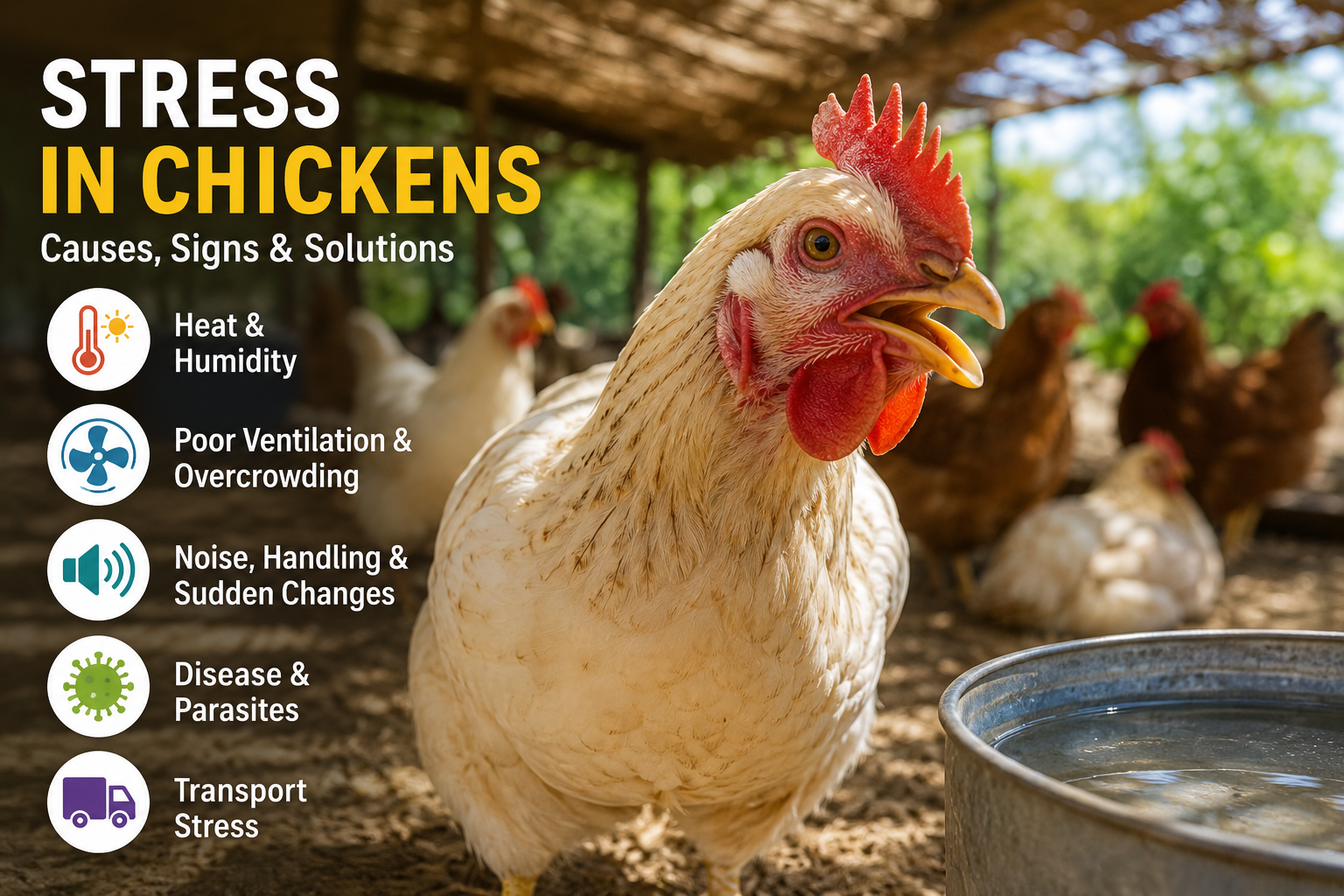
Stress in Chickens has become an important poultry welfare issue in 2026. Extreme heat, poor ventilation, overcrowding, transport, sudden management changes, and disease can place serious pressure on birds. For backyard keepers and commercial producers worldwide, recognizing early warning signs can help protect flock health and productivity.
Recent 2026 reports show why the issue deserves attention. In the UK, approximately 17,000 broilers and hundreds of other poultry were reported dead on arrival at slaughterhouses during the June extreme-heat period, with suspected heat stress cited as a cause.
Meanwhile, new research continues to examine ways to improve heat tolerance and welfare in chickens.
Why Stress in Chickens Matters in 2026
Stress affects more than a bird’s behavior. Prolonged stress can reduce feed intake, growth, egg production, eggshell quality, immunity, and overall welfare.
A 2026 review found that heat stress can affect feed consumption, egg production, eggshell formation, immune function, and mortality.
Additionally, research published in Frontiers in Physiology found that chronic heat exposure can negatively affect egg production and egg quality in laying hens.
Therefore, Stress in Chickens should be treated as both a welfare concern and a production issue.
Key Causes of Stress in Chickens
1. Heat and Humidity
Heat is one of the biggest environmental causes of Stress in Chickens. Chickens cannot sweat, so they rely heavily on panting and other cooling mechanisms.
Signs may include:
- Heavy panting
- Wings held away from the body
- Reduced eating
- Increased drinking
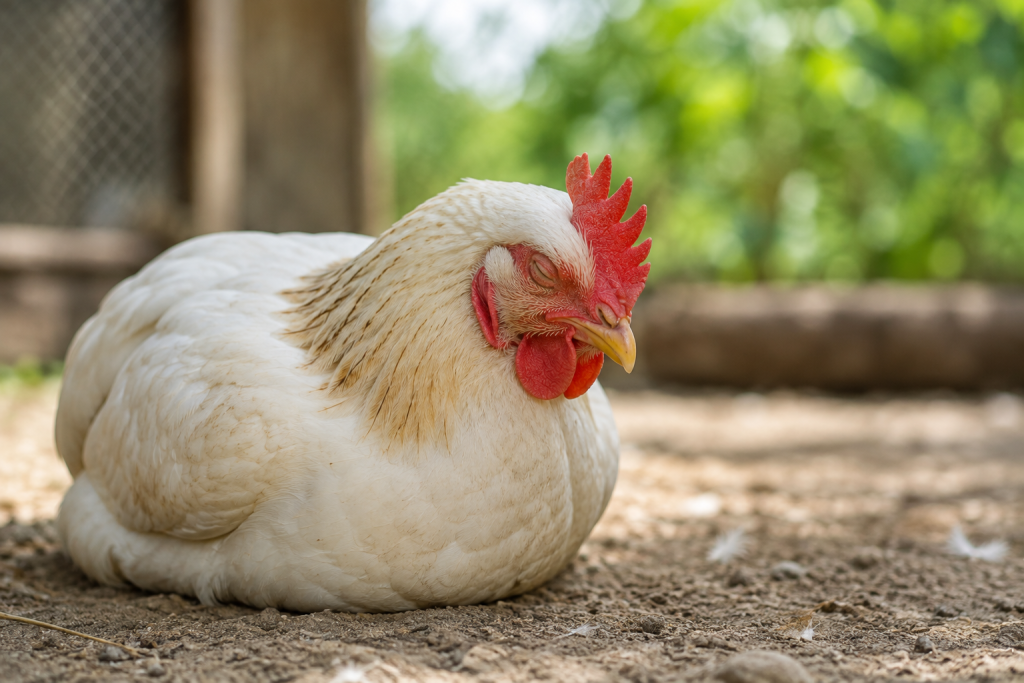
- Lethargy
- Reduced egg production
University of Minnesota Extension notes that chickens may drink two to four times their normal amount during heat stress.
2. Poor Ventilation and Overcrowding
Hot, poorly ventilated housing can quickly increase discomfort. Furthermore, overcrowding limits movement and can increase competition for feed, water, shade, and resting areas.
Good airflow is therefore a major part of poultry stress management.
3. Disease, Noise and Sudden Changes
Disease, parasites, loud noises, predators, rough handling, transportation, and sudden changes in feed or housing can also trigger stress.
However, stress signs can overlap with illness. If a bird appears seriously weak, unconscious, injured, or unusually sick, contact a veterinarian promptly.
Types of Stress in Chickens
Environmental Stress
Environmental stress includes excessive heat, cold, humidity, poor air quality, and inadequate lighting. In 2026, heat remains a major global concern because extreme temperatures can affect both backyard and commercial poultry.
Social and Management Stress
Moving birds, mixing unfamiliar groups, overcrowding, and aggressive flock behavior can create social pressure.
Additionally, poor access to resources may increase competition and anxiety.
Transport Stress
Transportation can expose chickens to heat, vibration, handling, unfamiliar surroundings, and limited access to water. Proper planning is especially important during hot weather.
How to Reduce Stress in Chickens
The most effective approach is prevention. Start with basic environmental management.
- Provide clean, cool water at all times.
- Improve ventilation without creating dangerous drafts.
- Offer reliable shade during hot weather.
- Avoid unnecessary handling during extreme heat.
- Keep stocking density appropriate.
- Monitor birds frequently during heatwaves.
- Maintain clean feeders and drinkers.
- Keep housing dry and comfortable.
For backyard birds, extension guidance also recommends shade, water, and ventilation as core heat-management measures.
As a result, simple daily checks can prevent Stress in Chickens from becoming a serious welfare problem.
What 2026 Research Is Showing
Scientists are also exploring longer-term solutions. A July 2026 study examined heat resilience in Thai native and black-boned chickens and highlighted the importance of temperature-humidity conditions for sustainable egg production.
Another 2026 study investigated early-age thermal conditioning in pasture-raised broilers as a possible strategy for improving responses to later heat exposure.
These findings suggest that future poultry management may combine better housing, genetics, environmental monitoring, and improved management practices.
Common Mistakes to Avoid
Avoid these common errors when managing Stress in Chickens:
- Waiting until birds collapse before taking action
- Providing too few drinkers
- Ignoring nighttime heat
- Blocking natural airflow
- Making sudden feed changes
- Overcrowding the coop
- Assuming every stressed bird simply needs more food
Furthermore, never assume panting is harmless when it becomes heavy or persistent.
Daily Care Checklist
A quick daily inspection can help identify problems early.
Check:
- Water availability
- Coop temperature and airflow
- Bird behavior
- Feed consumption
- Droppings
- Egg production
- Injuries or unusual aggression
- Signs of panting or weakness
If several birds suddenly show abnormal behavior, investigate environmental conditions and disease risks rather than treating the problem as ordinary Stress in Chickens.
Conclusion
The 2026 poultry season shows that Stress in Chickens is becoming an increasingly important welfare challenge, particularly during extreme weather. Heat, humidity, poor ventilation, overcrowding, disease, transportation, and sudden environmental changes can all affect flock health.
Leave a Reply