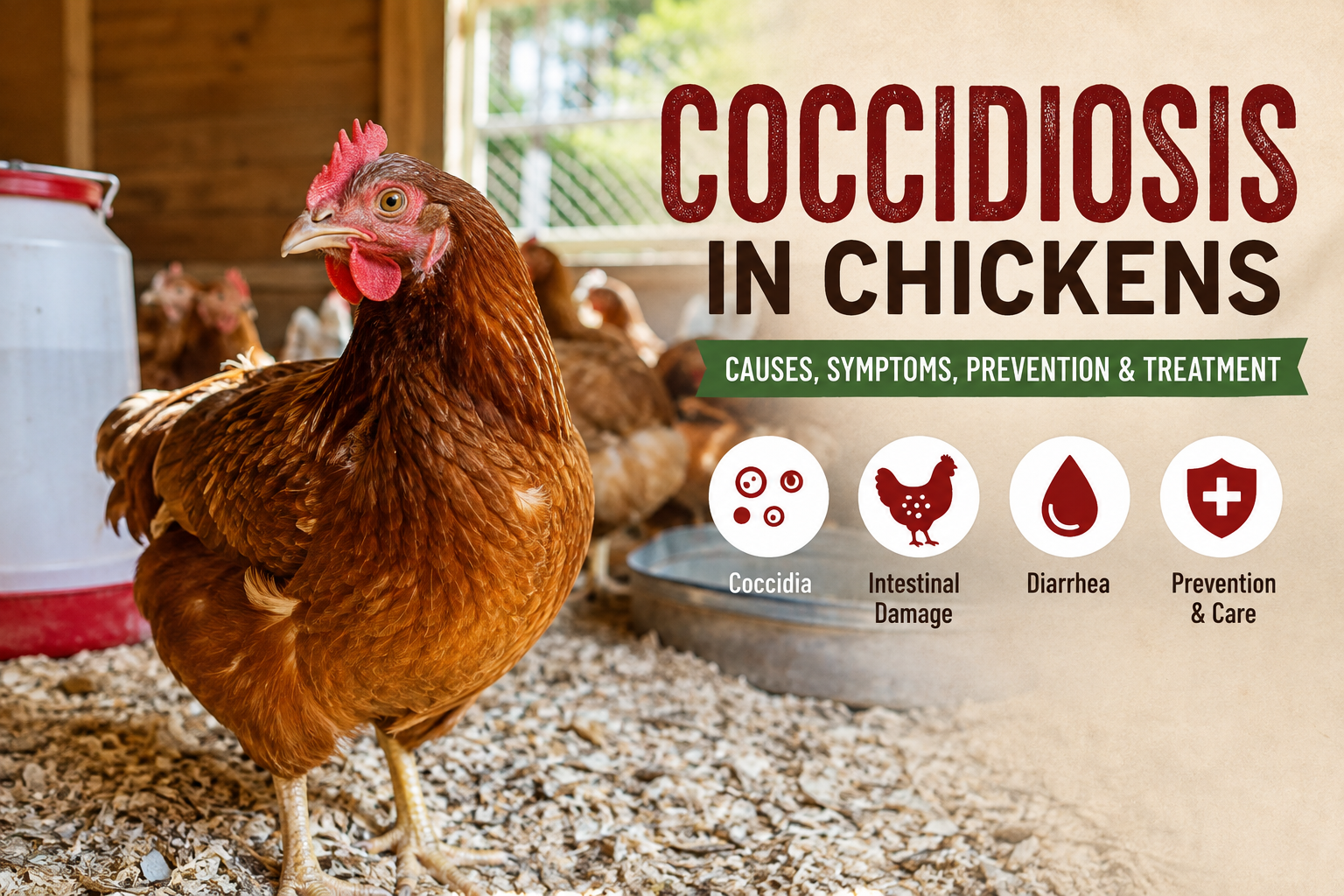
Coccidiosis in Chickens: 2026 Guide
Coccidiosis in Chickens is a common intestinal disease that can quickly affect young birds. It is caused by microscopic parasites called Eimeria. These parasites damage the intestinal lining and can lead to diarrhea, poor growth, weight loss, and, in severe cases, death.
For backyard keepers and poultry producers, early action matters. Therefore, knowing the signs and keeping litter dry can help reduce serious outbreaks.
Why Coccidiosis in Chickens Matters
Coccidiosis can spread when chickens ingest infectious oocysts from contaminated litter, soil, feed, water, equipment, or footwear. Warm, moist conditions can help oocysts become infectious within about one to two days.
As a result, crowded or damp housing can increase disease pressure. Young chickens face particular risk because they have not yet developed strong protective immunity.
Common problems include:
- Reduced appetite
- Slow growth and weight loss
- Diarrhea
- Reduced egg production
- Weakness or poor activity
- Increased mortality during severe outbreaks
Key Factors to Consider
Chicken Coccidiosis Symptoms
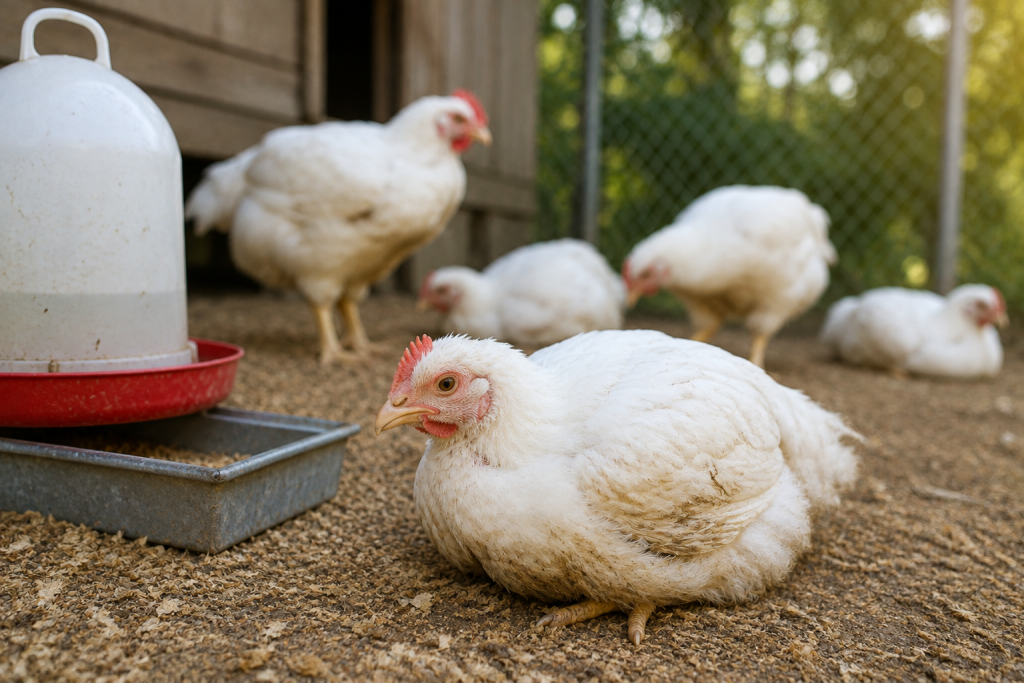
Watch your flock closely for changes in behavior and droppings. Chicken coccidiosis symptoms can vary according to the Eimeria species and the severity of infection.
Blood in droppings can occur with certain severe infections, but abnormal droppings alone do not prove coccidiosis. Therefore, avoid relying on appearance alone.
If several birds become weak, stop eating, lose weight, or develop severe diarrhea, contact a poultry veterinarian promptly.
How Coccidia in Poultry Spreads
Coccidia in poultry are commonly spread through contaminated feces. Chickens can pick up infectious oocysts while scratching through litter or eating contaminated feed.
Additionally, people can accidentally move contaminated material between pens on shoes, clothing, tools, or equipment. Flies and rodents can also contribute to contamination.
Types and Categories
Common Eimeria Species
Several Eimeria species can infect chickens. Some primarily affect different areas of the intestine.
For example, Eimeria tenella can cause serious damage in the ceca, while Eimeria necatrix can severely affect the small intestine.
Because different species can produce different lesions, accurate diagnosis is important before choosing a treatment plan.
Clinical vs. Subclinical Infection
Not every infection causes obvious illness. Mild or subclinical infections may reduce growth or production without dramatic external signs.
However, severe infections can cause intestinal damage, dehydration, poor performance, and mortality. Survivors may also need time to regain normal growth and production.
Diagnosis and Treatment Guide
A veterinarian can diagnose coccidiosis using fecal testing and, when necessary, examination of intestinal tissues. Importantly, finding oocysts does not always show how severe the disease is, so clinical signs and intestinal lesions also matter.
Coccidiosis treatment for chickens should follow veterinary advice and the instructions for the approved product used in your country. Anticoccidial medications and vaccination programs are important control tools in poultry production.
Do not randomly combine medications or copy treatment doses from social media. Also, always check meat and egg withdrawal requirements because they can differ by product and location.
Common Mistakes to Avoid
Avoid these common flock-management mistakes:
- Keeping wet litter for long periods.
- Allowing feeders and drinkers to become contaminated.
- Overcrowding young chickens.
- Moving dirty equipment between pens.
- Treating every case of diarrhea as coccidiosis.
- Using medication without checking its label or veterinary guidance.
- Ignoring withdrawal requirements for eggs or meat.
Most importantly, do not wait for severe symptoms before improving sanitation.
Coccidiosis Prevention and Care Tips
Strong management remains one of the best ways to reduce disease pressure. Practical coccidiosis prevention should include:
- Keep bedding clean and as dry as possible.
- Prevent water spills around drinkers.
- Clean feeders and waterers regularly.
- Reduce unnecessary crowding.
- Control rodents and insects.
- Limit contamination from footwear and equipment.
- Isolate and assess sick birds quickly.
- Follow an appropriate vaccination or anticoccidial program when recommended.
Vaccination and anticoccidial programs can help prevent clinical disease, while good management reduces environmental contamination and exposure.
Conclusion
Coccidiosis in Chickens can become serious quickly, especially among young birds. Fortunately, careful observation, dry housing, good sanitation, and an appropriate prevention program can reduce the risk.
Leave a Reply