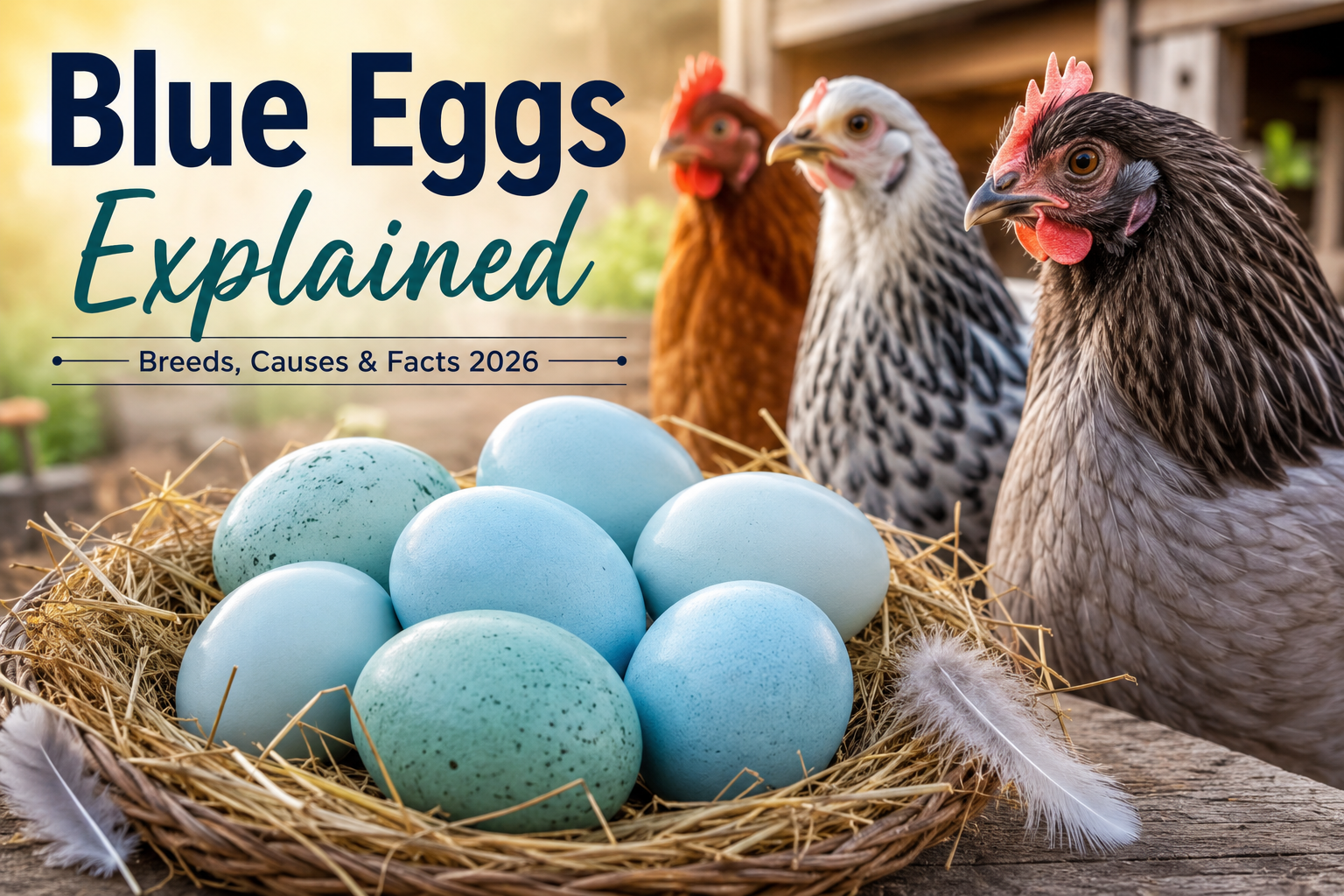
Blue Eggs Explained: Breeds, Causes & Facts 2026
Have you ever opened a nesting box and found a beautiful blue egg? Blue Eggs Explained is a simple guide to understanding this unusual and natural egg color. For backyard chicken keepers in the US and around the world, blue eggs can add variety to a flock and make egg collecting more exciting.
The blue shell does not mean the egg contains unusual ingredients. Instead, genetics determine the shell color. Additionally, several popular chicken breeds can produce blue or blue-green eggs.
Why Blue Eggs Matter
Blue Eggs Explained starts with one important fact: shell color mainly comes from genetics. A pigment called biliverdin creates the blue color during shell formation.
Unlike brown eggs, where pigment often coats the outside of the shell, biliverdin can affect the shell more deeply. As a result, the blue shade may appear both outside and inside the shell.
Blue eggs also offer several practical benefits:
- They add visual variety to an egg basket.
- They can make backyard flocks more interesting.
- They help owners identify certain breeds.
- They can be a fun talking point at farmers’ markets.
- They are generally similar nutritionally to other chicken eggs.
However, shell color does not automatically make an egg healthier. Nutrition depends more on the hen’s diet, health, age, and living conditions.
Blue Eggs Explained: What Causes the Color?
Genetics and Egg Pigment
The main reason for blue shells is genetics. Certain chickens inherit genes that control how their bodies produce and deposit biliverdin during shell formation.
Therefore, choosing the right breeding stock matters if you want chickens that lay blue eggs.
Blue Eggs Explained by Breed
Different breeds can produce slightly different shades. Some hens lay pale sky-blue eggs, while others produce blue-green or greenish eggs.
Common examples include:
- Araucana: Known for blue-shelled eggs and distinctive genetics.
- Ameraucana: A popular breed known for blue eggs and a calm nature.
- Easter Egger: These mixed-breed chickens may produce blue, green, olive, tan, or other shades.
- Cream Legbar: Often associated with attractive blue eggs and strong foraging ability.
Types of Blue Eggs
Light Blue Eggs
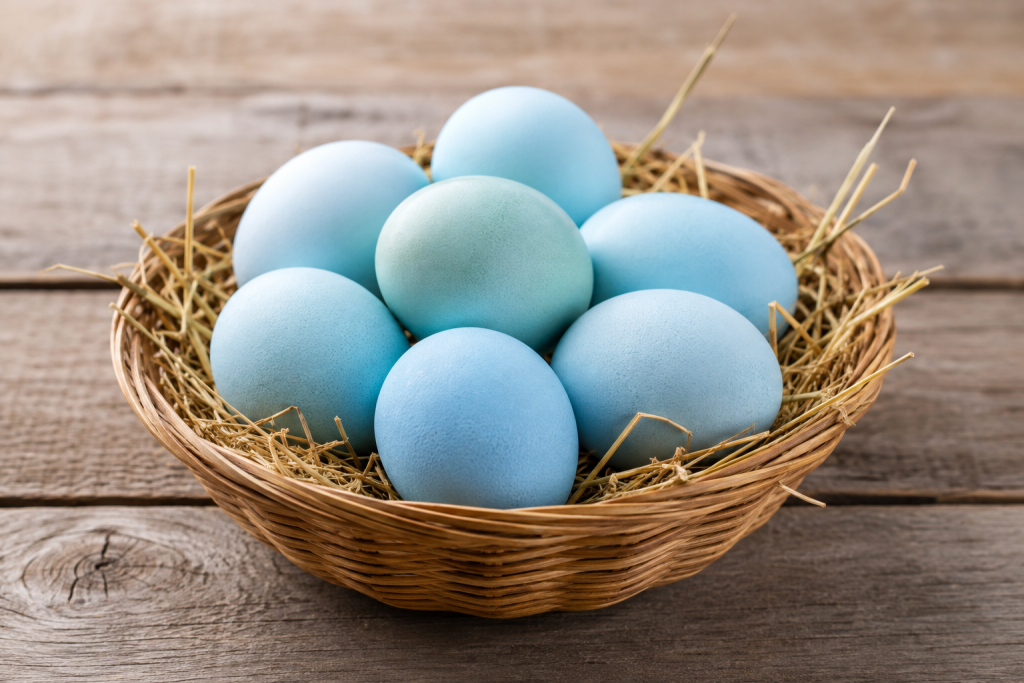
Some hens produce soft pastel-blue shells. These eggs often look almost white under bright light, but their blue tint becomes easier to see in natural lighting.
Blue-Green Eggs
Some chickens produce eggs with a blue-green appearance. Easter Egger blue eggs can vary widely because Easter Eggers do not belong to one standardized breed.
Darker Blue Shades
Deep blue shells are less common. Even within one breed, individual hens may produce different shades. Furthermore, shell color can sometimes change slightly as a hen ages.
Choosing Chickens That Lay Blue Eggs
If your goal is a colorful egg basket, consider the following before buying birds:
- Research the breed: Check whether the breed reliably produces blue eggs.
- Ask about parent stock: Genetics strongly influence shell color.
- Check temperament: Choose a breed that fits your flock.
- Consider climate: Some breeds may handle certain environments better than others.
- Buy from reputable breeders: Accurate breeding information improves your chances of getting the desired egg color.
Additionally, do not buy a chicken based only on egg color. Health, temperament, productivity, and housing needs should also influence your decision.
Common Mistakes to Avoid
When learning about Blue Eggs Explained, new chicken keepers often make a few mistakes.
Mistake 1: Assuming blue eggs taste different.
Shell color alone does not determine flavor. Feed, freshness, and storage have a greater impact.
Mistake 2: Believing blue eggs are automatically healthier.
Blue shells do not guarantee superior nutrition.
Mistake 3: Expecting every hen to lay the same shade.
Egg color can vary between hens and sometimes change during a hen’s laying cycle.
Mistake 4: Choosing birds without checking genetics.
If blue eggs are important to you, research the breeding background before purchasing chickens.
Caring for Blue Egg-Laying Hens
Good care supports healthy hens and consistent egg production. Provide clean water, balanced layer feed, safe housing, and enough space to move naturally.
Also, keep nesting areas clean and collect eggs regularly. Fresh bedding helps reduce contamination, while good coop ventilation supports overall flock health.
Blue Eggs Explained: Final Takeaway
Blue Eggs Explained comes down to genetics, pigments, and chicken breed. Ameraucanas, Araucanas, Cream Legbars, and some Easter Eggers can produce attractive blue or blue-green shells.
If you want these colorful eggs in your own basket, choose suitable breeds and buy birds from reliable sources. Most importantly, focus on healthy hens, quality feed, clean housing, and responsible flock care. Want more colorful eggs in your backyard flock? Explore suitable blue egg-laying breeds and start planning your 2026 flock today.
Leave a Reply