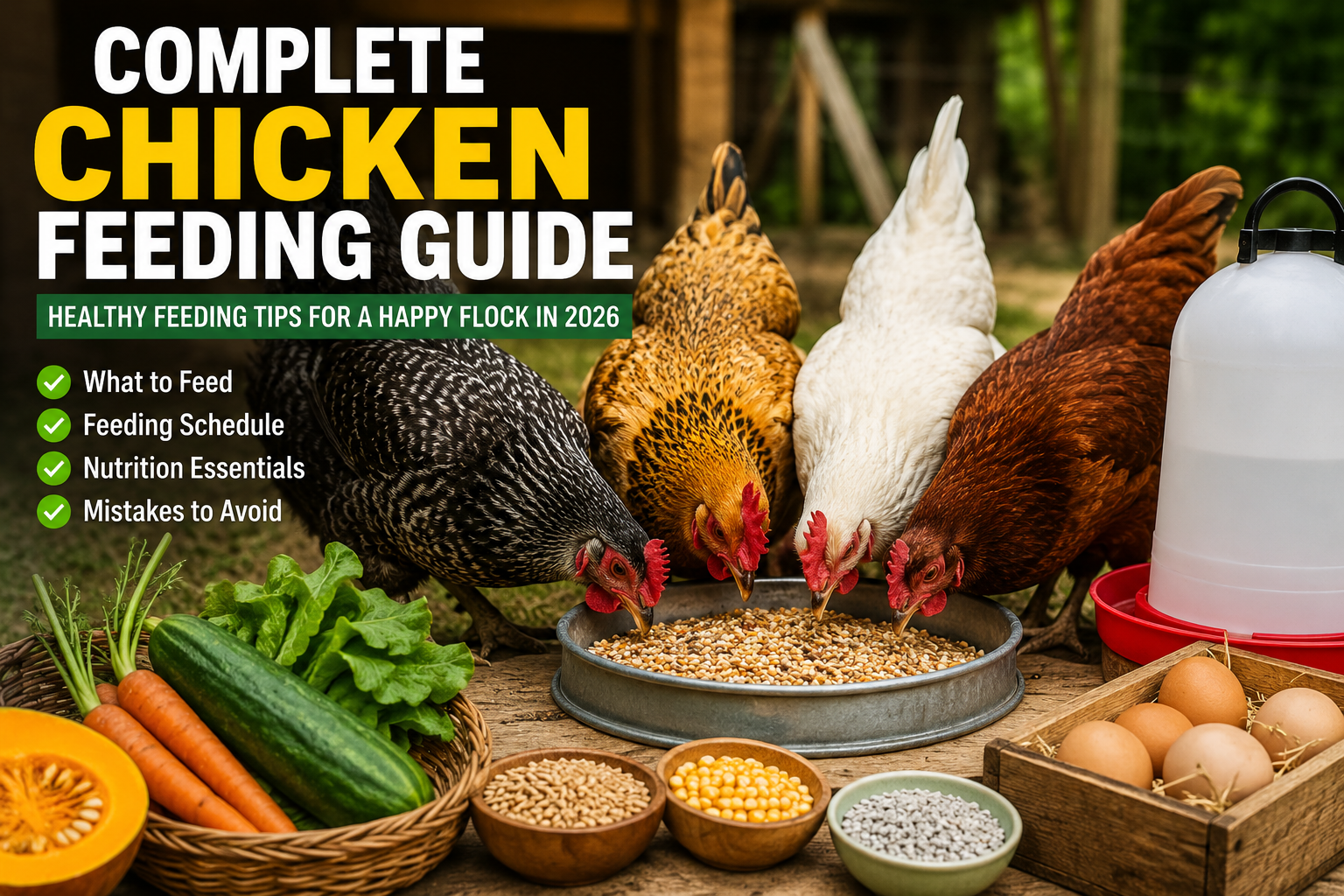
Complete Chicken Feeding Guide: Healthy Tips for 2026
A Complete Chicken Feeding Guide can make daily flock care much easier. Whether you keep backyard chickens in the US or manage a larger flock, proper nutrition supports growth, egg production, energy, and overall health. However, chickens need more than simply filling a feeder each morning.
This Complete Chicken Feeding Guide explains what chickens should eat, how much feed they need, which treats are safe, and how to avoid common feeding problems in 2026.
Why a Complete Chicken Feeding Guide Matters
Good nutrition gives chickens the energy they need for daily activity. Additionally, balanced feed provides important protein, vitamins, minerals, and calcium.
A proper feeding plan can help you:
- Support healthy growth and body condition
- Maintain consistent egg production
- Strengthen bones and eggshells
- Reduce food waste
- Prevent nutritional deficiencies
- Keep clean water available throughout the day
As a result, understanding basic chicken nutrition requirements can save money and support a healthier flock.
Complete Chicken Feeding Guide: Choosing the Right Feed
The correct feed depends on a chicken’s age and purpose. Therefore, always choose a complete commercial feed that matches your flock.
Chick Starter Feed
Young chicks usually need starter feed with higher protein than adult birds. This supports rapid growth and feather development.
Follow the manufacturer’s feeding directions and provide fresh feed every day.
Grower Feed
As chickens mature, they can move to grower feed. This type of feed supports continued development without the same nutrient profile used for young chicks.
Layer Feed
Laying hens need nutrients that support egg production. In particular, calcium is important for strong eggshells.
However, avoid giving layer feed to very young chicks because their nutritional needs differ.
Complete Chicken Feeding Guide: How Much Should Chickens Eat?
The right amount depends on age, breed, activity, weather, and feed type. Adult laying hens commonly consume roughly ¼ pound of complete feed per day, although individual needs vary.
A simple chicken feeding schedule can help you monitor consumption:
- Provide fresh feed in the morning.
- Check the feeder during the afternoon.
- Remove spoiled or wet feed.
- Provide clean drinking water at all times.
- Adjust portions if excessive feed remains.
Additionally, monitor body condition instead of relying only on a fixed amount.
What to Feed Chickens Besides Commercial Feed
Complete feed should remain the main source of nutrition. Nevertheless, small amounts of healthy treats can add variety.
Good options include:
- Leafy greens
- Cucumber
- Pumpkin
- Carrots
- Peas
- Corn in moderation
- Small amounts of fruit
However, treats should not replace balanced feed. Too many treats can dilute important nutrients and may contribute to weight problems.
For more information about safe foods, add an internal resource here: [Internal Link: What Can Chickens Eat?]
Complete Chicken Feeding Guide: Grit and Calcium
Chickens do not have teeth, so grit helps them grind food in their digestive system. Free-range birds may find natural grit, but confined chickens may need access to suitable poultry grit.
Additionally, laying hens need a reliable calcium source. Oyster shell is commonly offered separately so hens can consume what they need.
Common Chicken Feeding Mistakes to Avoid
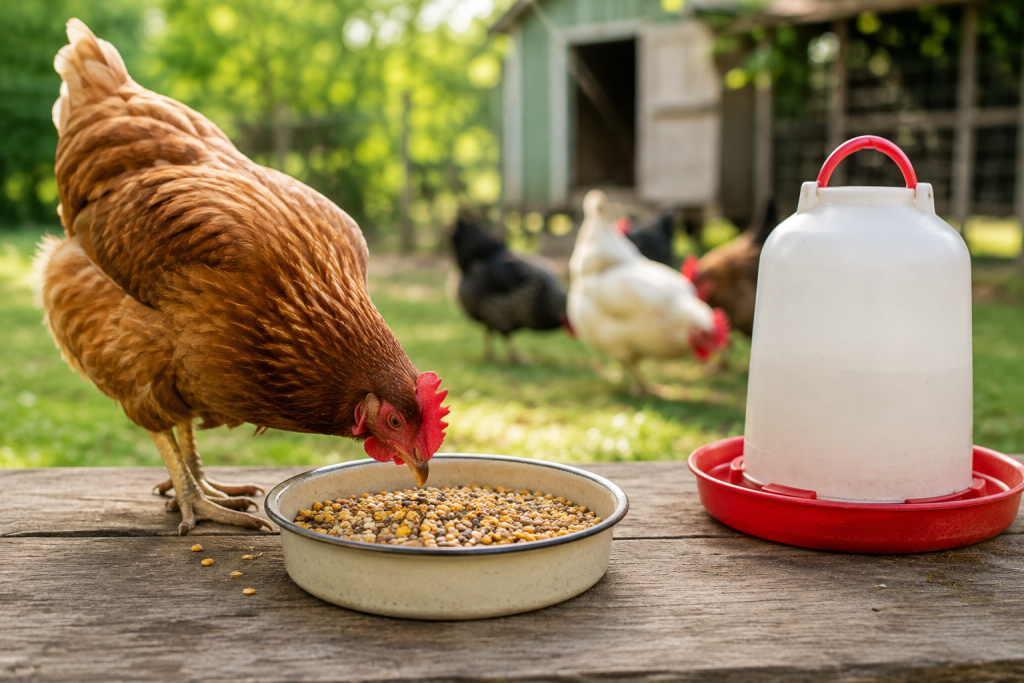
Even experienced keepers can make feeding mistakes. Therefore, watch for these common problems:
- Feeding too many treats
- Giving moldy or spoiled food
- Providing dirty drinking water
- Using feed designed for the wrong age group
- Storing feed in damp conditions
- Leaving feeders exposed to pests
- Making sudden diet changes
As a result, good storage and consistent routines are just as important as choosing quality feed.
Complete Chicken Feeding Guide: Daily Care Tips
Store feed in a dry, cool, pest-resistant container. Furthermore, clean feeders regularly and check them for moisture or mold.
Fresh water should always be available. During hot weather, check water containers more often because chickens can drink more and water can become dirty quickly.
You should also observe your flock while feeding. Changes in appetite, drinking habits, droppings, or activity can indicate that something needs attention.
Complete Chicken Feeding Guide: Smart Buying Tips
When selecting chicken feed, check the label before buying. Look for feed designed specifically for your birds’ age and purpose.
Consider these factors:
- Chicken age
- Layer or non-layer status
- Protein content
- Calcium needs
- Feed freshness
- Storage requirements
- Number of birds
Additionally, buy an amount your flock can use before the feed becomes stale. Proper storage helps protect both nutrition and your budget.
Final Thoughts:
A balanced diet is one of the most important parts of successful chicken keeping. By choosing appropriate feed, providing clean water, limiting treats, and monitoring your flock, you can build a simple and effective routine.
Use this Complete Chicken Feeding Guide as a practical starting point for your 2026 flock. Finally, review your feeding routine regularly and adjust it as your chickens grow or their needs change.
Leave a Reply