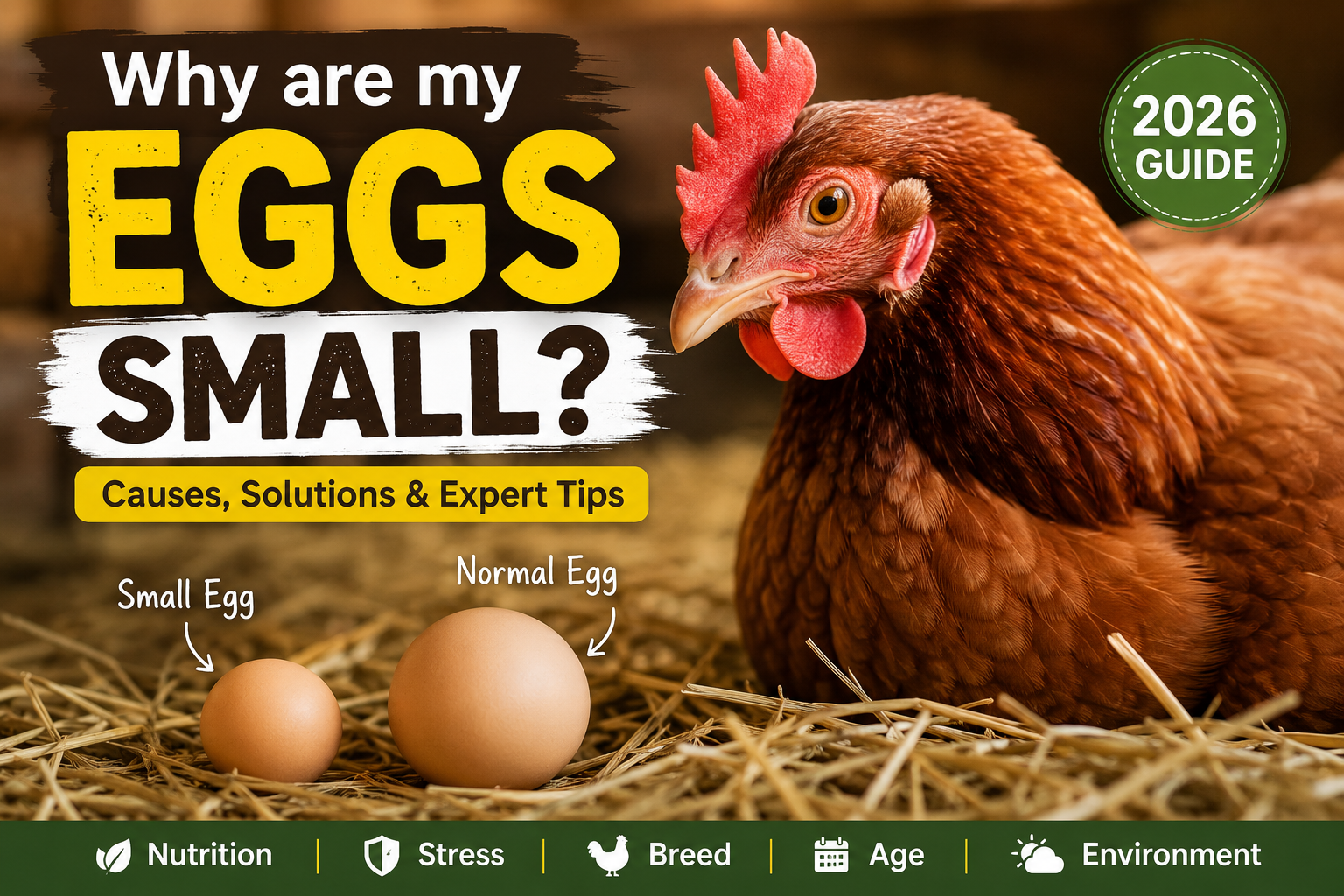
Why are my Eggs Small? Complete 2026 Guide for Chicken Owners
If you’ve recently asked yourself, Why are my Eggs Small?, you’re not alone. Backyard chicken keepers around the world often notice tiny eggs and wonder if something is wrong with their flock. Fortunately, small eggs are usually normal and can result from age, breed, nutrition, stress, or seasonal changes.
In this updated 2026 guide, you’ll learn why are my Eggs Small?, how to identify the real cause, and what you can do to help your hens produce healthy, full-sized eggs
Why Does It Matter If Your Eggs Are Small?
Understanding why are my Eggs Small? helps you identify whether your hens simply need more time or if they require better care.
Small eggs may indicate:
- Young hens just starting to lay
- Poor nutrition
- Heat or environmental stress
- Breed genetics
- Temporary health issues
However, identifying the cause early helps maintain healthy egg production and improves your flock’s long-term health.
Common Reasons Why are my Eggs Small?
Young Pullets Lay Small Eggs
One of the most common answers to Why are my Eggs Small? is that your hens recently started laying.
Pullets naturally produce tiny “starter eggs” during their first few weeks. Additionally, egg size usually increases over the next two to three months as their reproductive system matures.
Breed Determines Egg Size
Not every chicken lays large eggs.
Some breeds naturally produce smaller eggs than others.
Examples include:
- Dutch Bantam
- Sebright
- Silkies
- Old English Game
Meanwhile, breeds like Rhode Island Red and Leghorn usually lay medium to large eggs.
Poor Nutrition
Another major reason why are my Eggs Small? involves diet.
Layers require balanced nutrition rich in:
- Protein
- Calcium
- Vitamin D
- Essential minerals
Without proper nutrients, hens may lay smaller eggs or produce fewer eggs altogether.
Additionally, fresh water should always be available.
Stress Reduces Egg Size
Stress affects egg production more than many owners realize.
Common stress factors include:
- Predator attacks
- Loud noises
- Overcrowded coops
- Sudden weather changes
- Moving chickens
As a result, stressed hens often produce smaller eggs until conditions improve.
Seasonal Changes
Many hens lay smaller eggs during extreme heat or winter.
High temperatures reduce feed intake, while shorter daylight hours affect hormone production.
Therefore, keeping your flock comfortable throughout the year supports consistent egg size.
Types of Small Eggs
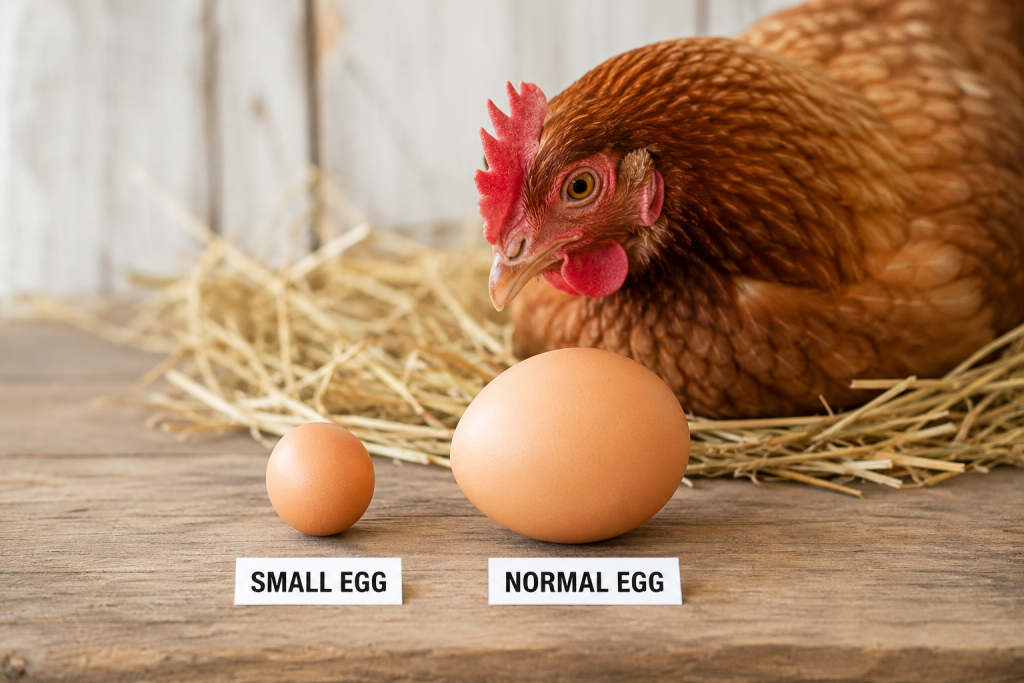
Normal Starter Eggs
These tiny eggs come from young pullets and are completely normal.
Most hens outgrow this stage naturally.
Fairy Eggs
Fairy eggs are extremely small and usually contain only egg white.
Fortunately, they rarely indicate a serious problem.
Misshapen Small Eggs
Occasionally, hens produce small eggs with unusual shapes.
These may result from temporary stress, illness, or reproductive disturbances.
Buying & Decision Guide: How to Improve Egg Size
If you’re still wondering Why are my Eggs Small?, use this simple checklist.
Choose quality layer feed containing at least:
- 16-18% protein
- Added calcium
- Vitamins and minerals
Additionally:
- Provide clean drinking water daily.
- Allow enough coop space.
- Reduce stress whenever possible.
- Offer oyster shells separately.
- Keep nesting boxes clean.
Following these steps can improve small chicken eggs causes related to nutrition and management.
Common Mistakes to Avoid
Many backyard chicken owners accidentally reduce egg size by making simple mistakes.
Avoid:
- Feeding only scratch grains
- Ignoring parasite problems
- Keeping overcrowded coops
- Changing feed too often
- Allowing dehydration
- Expecting young hens to lay large eggs immediately
Understanding why are my Eggs Small? helps prevent these common problems before they become serious.
Maintenance and Care Tips
Healthy hens produce healthier eggs.
Follow these maintenance tips:
- Clean the coop every week.
- Replace bedding regularly.
- Supply fresh water every day.
- Feed a balanced layer ration.
- Watch for illness or parasites.
- Provide 14–16 hours of light during darker months if appropriate.
Additionally, monitor egg production weekly so you can notice changes early.
Using proper chicken nutrition for egg production and reducing stress often improves egg size naturally.
When Should You Worry?
Although small eggs are usually harmless, consult a poultry veterinarian if:
- Egg size suddenly becomes much smaller.
- Egg production stops completely.
- Blood appears in eggs repeatedly.
- Hens show signs of illness.
- Weight loss accompanies poor laying.
Early treatment helps protect both your flock and future egg production.
Conclusion
If you’ve been asking Why are my Eggs Small?, the good news is that the answer is often simple. Young hens, breed differences, nutrition, and temporary stress account for most cases. However, providing balanced feed, clean water, proper housing, and regular flock care will help your hens produce larger, healthier eggs over time.
Continue monitoring your flock, follow good poultry management practices, and you’ll better understand Why are my Eggs Small? while keeping your chickens healthy throughout 2026.
Call to Action: Explore our other poultry care guides to learn more about improving egg production, chicken health, and backyard flock management.
Frequently Asked Questions (FAQs)
1. Why are my eggs small all of a sudden?
Small eggs can result from stress, poor nutrition, seasonal changes, illness, or young hens that have recently started laying. Check your flock’s diet, water supply, and overall health to identify the cause.
2. Is it normal for young hens to lay small eggs?
Yes. Young hens, also called pullets, usually lay small “starter eggs” during their first few weeks of egg production. The eggs typically become larger as the hens mature.
3. Can chicken breed affect egg size?
Absolutely. Some breeds naturally lay smaller eggs, while others consistently produce medium or large eggs. Egg size is strongly influenced by genetics.
4. Does nutrition affect egg size?
Yes. A balanced layer feed with adequate protein, calcium, vitamins, and minerals helps hens produce healthy, normal-sized eggs. Poor nutrition is a common cause of small eggs.
5. Can stress cause small eggs?
Yes. Stress from predators, overcrowding, extreme temperatures, or sudden changes in the environment can temporarily reduce egg size and overall egg production.
Leave a Reply