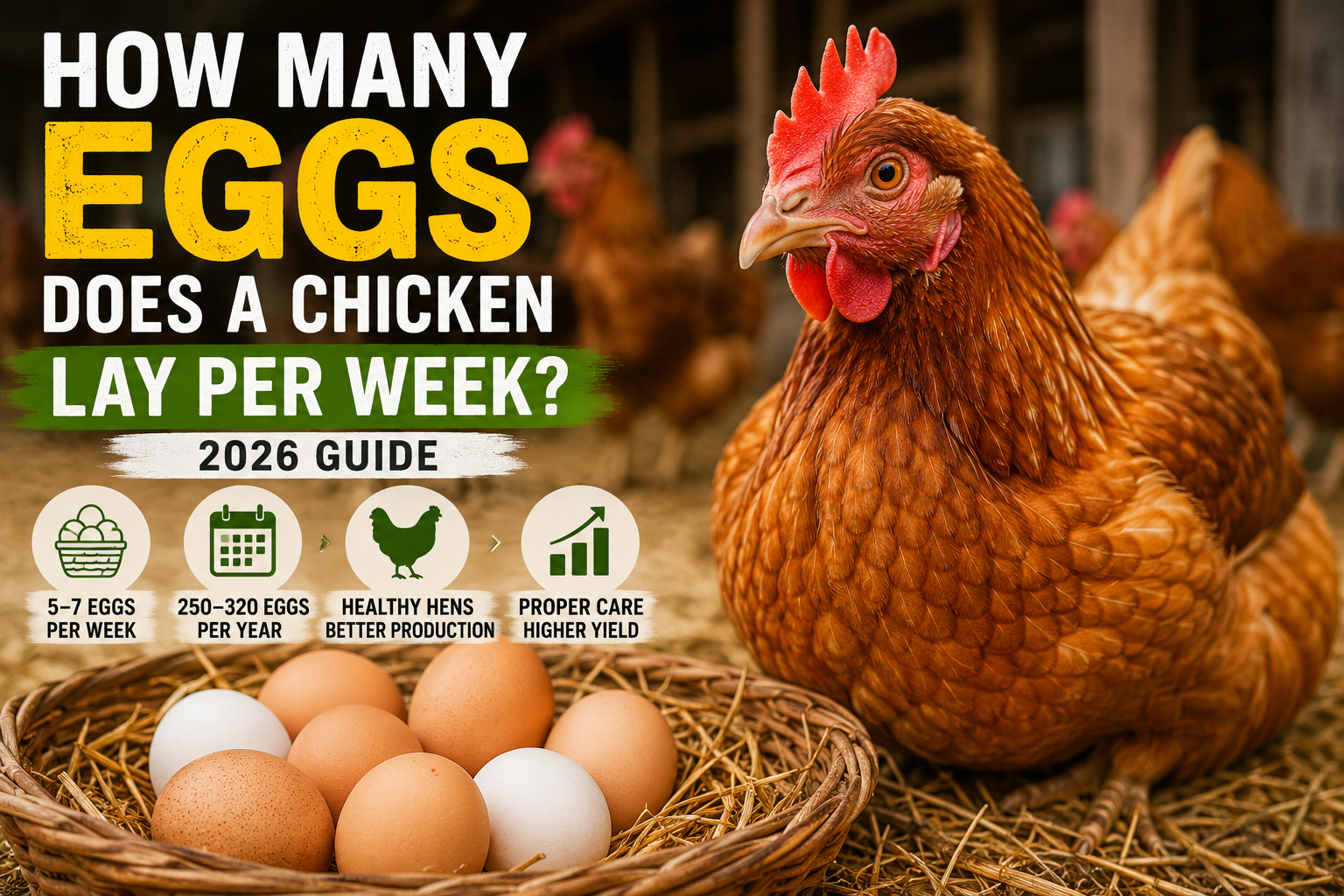
How Many Eggs Does a Chicken Lay Per Week? (2026 Complete Guide)
If you’ve ever wondered How Many Eggs Does a Chicken Lay Per Week?, you’re not alone. Whether you’re raising backyard hens or running a commercial poultry farm, understanding weekly egg production helps you plan better and improve flock performance. In 2026, improved nutrition and modern poultry management continue to increase egg production worldwide.
A healthy laying hen can produce impressive numbers of eggs, but several important factors affect the final result. Let’s explore everything you need to know.
Why Does Weekly Egg Production Matter?
Knowing How Many Eggs Does a Chicken Lay Per Week? helps poultry owners make smarter decisions. Additionally, it allows families and farmers to estimate food supply and income more accurately.
Benefits include:
- Better feed planning
- Improved flock management
- Higher farm profits
- Easier breed selection
- Early detection of health problems
If egg production suddenly drops, it often signals nutrition, lighting, stress, or health issues.
How Many Eggs Does a Chicken Lay Per Week?
The simple answer is:
A healthy laying hen typically lays:
- 5–7 eggs per week
- Around 250–320 eggs per year
- Roughly 25–27 eggs per month
However, the exact number depends on breed, age, diet, weather, and management.
Commercial hybrid hens often lay almost one egg every day, while traditional breeds may lay fewer eggs.
Factors That Affect How Many Eggs Does a Chicken Lay Per Week
Breed
Some breeds naturally produce more eggs than others.
Top egg layers include:
- White Leghorn
- ISA Brown
- Rhode Island Red
- Golden Comet
- Lohmann Brown
These breeds are known for excellent average chicken egg production.
Age
Young hens usually begin laying at 18–24 weeks.
Peak production occurs during:
- First year
- Second year
After that, production gradually declines each year.
Nutrition
A balanced diet makes a huge difference.
Laying hens require:
- 16–18% protein
- Calcium
- Phosphorus
- Fresh water
- Vitamins and minerals
Additionally, poor nutrition quickly reduces eggs per hen per week.
Daylight
Hens need around 14–16 hours of light daily.
During winter, fewer daylight hours often reduce egg production unless supplemental lighting is used.
Stress and Health
Stress can stop laying almost immediately.
Common causes include:
- Predator attacks
- Extreme temperatures
- Moving to a new coop
- Parasites
- Disease
Healthy birds remain productive for much longer.
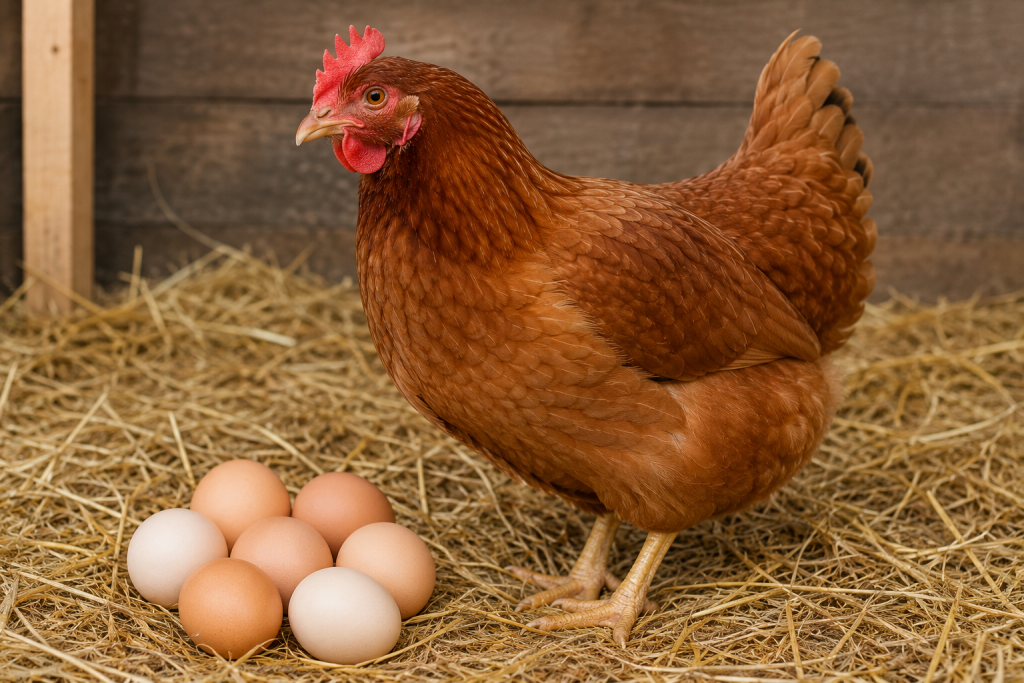
Types of Egg-Laying Chickens
High-Producing Hybrid Layers
These chickens are bred specifically for maximum egg production.
Examples include:
- ISA Brown
- Lohmann Brown
- Hy-Line Brown
Average output:
6–7 eggs per week
Dual-Purpose Breeds
These breeds provide both meat and eggs.
Popular choices include:
- Rhode Island Red
- Plymouth Rock
- Sussex
Average output:
4–6 eggs per week
Heritage Breeds
Traditional breeds lay fewer eggs but often live longer.
Examples include:
- Orpington
- Australorp
- Wyandotte
Average output:
3–5 eggs per week
Buying Guide: Choosing Chickens for Maximum Egg Production
Before buying hens, consider these points:
- Select proven best egg laying chicken breeds.
- Purchase healthy pullets around 16–18 weeks old.
- Check vaccination history.
- Buy from trusted hatcheries.
- Match the breed to your local climate.
Common Mistakes That Reduce Egg Production
Many beginners unknowingly reduce weekly egg output.
Avoid these mistakes:
- Feeding poor-quality feed
- Lack of clean water
- Overcrowded housing
- Dirty nesting boxes
- Not providing enough calcium
- Ignoring parasites
- Allowing excessive stress
Additionally, collecting eggs regularly encourages hens to continue laying.
Maintenance Tips for Better Egg Production
Keeping hens healthy improves long-term productivity.
Follow these simple tips:
- Clean the coop weekly.
- Provide fresh water every day.
- Feed high-quality layer pellets.
- Offer oyster shell for calcium.
- Ensure proper ventilation.
- Protect birds from predators.
- Maintain consistent lighting.
- Monitor flock health regularly.
These practices help maintain strong average chicken egg production throughout the year.
Frequently Asked Questions
Can a chicken lay two eggs in one day?
It happens occasionally, but it is rare. Most hens lay only one egg every 24–26 hours.
Why did my chicken stop laying?
Common reasons include molting, stress, illness, poor nutrition, old age, or shorter daylight hours.
Which breed lays the most eggs?
Commercial hybrids such as ISA Brown and White Leghorn remain among the world’s highest-producing laying hens.
For detailed poultry nutrition recommendations, visit the
Merck Veterinary Manual – Poultry.
Conclusion
So, How Many Eggs Does a Chicken Lay Per Week? Most healthy hens produce 5 to 7 eggs weekly, although breed, nutrition, age, lighting, and overall care all play important roles. By choosing productive breeds, feeding a balanced diet, and maintaining a healthy environment, you can maximize egg production throughout 2026 and beyond.
If you found this guide helpful, explore our other poultry resources to learn more about raising healthy, productive chickens and boosting your flock’s performance naturally.
Leave a Reply