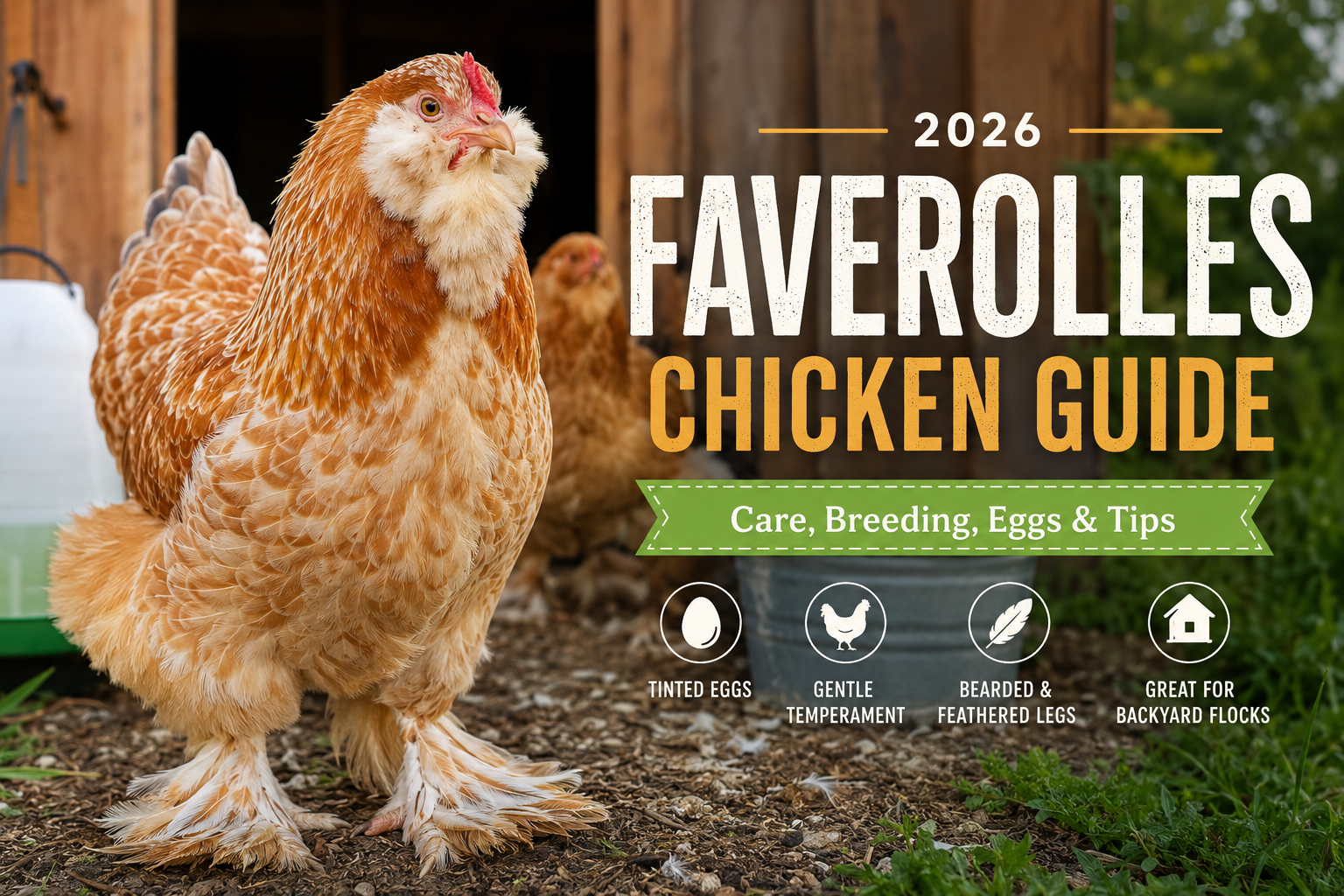
Faverolles Chicken Guide 2026: Care & Breed Tips
If you want a friendly, useful, and eye-catching backyard bird, this Faverolles Chicken Guide is a great place to start. Faverolles chickens originated in France and were developed as dual-purpose birds for both eggs and meat. Today, they remain popular with homesteaders and backyard keepers because of their gentle nature, attractive appearance, and useful winter laying ability.
For 2026, the breed remains important to heritage poultry conservation. The Livestock Conservancy currently lists Faverolles as Threatened, which makes responsible breeding and good flock management especially valuable.
Why Choose Faverolles Chickens?
The Faverolles Chicken Guide starts with one major advantage: versatility. These birds can provide eggs, meat, companionship, and plenty of personality.
They are generally gentle but active. Therefore, they can work well for families, beginners, and small homesteads. They also enjoy foraging, although they can live successfully in a secure run when given enough space and enrichment.
Key benefits include:
- Friendly and generally calm temperament
- Medium to large tinted or light-brown eggs
- Useful winter egg production
- Good meat qualities
- Attractive beard, muff, and feathered legs
- Active foraging behavior
- Suitable for beginner keepers
Key Features in a Faverolles Chicken Guide
Appearance and Size
Faverolles have a distinctive appearance. They feature a beard, muffed face, feathered shanks, and five toes on each foot. Salmon is the best-known color, while other varieties also exist depending on the country and poultry standard.
The 2026 Livestock Conservancy reference lists adult weights around 8 pounds for males and 6.5 pounds for females.
Temperament
Faverolles chicken temperament is one of the breed’s strongest selling points. They are usually gentle, curious, and active. However, their softer personality can sometimes make them vulnerable to bullying in a mixed flock.
For that reason, monitor flock dynamics after introducing new birds.
Eggs and Meat
Faverolles are true dual-purpose chickens. Hens produce tinted to light-brown eggs, and heritage-breed references report roughly 180–200 eggs per year under suitable conditions.
Additionally, the breed was developed with meat production in mind. This makes it useful for homesteaders who want both eggs and table qualities from one flock.
Types and Popular Varieties
Salmon Faverolles Chicken
The Salmon Faverolles chicken is the variety most people recognize. Females have a soft salmon-and-wheat appearance, while males show contrasting darker markings. The unique coloring gives this variety strong appeal for backyard flocks and exhibition keepers.
White Faverolles
White Faverolles are another recognized variety. However, accepted colors can differ between poultry organizations and countries. Therefore, check your local breed standard if exhibition quality matters.
Faverolles Chicken Buying Guide
When buying birds, focus on health rather than appearance alone. A beautiful bird may still carry health or management problems.
Look for:
- Bright, alert eyes
- Clean nostrils and beak
- Smooth breathing
- Good body condition
- Clean feathers around the vent
- Healthy legs and feet
- Active behavior
Additionally, ask the breeder about vaccination history, flock health, age, and breeding background. If preserving heritage traits matters to you, choose breeders who follow recognized breed standards.
Common Mistakes to Avoid
A good Faverolles Chicken Guide should also explain what not to do.
Avoid these common mistakes:
- Keeping birds in an overcrowded coop
- Ignoring muddy or wet conditions around feathered feet
- Feeding a poor-quality diet
- Introducing new birds without monitoring aggression
- Neglecting parasite checks
- Providing poor ventilation
- Failing to offer shade and fresh water during hot weather
Because Faverolles have feathering around their legs, regular foot and leg checks are especially helpful. They can also be vulnerable to scaly-leg mites.
Faverolles Chicken Care Tips for 2026
Good Faverolles chicken care starts with clean housing, balanced feed, fresh water, and enough room to move.
Provide a dry, well-ventilated coop with clean bedding. Furthermore, allow safe access to an outdoor run or foraging area when possible. The 2026 heritage breed guide notes that Faverolles can do well in various climates, but their combs can be vulnerable to frostbite in cold conditions.
During hot weather, provide shade, airflow, and several clean water sources. Feathered breeds can require extra attention during heat waves.
Finally, inspect your flock regularly. Early detection of injuries, parasites, unusual droppings, appetite changes, or breathing problems can help you respond quickly.
Is This Breed Right for You?
This Faverolles Chicken Guide shows why the breed can suit many backyard keepers. It offers attractive looks, friendly behavior, useful egg production, and dual-purpose value.
However, it may not be ideal if you want extremely high commercial egg production or a highly dominant flock member. Instead, it works particularly well for people who value heritage traits, personality, and versatility.
Conclusion
The Faverolles Chicken Guide for 2026 highlights a heritage breed with plenty to offer. Its gentle temperament, distinctive appearance, tinted eggs, meat qualities, and winter productivity make it an interesting choice for both new and experienced keepers.
If you are considering adding Faverolles to your flock, start with healthy birds from a responsible breeder. Then provide quality feed, clean housing, safe outdoor space, and regular health checks. Use this Faverolles Chicken Guide as your starting point and build a care routine around your flock’s individual needs.
Leave a Reply