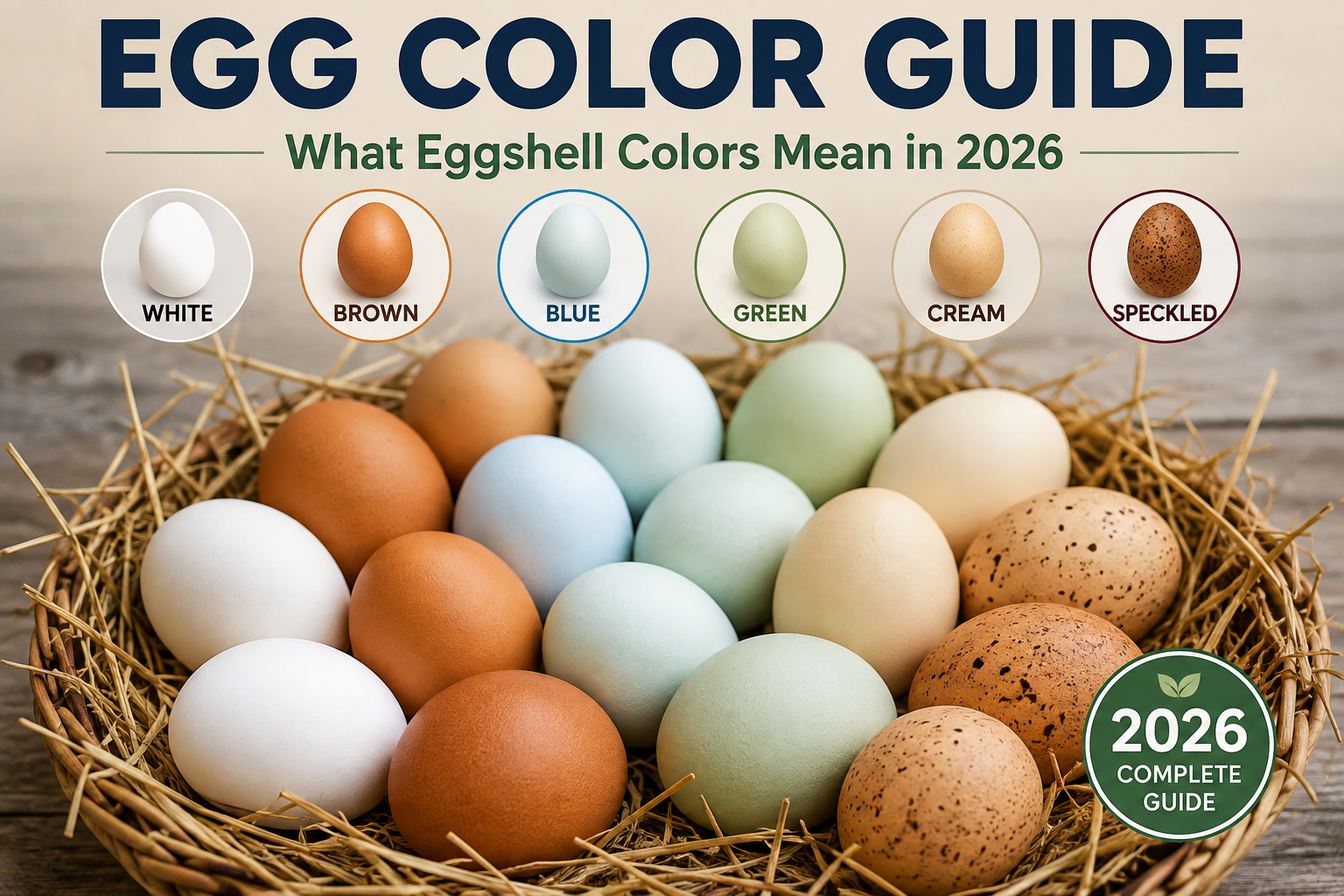
Egg Color Guide: What Eggshell Colors Mean in 2026
Walk through almost any U.S. grocery store, and you will see eggs in several shades. White and brown remain common, but blue, green, cream, and speckled eggs also attract attention. This Egg Color Guide explains what those colors mean and helps shoppers make smarter choices in 2026.
The good news is simple: shell color usually does not tell you how nutritious an egg is. Instead, genetics, especially the chicken breed, largely determines shell color. However, farming methods, freshness, size, and labeling can matter much more when you buy eggs.
Why Egg Color Matters
Many shoppers assume darker shells contain more nutrients. However, shell color mainly comes from pigments deposited during egg formation.
White eggs generally lack significant shell pigment. Brown eggs receive brown pigments called protoporphyrins. Meanwhile, blue and green shells can result from pigments related to biliverdin.
As a result, egg shell colors can tell you something interesting about the hen. They do not, by themselves, provide a reliable measure of nutrition or quality.
For shoppers, the Egg Color Guide offers three useful benefits:
- It helps explain why eggs look different.
- It makes it easier to identify eggs from specialty breeds.
- It prevents common myths about nutrition and freshness.
Egg Color Guide: Key Factors to Consider
Chicken Breed and Genetics
Genetics play the biggest role in shell color. Certain breeds consistently produce particular colors.
For example, Leghorns commonly lay white eggs. Rhode Island Reds often produce brown eggs. Araucana-related breeds can produce blue eggs, while some hybrid breeds produce green or olive shades.
Therefore, chicken breeds and egg color are closely connected. A hen’s breed can often give you a good idea of the shell color you can expect.
Pigment and Shell Formation
Shell color develops near the end of the egg-laying process. The hen adds pigments to the shell as the egg forms.
Interestingly, some brown eggs appear darker than others. This difference can happen because individual hens deposit different amounts of pigment.
Age of the Hen
A hen’s age can also affect shell appearance. As some hens get older, their eggs may become lighter or show subtle changes in shell quality.
However, this does not mean a lighter egg is automatically less fresh or less nutritious.
Types of Egg Colors
White Eggs
White eggs are among the most familiar choices in supermarkets. They are often associated with breeds such as Leghorns.
Nutritionally, white eggs can be very similar to brown eggs when hens receive comparable diets and production conditions.
Brown Eggs
Brown eggs get their color from natural pigments added to the shell. They are popular in many markets and often appear in premium or farm-style packaging.
However, brown vs white eggs is not a simple nutrition contest. Shell color alone does not make one option healthier.
Blue Eggs
Blue eggs create strong visual appeal. Breeds such as Ameraucana-type chickens can produce blue shells.
The blue shade comes from pigment deposited into the shell structure. Depending on the breed, the color may range from pale blue to a deeper blue-green shade.
Green and Speckled Eggs
Some chickens produce green, olive, cream, or speckled eggs. These unusual shades can come from combinations of shell pigments and genetic traits.
For hobby farmers and backyard chicken keepers, these colors can add variety to an egg basket.
Egg Color Guide: Buying and Decision Guide
When choosing eggs, look beyond the shell color. Instead, compare the information that actually affects your purchase.
- Check the date. Look at the package date and storage guidance.
- Inspect the carton. Avoid cracked or dirty eggs.
- Compare labels. Review terms such as organic, free-range, pasture-raised, or conventional.
- Consider your budget. Brown and specialty eggs can cost more without offering a major nutritional advantage.
- Choose your priorities. Farming practices, animal welfare, and local sourcing may matter more than shell color.
In other words, use egg color meaning as useful background information, not as your main buying factor.
Common Egg Color Mistakes to Avoid
Several myths continue to influence egg purchases. However, the science is much simpler.
- Mistake 1: Assuming brown eggs are always healthier.
- Mistake 2: Thinking blue eggs contain dramatically different nutrients.
- Mistake 3: Using shell color to judge freshness.
- Mistake 4: Believing darker shells always indicate better quality.
- Mistake 5: Ignoring storage and safe handling because an egg looks clean.
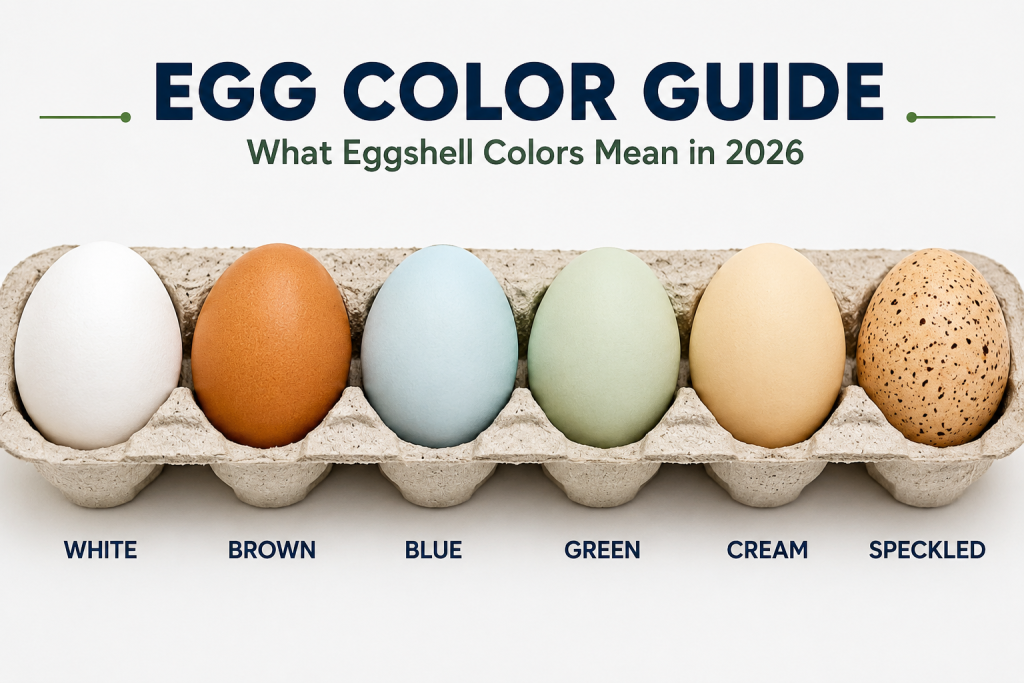
The Egg Color Guide shows why appearance can be interesting without being a complete quality test.
Care and Storage Tips
Regardless of shell color, handle eggs carefully. Keep refrigerated eggs cold and follow the storage instructions on the carton.
Additionally, wash your hands after handling raw eggs and clean surfaces that come into contact with them. Cook eggs thoroughly when required for food safety.
Do not rely on shell appearance to determine whether an egg is safe to eat. Proper refrigeration, handling, and cooking practices are more important.
Egg Color Guide: What Should You Choose?
The best egg depends on your personal priorities. If price matters most, compare similar products and choose the option that fits your budget. If you care about farming practices, read the carton labels carefully.
Likewise, if you keep chickens, research chicken breeds and egg color before choosing hens. Breed selection can help you create the mix of white, brown, blue, green, or tinted eggs you want.
Ultimately, shell color is a fascinating part of egg biology. It can reveal clues about genetics and breed, but it does not automatically determine taste, freshness, or nutrition.
Conclusion
The Egg Color Guide makes one point clear: eggs come in many beautiful colors, but shell color alone does not determine quality or health benefits. In 2026, shoppers should focus on freshness, safe handling, nutrition, labeling, farming practices, and price. Use this Egg Color Guide to understand the shell, then look beyond color to choose the eggs that best fit your needs.
Leave a Reply