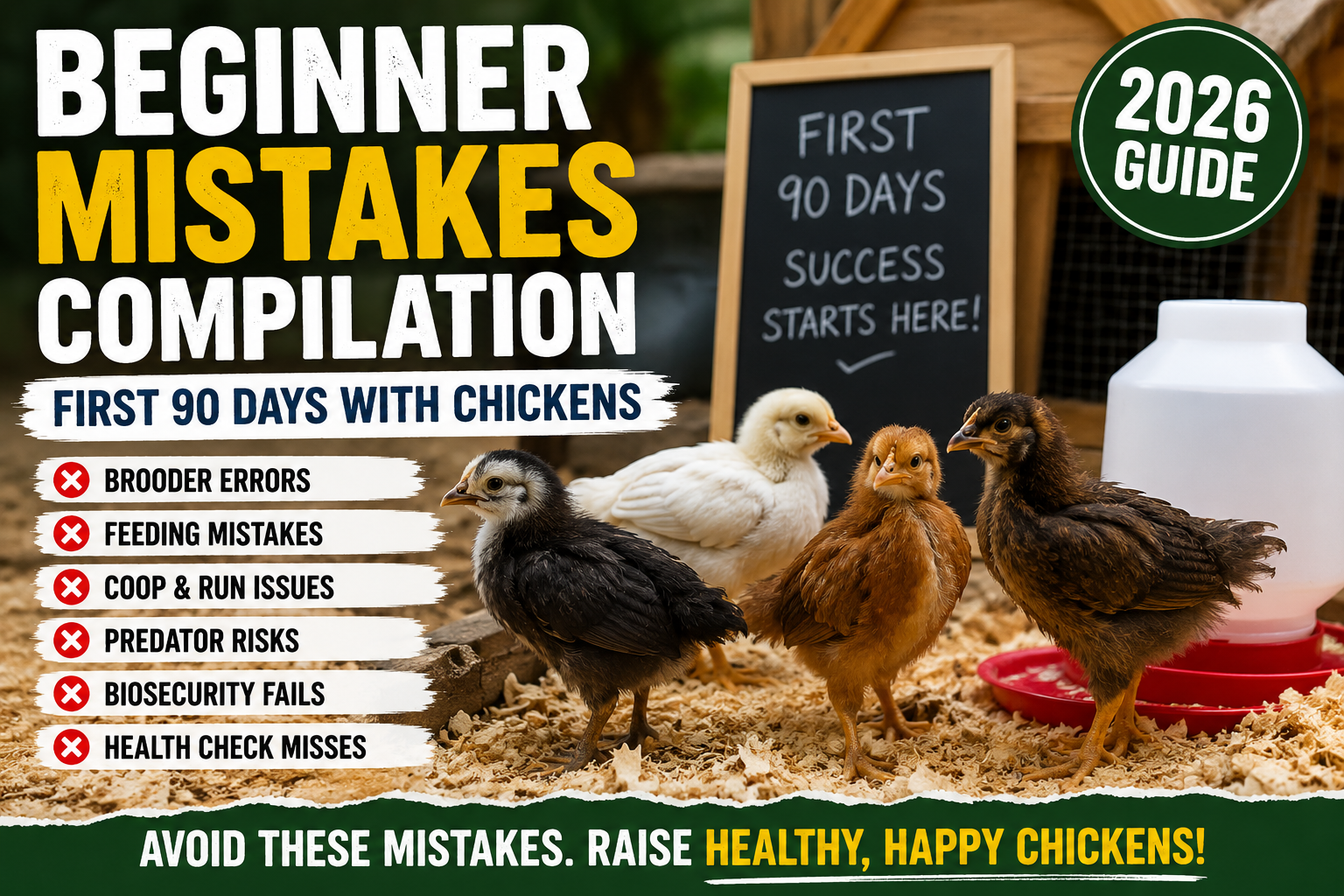
Chicken Mistakes: First 90 Days With Chickens
Bringing home your first chicks is exciting. However, new chicken keepers often make simple chicken mistakes during the first few weeks. These errors can affect growth, health, safety, and flock behavior.
This updated 2026 guide explains the most common problems and how to avoid them. Whether you keep chickens in the United States or another country, these basic care principles can help you start with confidence.
Why Chicken Mistakes Matter
The first 90 days are an important learning period. Chicks need suitable heat, clean water, proper feed, dry bedding, and protection from predators.
Additionally, disease prevention deserves attention in 2026. USDA continues to encourage strong biosecurity because highly pathogenic avian influenza remains a serious poultry risk. Recent USDA guidance also highlights the importance of limiting contact with wild birds and keeping equipment, footwear, feed, and water clean.
As a result, avoiding basic chicken mistakes is not only about saving money. It is also about protecting the flock.
Common Chicken Mistakes in the First 90 Days
1. Poor Brooder Setup
One of the biggest chicken mistakes is setting up the brooder too late or without enough space.
Chicks need a warm, safe, dry area. They also need easy access to food and water. Watch their behavior because it can show whether the temperature is comfortable.
Avoid these problems:
- Overcrowding the brooder
- Wet bedding
- Unsafe heat sources
- Empty water containers
- Poor ventilation
- Slippery flooring
2. Choosing the Wrong Feed
Another common mistake is giving chicks unsuitable food. Young birds need feed designed for their growth stage.
Do not make treats, kitchen scraps, or grains the main diet. Instead, provide a balanced poultry feed and fresh water every day.
Good baby chick care starts with consistent nutrition. Therefore, check the feed label before buying.
3. Buying a Coop That Is Too Small
Many beginners choose a coop based on the size of their chicks. However, chicks grow quickly.
A small coop can lead to crowding, dirty bedding, stress, and fighting. Therefore, plan for the adult size of your flock before purchasing or building a coop.
This is one of the most expensive chicken mistakes because replacing a poor-quality or undersized coop can cost much more later.
Chicken Mistakes With Safety and Health
Predator Protection
Do not wait until a predator attacks. Secure doors, fencing, windows, and openings before moving birds outside.
Foxes, raccoons, dogs, cats, snakes, and birds of prey can threaten backyard flocks. Local predator risks vary, so inspect your setup regularly.
Ignoring Biosecurity
Biosecurity is now a major part of backyard chicken care. USDA recommends practical steps such as cleaning equipment, using dedicated footwear, limiting unnecessary visitors, and reducing contact between domestic poultry and wild birds.
[External Link: USDA Poultry Biosecurity Resources]
Also, watch your flock every day. Sudden deaths, breathing problems, loss of appetite, unusual behavior, or other serious symptoms require prompt veterinary or animal-health advice.
Chicken Mistakes Beginners Should Avoid
Here are the errors new owners should check first:
- Buying too many chicks
- Using an undersized coop
- Providing dirty water
- Feeding the wrong diet
- Ignoring ventilation
- Allowing wild birds near feed
- Failing to secure the run
- Adding new birds without a proper separation plan
- Ignoring unusual behavior
- Cleaning equipment too rarely
Fortunately, most of these chicken mistakes are easy to prevent with a daily routine.
First 90 Days: Simple Care Routine
Create a simple checklist and follow it every day.
Every Day
- Check drinking water.
- Check feed levels.
- Observe every bird.
- Remove wet bedding.
- Check doors and fencing.
- Look for signs of illness.
- Make sure the birds are protected from weather and predators.
Every Week
Inspect the coop and run carefully. Look for damaged fencing, wet areas, dirty feeders, blocked ventilation, and possible predator entry points.
Furthermore, keep basic health records. Notes about appetite, behavior, injuries, deaths, or unusual changes can help you notice problems early.
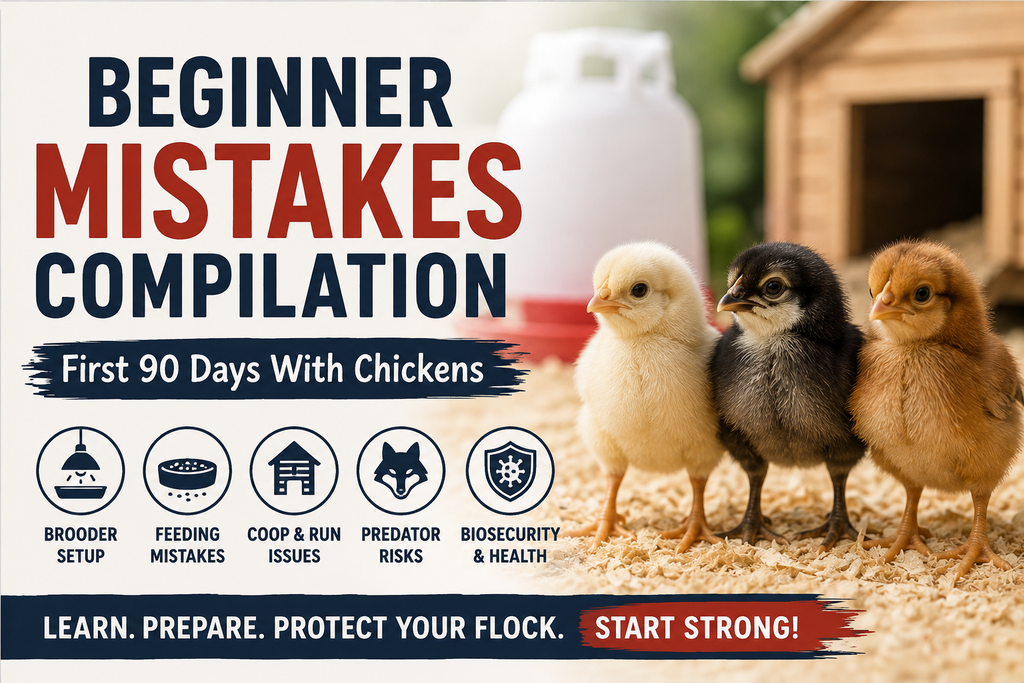
How to Raise Chickens With Fewer Mistakes
The best approach is to keep things simple. Give chickens clean water, suitable feed, safe housing, good ventilation, enough space, and daily attention.
You do not need expensive equipment for every task. Instead, spend money first on essentials that improve safety and flock health.
Remember that chicken mistakes often happen when beginners rush. Prepare the brooder before chicks arrive, prepare the coop before birds move outside, and learn local poultry regulations and veterinary resources.
2026 Update: Biosecurity Matters More
For 2026, flock owners should pay extra attention to biosecurity. USDA’s current guidance continues to describe biosecurity as a key defense against avian influenza and other infectious diseases.
USDA also continues its Defend the Flock program with free educational resources and biosecurity tools.
Therefore, keeping wild birds away from food and water, cleaning footwear and equipment, and monitoring flock health should become normal habits.
Conclusion
Your first 90 days with chickens do not have to be difficult. By understanding common chicken mistakes, you can build better habits from the beginning.
Focus on proper feed, clean water, safe housing, predator protection, ventilation, and biosecurity. Most importantly, observe your birds every day.
If you are raising chickens for beginners or starting your first backyard flock in 2026, save this guide and use it as a simple reference throughout the first three months.
Avoid the common chicken mistakes, prepare before problems appear, and give your flock a healthy start
Leave a Reply